

Maddy summarySB 1344 modifies Arizona election procedures to exclude voters on the "active permanent early voting list" from receiving mailed sample ballots. Registered voters who have opted into permanent early voting (as established under Section 16-544) will no longer receive these mailed voting materials, while all other registered voters continue to receive them. The bill amends Sections 16-245(D) and 16-411(B)(3) of Arizona Revised Statutes to implement this change in ballot distribution. This affects only voters who have chosen permanent early voting status, altering how election officials provide voting information. The policy change is administrative, focusing on mail distribution rather than altering voting rights or election mechanics.
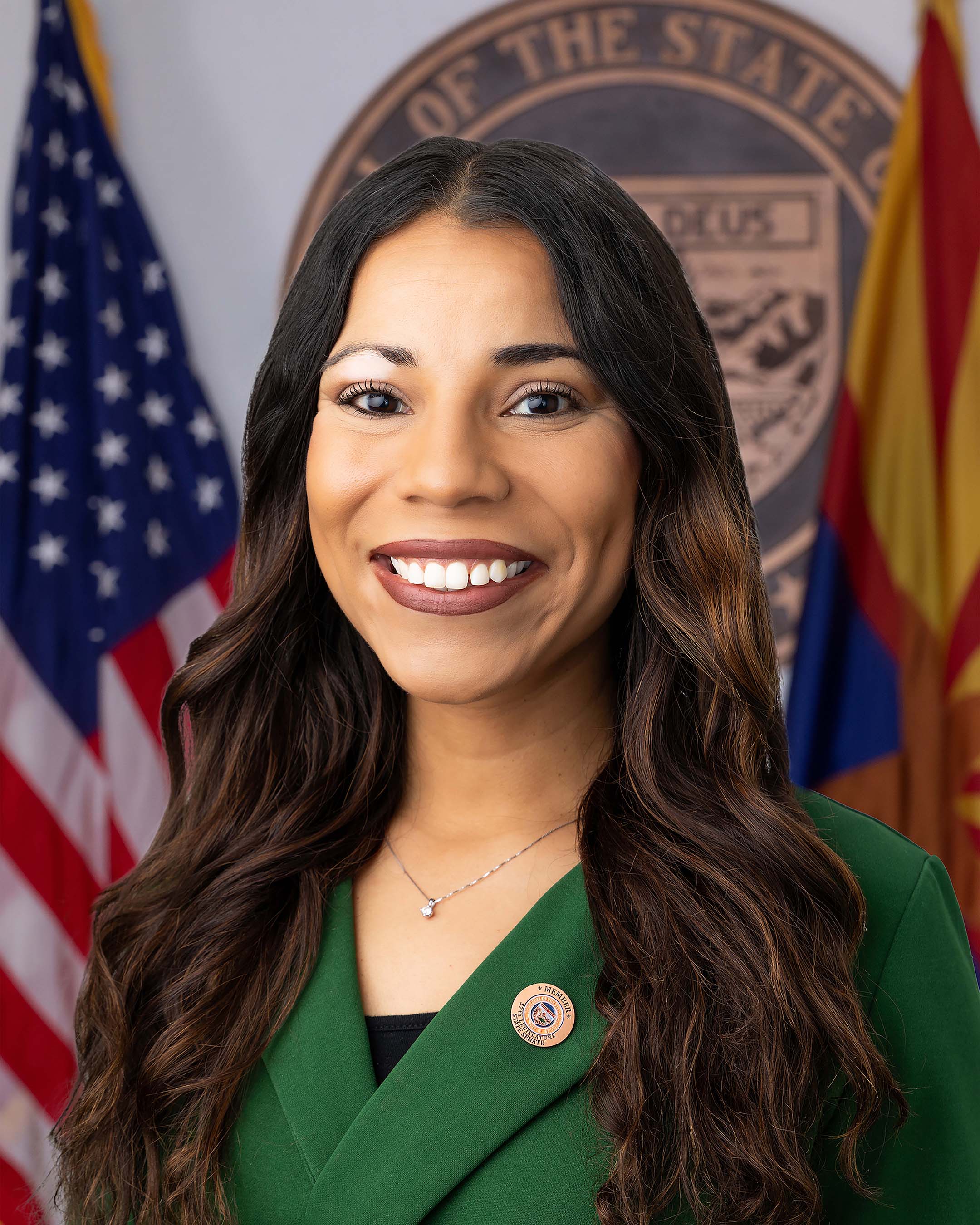
Sen. Analise Ortiz
Sponsored bills
Maddy summaryHB 2880 creates protections for individuals attending court proceedings and sets requirements for hospitals regarding law enforcement interactions. Section 11-1052 grants a "privilege from civil arrest" to parties, witnesses, and court companions (including family members, advocates, or translators) while traveling to, at, or leaving court - covering courthouse premises and surrounding areas - but excludes criminal arrests. Section 11-1053 requires hospitals to adopt policies by January 1, 2027, including verifying law enforcement identity, designating waiting areas, and providing patients with privacy notices that allow redaction of immigration status, birthplace, or documents like passports. The bill directly affects court attendees, hospital staff, and law enforcement agencies interacting with patients. It does not address schools or daycares, despite the bill title.
Maddy summarySB 1382 requires most groundwater users in Arizona’s designated management areas to install approved measuring devices and submit annual reports on their water withdrawals. It primarily affects agricultural users, landowners, and water districts withdrawing groundwater for irrigation or non-irrigation uses in active management zones or the Santa Cruz area. Key exemptions include small users (10 or fewer acre-feet yearly), farms using water on ≤10 contiguous irrigated acres without integrated operations, and certain grandfathered rights. The bill mandates the director to set device specifications and reporting rules, while clarifying which users are exempt from these requirements.
Maddy summarySB 1320 establishes a task force to address the needs of children with incarcerated parents in Arizona. The task force, made up of diverse stakeholders including former inmates, adult children of incarcerated parents, state agency directors, and legislators, must ensure these children have specific rights (like safety, being heard in decisions, and maintaining parent relationships) and identify gaps in mental health support. It will track metrics like children served and community partnerships, and partner with faith-based groups to provide support programs. The task force must submit a final report by June 30, 2028, after which the bill expires. This directly affects children in Arizona whose parents are incarcerated.
Maddy summaryHB 2515 requires lessees of state agricultural land (outside designated active management or irrigation non-expansion areas) to pay an annual fee for groundwater used in irrigation. It mandates that these lessees report well locations, annual groundwater quantities, and specific uses to the state department by March 31 each year. Fees collected must be deposited into the appropriate beneficiary fund, with the legislature intending the fee to reflect groundwater’s fair market value. The bill directly affects agricultural tenants leasing state land for irrigation outside specific water management zones.
Maddy summaryHB 2473 creates a program to fund curbside composting in Arizona cities through grants. It establishes a special fund financed by fees from managing waste classified as hazardous in its state of origin but not in Arizona (e.g., waste transported from other states). Municipalities can apply for grants to start composting programs under rules set by the environmental agency, with the fund also covering administration of both the composting program and the hazardous waste management system. The bill directly affects cities seeking to expand waste reduction efforts, using existing fee structures to support new sustainability initiatives.
Maddy summaryThis bill (SB 1378) amends Arizona's court fee schedule under Section 12-284 of the Arizona Revised Statutes. It updates specific filing fees for court cases, including domestic relations matters (e.g., dissolution petitions at $149.00), but does not address domestic violence or firearm transfers. The bill solely modifies fee classifications for court filings and administrative actions, with no substantive policy changes related to firearm restrictions or domestic violence protections. The title appears misleading, as the actual text contains only fee adjustments.
Maddy summarySB 1352 expands Arizona’s definition of domestic violence to include more relationship types, such as current or former romantic/sexual partners, and clarifies when law enforcement must arrest individuals for domestic violence offenses involving physical injury or weapons. It requires officers to temporarily seize firearms during domestic violence calls if they believe the firearm poses a risk of serious harm to victims or household members, with specific procedures for holding firearms for 72 hours and notifying victims. The bill also mandates that officers inform victims about available protections (like restraining orders) and establishes a court process for returning firearms after a hearing if the risk no longer exists. Importantly, this bill does not address animal abuse, despite the title suggesting it. The changes directly affect victims, defendants, and law enforcement officers responding to domestic violence incidents.
Maddy summaryHB 2514 requires municipalities in Arizona to verify adequate water supply before approving new housing subdivisions. Specifically, it mandates that final subdivision plats cannot be approved without either a "certificate of assured water supply" from the state water resources director or a written commitment from a designated water provider. This directly affects developers and local governments when reviewing new residential developments, particularly in areas designated as "active management areas." The bill enforces this requirement to ensure water resources can support new construction, with municipalities required to note the verification on the plat itself.
Maddy summarySB 1361 creates Arizona Empowerment Scholarship Accounts, providing state-funded scholarships for students to use at approved educational providers. It directly affects Arizona students and their parents, who must sign agreements to use funds only for specific educational expenses like tuition at qualified schools, textbooks, tutoring, special education services (for eligible students), and postsecondary education costs. Key provisions include restrictions on concurrent use with school tuition organizations, requirements for approved providers (e.g., fingerprinted staff), and annual eligibility reviews for students nearing age 22. The bill expands educational options beyond traditional public schools while specifying allowable uses of funds through detailed expense categories.