

Maddy summarySB 1479 requires most individuals to present valid photo ID when recording property deeds or contracts at county offices, with exemptions for title agents, banks, attorneys, and government entities. It mandates that all real estate sales include a detailed affidavit at the time of recording, listing sale price, property details, buyer/seller information, and financing terms. The bill also creates a voluntary system for property owners to receive electronic notifications (via email or text) about changes to ownership or mailing addresses by January 2027. Additionally, it increases penalties for false property documents, requiring at least $5,000 in damages (or triple actual losses) for forgers and $1,000 for those refusing to correct errors after a written request.
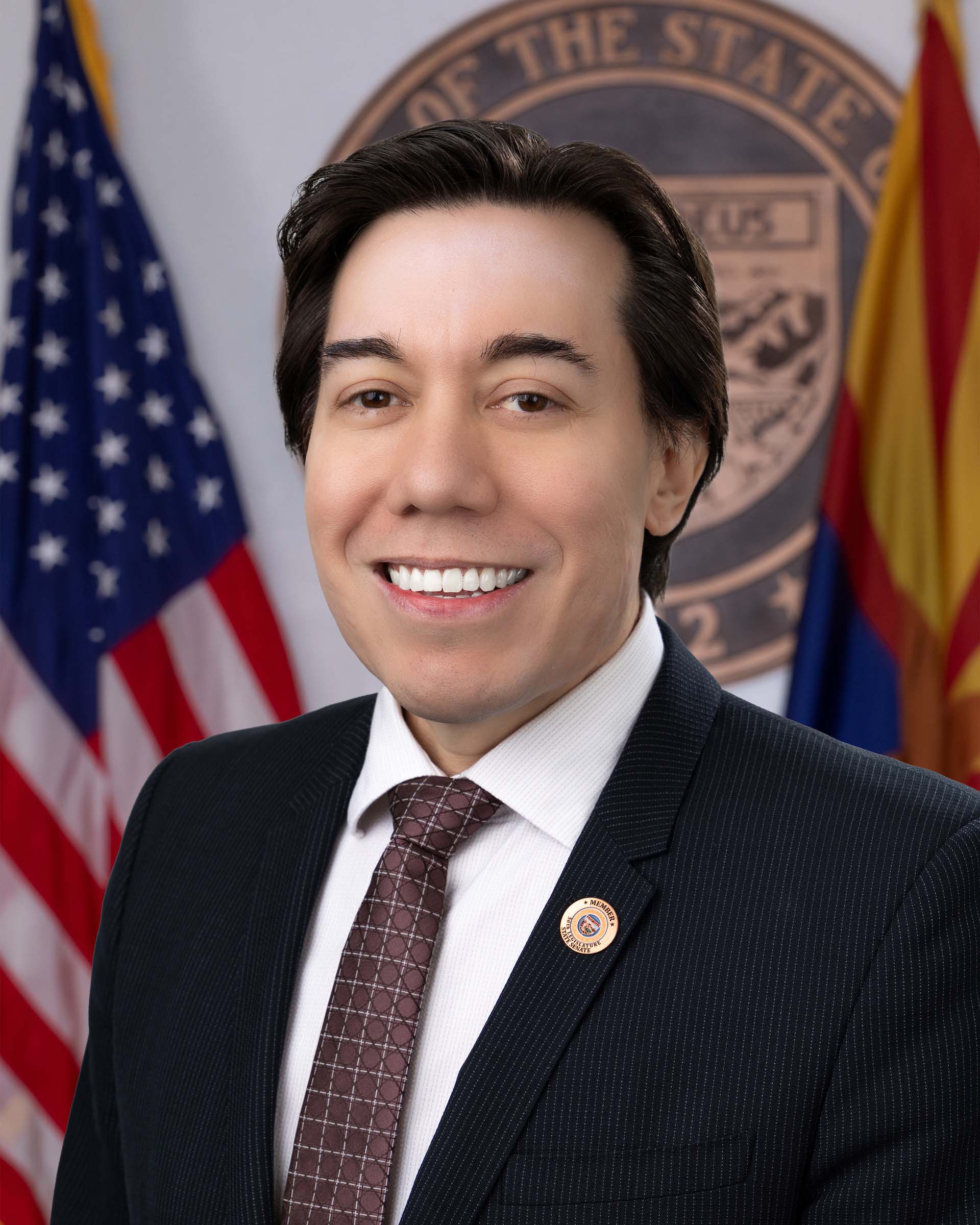
Sen. Brian Fernandez
Sponsored bills
Maddy summarySB 1295 creates a process for releasing Arizona inmates who are elderly or disabled to medical facilities. It requires inmates to first pass a preliminary eligibility check (based on age, disability, citizenship, and residency), then receive approval from Arizona's long-term care system. The bill mandates that victims of the inmate's crime be notified of the release and provides a mechanism for returning inmates to prison if they lose long-term care eligibility. This directly affects inmates qualifying for Arizona's long-term care system, which includes assisted living facilities or healthcare institutions contracted with the state.
Maddy summaryThis is a ceremonial resolution (HCR 2064) expressing the Arizona Legislature's condolences upon the passing of former state legislator Barbara Leff. It honors her 1996-2006 service representing Paradise Valley, her work on HMO reform and economic development, and her contributions to voter information systems. The resolution extends sympathy to her surviving family members (husband, children, grandchildren) and acknowledges her community leadership. It has no policy impact or legislative effect beyond this expression of respect.
Maddy summarySB 1507 mandates automatic consolidation of Arizona school districts with fewer than 300 students that are placed under state receivership. It requires merging such districts with the closest adjacent district providing matching grade-level instruction (elementary or secondary), based on proximity and boundary adjacency. The existing governing boards continue until the next election, after which a new five-member board is elected. The bill also specifies that state-appointed receivers must provide financial plans to the new board and are dismissed once the district achieves financial solvency and compliance for one fiscal year.
Maddy summaryHB 4135 creates a new child care tax credit for Arizona taxpayers with children under five who use certified child care providers. The credit provides $2,000 per child for families with federal adjusted gross income of $75,000 or less, and $1,000 for incomes between $75,000 and $150,000 annually. A total of $15 million in credits is available each year on a first-come, first-served basis, with excess credits paid as refunds. The credit applies to tax returns filed for 2026 and later, supporting working families seeking quality early childhood care.
Maddy summarySB 1685 establishes the Arizona Commission on Latino Affairs, a body tasked with advising state leadership and supporting Latino communities. The commission includes nine voting members (seven Latino, two non-Latino, appointed by the governor) and eight advisory members with expertise in education, health, civil rights, social services, and small business. Its key duties include advising the governor on policies affecting Latinos, developing recommendations for health, education, and economic programs, and producing an annual report to the legislature. The bill also creates a dedicated fund for the commission’s operations and mandates an annual "Latino Legislative Day" to honor community contributions and discuss issues.
Maddy summarySB 1796 creates a statewide electronic DNA match tracking system in Arizona, requiring all law enforcement agencies (including municipal police, county sheriffs, and the Department of Public Safety) and prosecutors that submit DNA evidence to accredited crime labs to use it. The system automatically routes DNA match notifications from crime labs to relevant agencies, mandates reviews within five business days, and requires case updates - including whether matches relate to active investigations, investigative actions, or case closures - within 60 days of review. All data must comply with privacy laws, and information stored in the system cannot be used as evidence in court. Starting December 31, 2027, the Department of Public Safety must submit annual reports detailing system performance, including match counts, response times, and recommendations for improvement.
Maddy summarySB 1694 requires Arizona charter schools receiving state funding to develop emergency response plans and conduct school safety assessments every five years using approved providers. It updates transparency rules to mandate posting meeting notices and public records online for all charter schools. The bill also prohibits for-profit organizations from establishing new charter schools after January 1, 2027. These provisions directly affect all Arizona charter schools operating under state funding programs.
Maddy summaryArizona's SB 1691 requires annual statewide testing in reading, writing, and math for students in designated grades, with additional testing in social studies and science permitted but not mandatory. It directly affects public schools, nonpublic online learning programs charging tuition, and all students in these settings, mandating test administration and data collection on graduation/dropout rates by ethnicity. Key provisions include ensuring uniform, objective tests; collecting non-test data only with public approval; requiring schools to use demographic data when evaluating scores; and setting strict deadlines for test results to be delivered to schools. The bill also mandates that test data must comply with federal privacy laws (FERPA) and be shared transparently via a public website.
Maddy summarySB 1698 expands Arizona's Empowerment Scholarship Account (ESA) program to cover specific educational services for students with disabilities. It allows ESA funds to pay for educational therapies, psychological evaluations, assistive technology, and vocational training when a student meets disability criteria under the law. The bill also requires annual education plans for students aged 21-22 to continue receiving funds, with reviews conducted by independent evaluation teams. This directly affects students with disabilities enrolled in the ESA program who qualify under the specified criteria. The policy change modifies allowable expenses under the existing ESA framework to include these disability-related services and extends eligibility through age 22.