

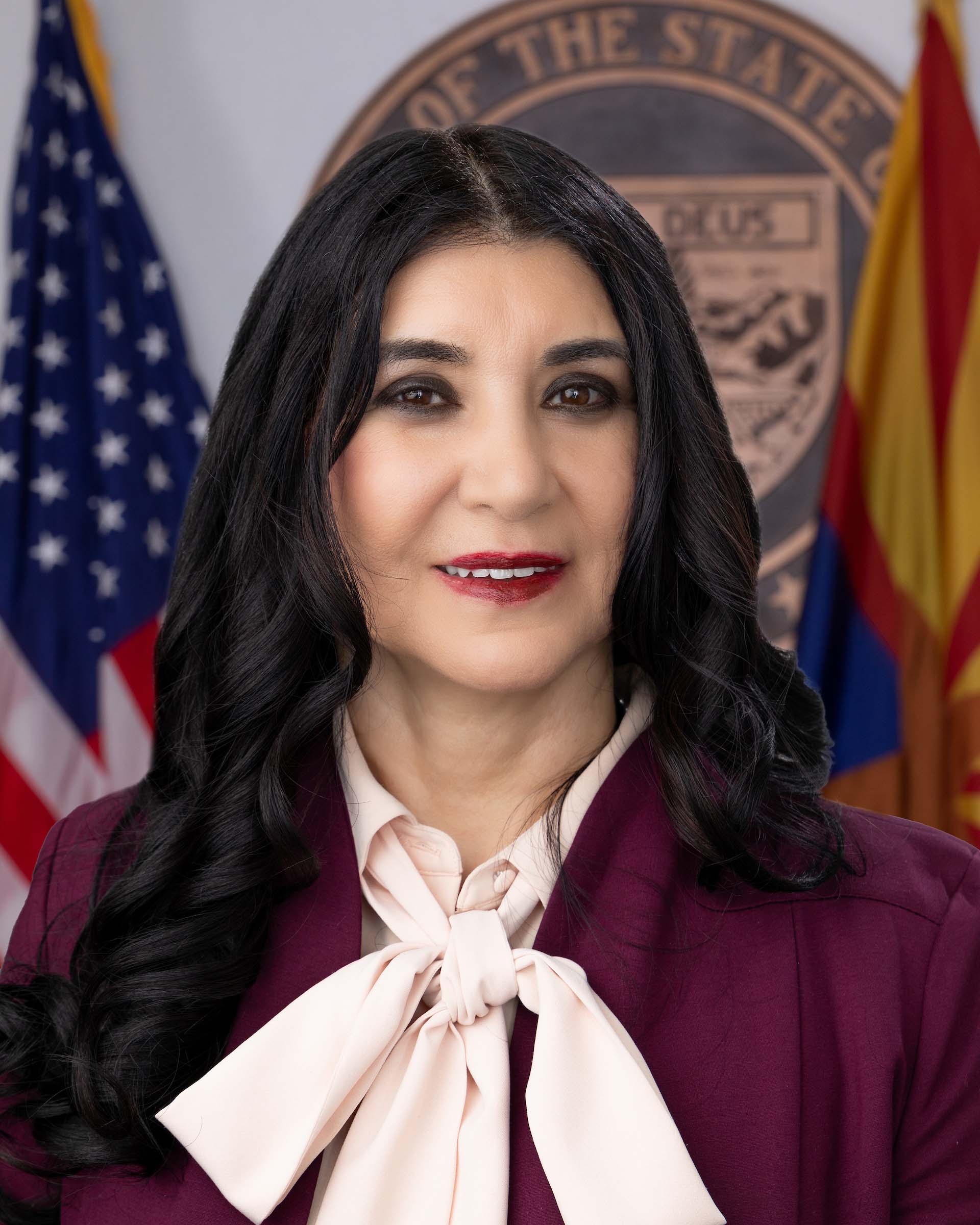
Maddy summarySB 1409 requires Arizona public schools serving grades 6-12 to provide free tampons and sanitary napkins in all women's and gender-neutral restrooms. It directly affects school districts and charter schools, mandating they make these products available without charging students or families. The bill allocates $2.5 million from the state general fund in fiscal year 2026-2027 to the Department of Education for distribution to schools to cover the costs. This is a concrete policy change ensuring access to essential hygiene products in school settings.
Sen. Eva Diaz
Sponsored bills
Maddy summarySB 1394 establishes legal rights for individuals to access fertility treatments without unreasonable barriers, including preserving reproductive materials, artificial insemination, IVF, and related services. It directly affects patients seeking fertility care, healthcare providers offering these services, and health insurers required to cover them. Key provisions guarantee individuals’ rights to continue ongoing treatments, retain control over their reproductive materials, and ensure providers can offer evidence-based care within their scope. The bill also exempts the Department of Health Services and health boards from standard rulemaking requirements for one year to implement these provisions. This legislation aims to clarify access and rights but is pending final passage.
Maddy summarySB 1381 requires farmers or ranchers leasing state agricultural land (outside specific groundwater management areas) to pay an annual fee based on their groundwater use. They must report well locations, water volume, and usage annually by March 31. Fees collected go to the state land trust fund, with the legislature stating fees should reflect groundwater's fair market value. This bill directly affects agricultural lessees on state land in areas not covered by active groundwater management zones.
Maddy summarySB 1395 repeals Arizona's existing requirement for abortion providers to report certain data to the state. It directly affects abortion providers who previously had to submit these reports under Title 36, Chapter 20, Article 2 of the Arizona Revised Statutes. The bill removes this reporting obligation without creating new requirements or mechanisms. As a procedural repeal, it eliminates a specific administrative rule rather than changing abortion access or policy. This action was introduced in the Arizona Senate on January 26, 2026.
Maddy summarySB 1344 modifies Arizona election procedures to exclude voters on the "active permanent early voting list" from receiving mailed sample ballots. Registered voters who have opted into permanent early voting (as established under Section 16-544) will no longer receive these mailed voting materials, while all other registered voters continue to receive them. The bill amends Sections 16-245(D) and 16-411(B)(3) of Arizona Revised Statutes to implement this change in ballot distribution. This affects only voters who have chosen permanent early voting status, altering how election officials provide voting information. The policy change is administrative, focusing on mail distribution rather than altering voting rights or election mechanics.
Maddy summarySB 1382 requires most groundwater users in Arizona’s designated management areas to install approved measuring devices and submit annual reports on their water withdrawals. It primarily affects agricultural users, landowners, and water districts withdrawing groundwater for irrigation or non-irrigation uses in active management zones or the Santa Cruz area. Key exemptions include small users (10 or fewer acre-feet yearly), farms using water on ≤10 contiguous irrigated acres without integrated operations, and certain grandfathered rights. The bill mandates the director to set device specifications and reporting rules, while clarifying which users are exempt from these requirements.
Maddy summarySB 1322 prohibits businesses from raising prices on essential goods and services by 15% or more during market disruptions caused by emergencies like natural disasters, power shortages, or declared states of emergency. It directly affects retailers, distributors, and manufacturers selling items such as food, water, diapers, prescription drugs, utilities, and gasoline, with a rebuttable presumption that prices exceeding the 15% threshold are unfair unless sellers prove costs rose by at least 10%. Enforcement is handled by the Arizona Attorney General, with violations carrying misdemeanor penalties and allowing affected buyers to seek up to $25,000 in damages per violation.
Maddy summarySB 1306 expands Arizona's Empowerment Scholarship Account (ESA) program to allow more families to use public funds for private education. It adds new eligibility requirements: students must either attend public school full-time for most of the prior year (with a transfer agreement) or provide proof of family income below $200,000 (adjusted annually after 2027). The bill specifies that ESA funds can cover tuition at qualified schools, textbooks, educational therapies, tutoring, online programs, standardized tests, and postsecondary costs, but prohibits using funds for school tuition organizations concurrently. This directly affects Arizona families with school-aged children meeting the income or attendance criteria, starting in 2027.
Maddy summarySB 1343, the Arizona State Voting Rights Act, requires covered political subdivisions (like cities or counties meeting specific language minority criteria) to provide voting materials and bilingual election staff in minority languages. It mandates that areas with over 2% of voting-age residents in a single language minority group (or over 4,000 members of such a group) must offer ballots, registration forms, and polling place staff fluent in that language. Covered subdivisions face penalties of up to $250,000 for failing to provide these materials or bilingual staff within strict timeframes after notice of noncompliance. The law establishes legal standing for affected voters or organizations to sue if these requirements are violated.
Maddy summaryThis bill defines key terms for Arizona's Empowerment Scholarship Account (ESA) program, establishing eligibility criteria for students. It specifies who qualifies as a "qualified student" (e.g., children with disabilities, military children, students from low-performing schools, or those on Indian reservations) and outlines requirements like prior enrollment in public schools. The definitions directly affect families seeking ESA funds to cover education costs at participating schools. As a foundational definitional bill (not a new policy), it sets the framework for future program implementation without altering current funding or administrative processes.