

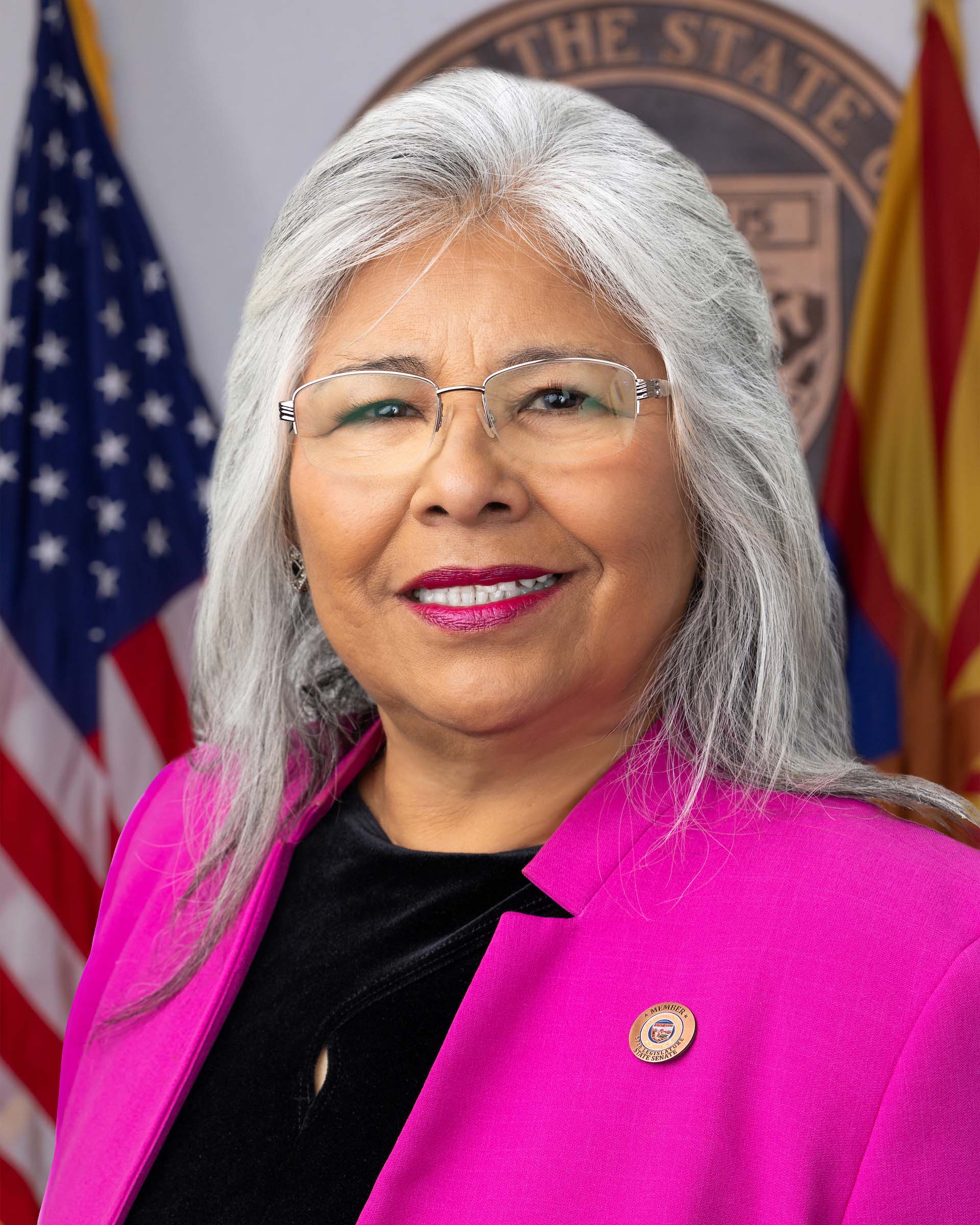
Photo of Sally Gonzales
D Arizona Senate · District 20

Sen. Sally Gonzales

Compare
Total votes
5,715
all sessions
Attendance
91%
528 missed
Near the chamber average
With party
92%
of cast votes
Lower than 80% of chamber peers
Bipartisan score
5%
crosses aisle rarely
Higher than 76% of chamber peers
Sponsored
1,271
bills & resolutions
Higher than 83% of chamber peers
Committees
3
assignments
1,271 bills and resolutions

Sponsored bills

Total
1,271
Primary
211
Co-sponsor
1,060
This page
1,271
matching current filters
Primary SB 1673
Introduced · Arizona Senate · Lead sponsor
inmate labor; wages

Maddy summarySB 1673 sets minimum wages for Arizona prison labor, requiring inmates working in state or contracted correctional industries programs to earn at least $1.50 per hour (or $2.00 per hour for private prison contracts). It mandates specific deductions from inmate earnings: 25% toward a savings account, 5% for a transition program, and portions for court fees or dependent care. The bill clarifies that inmates are not considered employees, so they do not qualify for workers' compensation or related benefits. These changes directly affect all Arizona prison inmates participating in correctional industries programs.

Introduced Feb 11, 2025 0 co-sponsors
Primary SB 1731
Introduced · Arizona Senate · Lead sponsor
juveniles; hearing; sentence reduction

Maddy summarySB 1731 would allow Arizona courts to reduce prison sentences for individuals who were under 18 when they committed a crime and are serving more than 25 years, after they have served a minimum number of years (exact number to be specified in the bill). The court must hold a hearing within 90 days of a defendant's motion, and sentence reduction is presumed unless the state proves the defendant poses a public safety threat. Courts must consider factors like the defendant's age at the time of the offense, rehabilitation efforts, completion of educational programs, and their role in the crime. If reduced, the new sentence must be a fixed term (not indefinite or life), and defendants denied relief cannot reapply for two years. The bill applies specifically to juvenile offenders serving lengthy sentences, aiming to provide a pathway for sentence review based on rehabilitation.

Introduced Feb 11, 2025 0 co-sponsors
Primary SB 1719
Introduced · Arizona Senate · Lead sponsor
juvenile convicted as adult; sentencing

Maddy summarySB 1719 would expand when juveniles (ages 14-17) in Arizona can be tried as adults for certain serious offenses, including murder, forcible sexual assault, armed robbery, and violent felonies. It requires a court hearing to determine if a juvenile qualifies as a "chronic felony offender" (with two prior felony convictions), and if so, the case continues in adult court. Crucially, the bill prohibits courts from imposing death, life without parole, or sentences totaling 25+ years ("de facto life") when sentencing juveniles convicted as adults, though judges may reduce sentences below minimums. This directly affects juveniles aged 14-17 accused of specific violent or repeated felony offenses, particularly those with prior felony records.

Introduced Feb 11, 2025 0 co-sponsors
Co-sponsor SCR 1036
Introduced · Arizona Senate · Co-sponsor
permanent funds; land trust; distributions

Maddy summaryThis constitutional amendment establishes permanent funds for revenue from Arizona's land grants, requiring strict separation of funds based on the original land grant purpose. It mandates that funds be invested in safe securities (capping equities at 60% and single-company holdings at 5%) and sets specific annual distribution rates: 2.5% until 2024-2025, 6.9% from 2025-2026 through 2034-2035, then returning to 2.5%. Distributions fund basic state aid and school funding, with automatic reductions during market downturns to preserve capital. The bill directly affects how Arizona manages and distributes long-term land trust revenue to public education and state aid programs.

Introduced Feb 11, 2025 1 co-sponsor
Primary SB 1680
Introduced · Arizona Senate · Lead sponsor
ESAs; qualified schools; tuition rates

Maddy summaryArizona's SB 1680 amends state law to regulate tuition rates for schools participating in Arizona's Education Savings Account (ESA) program. The bill caps tuition increases for students using ESAs at the previous year's consumer price index (CPI) change, preventing schools from raising fees faster than inflation for these students. It also protects participating schools' autonomy by prohibiting government interference in their religious practices, curriculum, or admissions policies, and shifts the legal burden to the state in challenges to the law. This directly affects private and homeschools accepting ESA funds, ensuring they maintain operational independence while adhering to the tuition cap.

Introduced Feb 11, 2025 0 co-sponsors
Primary SB 1717
Introduced · Arizona Senate · Lead sponsor
event wagering; problem gambling fund

Maddy summarySB 1717 directs annual allocations from Arizona's state lottery fund to specific state programs. It sets aside $1.3 million each year for the problem gambling fund (established under § 5-1318.01) and an additional $1.3 million for the Department of Gaming's problem gambling treatment, prevention, and education programs. The bill also allocates funds to other areas like child safety, health education, teen pregnancy prevention, and homeless shelters, with all amounts adjusted annually for inflation. The bill does not create new gambling regulations but specifies how existing lottery revenue is distributed to designated state funds and programs.

Introduced Feb 11, 2025 0 co-sponsors
Primary SB 1666
Introduced · Arizona Senate · Lead sponsor
tourism; sports authority; technical correction

Maddy summarySB 1666 is a technical correction to Arizona's Tourism and Sports Authority fund management rules. It amends Section 5-832 of the Arizona Revised Statutes to clarify that the Authority must invest unspent funds in ways that ensure securities mature when the funds are needed for operations. The bill also specifies that if fund balances become insufficient to meet obligations, the board must immediately notify the auditor general, who will investigate and report findings. This change directly affects the Tourism and Sports Authority's handling of its general fund accounts but does not create new policies or programs.

Introduced Feb 11, 2025 0 co-sponsors
Primary SB 1669
Introduced · Arizona Senate · Lead sponsor
SNAP eligibility; probation compliance

Maddy summarySB 1669 modifies Arizona's SNAP eligibility rules for individuals convicted after 1996 of felony drug offenses. It allows eligibility if they complete substance abuse treatment, are enrolled in a treatment program (even while waiting), actively participate in treatment, have a medical exemption, or comply with probation drug testing requirements. The bill also requires more frequent drug testing for applicants whose offenses occurred within 24 months of applying. This directly affects low-income Arizonans with past drug-related felony convictions seeking food assistance.

Introduced Feb 11, 2025 0 co-sponsors
Primary SB 1670
Introduced · Arizona Senate · Lead sponsor
TANF; lifetime limit; drug testing

Maddy summarySB 1670 modifies Arizona's Temporary Assistance for Needy Families (TANF) program by extending the lifetime limit for cash assistance from 60 to 120 months (10 years) for most recipients, retroactive to 2002. It exempts child-only cases and allows an additional 12 months if recipients comply with work requirements and children maintain 90% school attendance. The bill also explicitly prohibits the Department of Economic Security from requiring drug testing for TANF recipients, reversing prior policy. These changes apply retroactively to June 30, 2025, and affect low-income families receiving cash assistance under Arizona's TANF program.

Introduced Feb 11, 2025 0 co-sponsors
Primary SB 1676
Introduced · Arizona Senate · Lead sponsor
community colleges; dual enrollment; funding

Maddy summarySB 1676 amends Arizona's community college funding calculations to better support dual enrollment programs, where high school students take college courses simultaneously. It specifically prevents community colleges from having state aid reduced by 50% for students enrolled in dual credit courses taught by high school staff on high school campuses during regular hours. The bill also appropriates $1.1 million in fiscal year 2025-2026 to 11 community college districts (including Maricopa County's $852,800 allocation) to fully fund these dual enrollment students. These changes directly affect community college districts and high schools participating in dual enrollment, ensuring consistent state funding for these programs. The bill updates how student enrollment counts are calculated for funding purposes, with new audit requirements for transparency.

Introduced Feb 11, 2025 0 co-sponsors
Showing 141 to 150 of 1,271 bills
Previous 1 … 14 15 16 … 128 Next