

Maddy summaryThis is a memorial (not a binding bill) from Arizona's legislature urging Congress to address foreign influence in U.S. elections. It states that foreign interference - through contributions, dark money, disinformation, or other means - threatens election integrity and public trust, and calls for Congress to enact measures ending such influence. The memorial specifically requests Congress safeguard election transparency and enforce campaign finance laws to ensure U.S. elections remain "free, fair, and secure from international meddling." It does not create new laws or directly affect voters, but formally asks Congress to act on this issue.
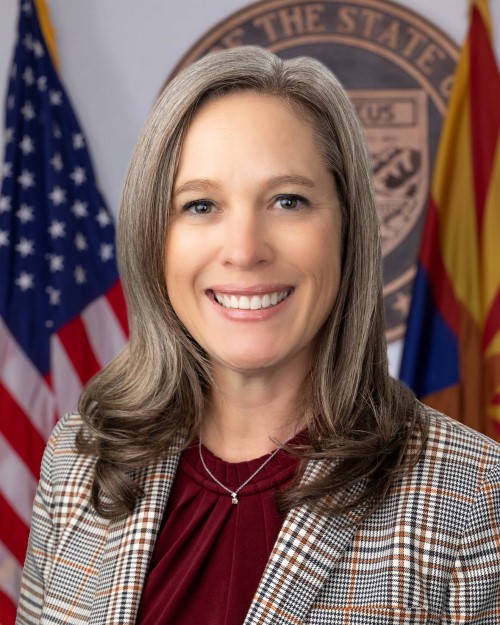
Sen. Shawnna Bolick
Sponsored bills
Maddy summarySB 1417 establishes safety requirements for fully autonomous vehicles operating without human drivers in Arizona. It requires companies to submit detailed safety plans, including law enforcement interaction protocols and proof of compliance with federal standards, before deployment. Operators must provide quarterly safety reports tracking miles driven, collisions (especially with pedestrians/bicyclists), near-miss events, and software updates, while maintaining $5 million in liability insurance. The bill directly affects autonomous vehicle manufacturers and service providers seeking to operate self-driving fleets on public roads. It defines key terms like "near-miss event" and "fallback-ready user" to clarify operational boundaries and safety responsibilities.
Maddy summarySB 1369 restricts access to medical examiner reports, including toxicology, photographs, and videos from death investigations, requiring a judge to review requests for disclosure in private. It allows specific groups - such as family members (spouse, children, parents), law enforcement, attending doctors, and medical researchers (with anonymity) - to access these records without court approval, prioritizing family requests. The bill also gives medical examiners legal immunity for sharing reports lawfully under these rules and clarifies that it doesn’t change existing court discovery processes. This policy directly affects families seeking death investigation details, law enforcement, and medical professionals needing access for care or research.
Maddy summarySB 1195 appropriates $10 million from Arizona's state general fund for fiscal year 2026-2027 to the Department of Economic Security. This funding supports free, statewide civil legal aid services provided by nonprofit organizations, aligning with federal grant terms under 42 U.S.C. §2996f. The bill requires the department to submit annual reports (2027-2032) detailing case statistics, legal areas involved, services delivered, and non-identifying demographic data of recipients. The appropriation is exempt from standard lapsing rules and is designated as ongoing funding for future fiscal years.
Maddy summarySB 1208 modifies Arizona's probation law for individuals sentenced to "lifetime probation." It prohibits courts from terminating this specific probation term early, requiring defendants to serve at least 25 years before possible discharge. This change applies only to those under lifetime probation sentences (typically for serious offenses), not standard probation terms. The bill does not alter other probation rules, such as the $65 monthly fee for supervised probation or standard revocation procedures.
Maddy summarySB 1507 establishes an independent Corrections Ombudsman office within Arizona’s existing ombudsman system. The governor appoints a director (with strict conflict-of-interest rules) to monitor prison conditions, investigate inmate complaints confidentially via phone or online, and inspect facilities every two years. The office must annually report detailed data to lawmakers, including inmate deaths, assaults, staff ratios, facility lockdowns, and the department’s compliance with rehabilitation programs. This directly affects Arizona inmates (by providing complaint channels), correctional staff (who can report issues), and the Department of Corrections (which must supply required data and meet reporting standards).
Maddy summarySB 1658 creates an alternative pathway for individuals to become certified veterinary technicians in Arizona without completing a traditional two-year veterinary technology program. Instead, applicants can qualify by completing five years of supervised on-the-job training under a licensed veterinarian through an approved nonprofit organization that partners with a veterinary school, with documented skill development aligned with AVMA standards. This alternative requires board approval of the training program and supervision, and applicants must still pass the national veterinary technician exam. The bill directly affects aspiring veterinary technicians who lack formal education but have extensive, supervised work experience in animal care settings.
Maddy summaryArizona's SB 1405 extends the state's Mental Health Transition Program through 2031 (previously set to expire in 2026). The bill allows eligible inmates diagnosed with serious mental illness to be released up to three months earlier than their standard release date, provided they participate in the program. Participants receive contracted services including case management, housing assistance, psychiatric care, and transportation for at least 90 days. The program requires annual recidivism studies comparing participants to similar inmates not in the program, with detailed reporting to lawmakers on program participation and outcomes.
Maddy summaryHB 2679 establishes a new framework for Arizona public power entities (like municipal utilities) to finance infrastructure upgrades by issuing "Transition Bonds." These bonds are secured by future customer payments called "Financing Charges," which become nonbypassable fees added to all customers' utility bills until the costs are fully recovered. The bill creates specific definitions for terms like "Financing Charges," "Qualified Special Purpose Entity," and "Transition Bonds," ensuring these payments cannot be avoided regardless of the customer's service provider or asset ownership. This mechanism allows public power entities to shift financing costs to customers over time rather than relying solely on traditional rate increases.
Maddy summarySB 1600, titled "Patient Rights; Health Care Services," defines core patient rights for anyone receiving healthcare in Arizona. It establishes that patients have the right to care prioritizing their best interest, avoiding harm, and requiring informed consent for medical decisions (except emergencies). The bill directly affects all patients receiving care from licensed health professionals in Arizona. However, the bill was passed by the legislature on May 7, 2025, but was vetoed by the governor on May 13, 2025, so it did not become law.