

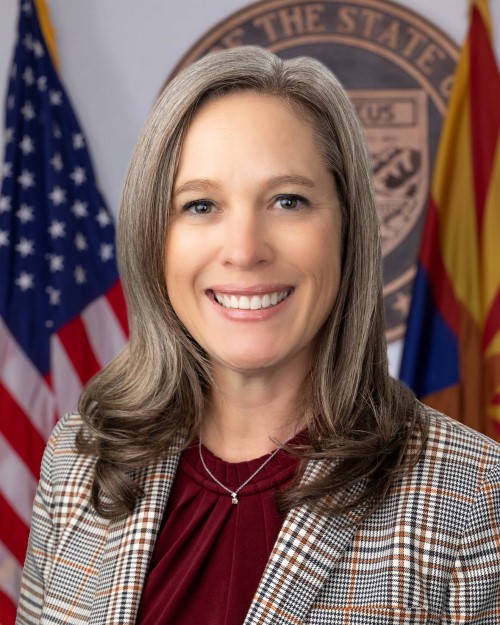
Photo of Shawnna Bolick
R Arizona Senate · District 2 On the 2026 ballot

Sen. Shawnna Bolick

Compare
Total votes
2,265
all sessions
Attendance
98%
49 missed
Higher than 76% of chamber peers
With party
96%
of cast votes
Near the chamber average
Bipartisan score
3%
crosses aisle rarely
Near the chamber average
Sponsored
187
bills & resolutions
Near the chamber average
Committees
4
assignments
187 bills and resolutions

Sponsored bills

Total
187
Primary
107
Co-sponsor
80
This page
187
matching current filters
Primary SB 1666
Passed · Arizona Senate · Lead sponsor
in-state custodial interference; penalty

Maddy summarySB 1666 makes it a civil violation to take or keep a child from a parent, legal guardian, or custodian without legal right, intending to interfere with a custody order. A first or second violation within ten years incurs a $500 civil penalty, while a third or subsequent violation is classified as a class 6 felony. The law directly affects individuals who illegally remove children from lawful custody arrangements within Arizona. It establishes clear penalties for repeated violations of custody orders, effective January 1, 2027.

Passed Mar 10, 2026 0 co-sponsors
Co-sponsor HCR 2064
Passed · Arizona House · Co-sponsor
Barbara Leff; death resolution

Maddy summaryThis is a ceremonial resolution (HCR 2064) expressing the Arizona Legislature's condolences upon the passing of former state legislator Barbara Leff. It honors her 1996-2006 service representing Paradise Valley, her work on HMO reform and economic development, and her contributions to voter information systems. The resolution extends sympathy to her surviving family members (husband, children, grandchildren) and acknowledges her community leadership. It has no policy impact or legislative effect beyond this expression of respect.

Passed Mar 9, 2026 1 co-sponsor
Co-sponsor SB 1535
Introduced · Arizona Senate · Co-sponsor
prostitution; assessment; anti-human trafficking fund.

Maddy summarySB 1535 requires courts to collect a $200 assessment from individuals convicted of specific prostitution offenses under Arizona law (ARS 13-3214), with no waiver allowed. The funds collected flow directly to Arizona’s Anti-Human Trafficking Grant Fund, established under ARS 41-1736. This fund supports programs that assist trafficking victims, provide law enforcement support, or offer public education on preventing and identifying human trafficking. The bill does not change prostitution prohibitions but directs penalties toward funding anti-trafficking initiatives.

Introduced Mar 9, 2026 1 co-sponsor
Primary SB 1032
Passed · Arizona Senate · Lead sponsor
appropriation; independent correctional oversight office

Maddy summarySB 1032 appropriates $1.5 million from Arizona's general fund for fiscal year 2026-2027 to the Corrections Oversight Fund, established under Arizona law. This funding directly supports the Independent Correctional Oversight Office (ICOO) in carrying out its duties to monitor prison conditions and oversight activities as defined in Title 41, Chapter 59 of the Arizona Revised Statutes. The bill does not create new policies but provides operational resources for the existing oversight office. This is a procedural budget allocation, not a substantive legislative change.

Passed Mar 9, 2026 0 co-sponsors
Co-sponsor SCR 1054
Passed · Arizona Senate · Co-sponsor
Mark Brnovich; death resolution

Maddy summaryThis resolution honors the late Mark Brnovich, a former Arizona Attorney General who passed away in January 2026. It formally expresses the state legislature's regret over his death and extends condolences to his family and friends. The document does not create new laws or policies but serves as a ceremonial tribute to his public service career. It acknowledges his contributions as a prosecutor and government official without altering any legal provisions.

Passed Mar 3, 2026 1 co-sponsor
Primary SB 1144
Passed · Arizona Senate · Lead sponsor
veterinary technicians; certification; education alternative

Maddy summarySB 1144 creates a new pathway for veterinary technicians in Arizona to become certified without completing a two-year veterinary technology degree. Instead, it allows applicants to qualify through 4,000 hours of supervised on-the-job training under a licensed Arizona veterinarian within six years, provided the training covers nationally recommended skills and includes documentation of each skill learned with the supervising veterinarian's signature. This alternative route makes applicants eligible to take the national veterinary technician exam and any required state exam, matching the eligibility of those with formal degrees. The bill does not change the existing requirement for applicants with a two-year degree but expands certification options for those with extensive work experience.

Passed Mar 3, 2026 0 co-sponsors
Primary SCR 1014
Passed · Arizona Senate · Lead sponsor
foreign contributions; early voting; tabulation

Maddy summarySCR 1014 prohibits Arizona government entities from using funds or services from foreign nationals for election administration. It requires election service providers to annually certify they aren’t receiving foreign contributions (with updates if new information arises) and mandates quarterly reports to the Secretary of State. Violations - including false certifications - may result in misdemeanor charges, termination of contracts, or civil penalties of $5,000 per violation. The bill applies to election service providers and government entities managing voting operations, excluding common goods or polling locations. It would become law only if approved by Arizona voters through a referendum.

Passed Mar 3, 2026 0 co-sponsors
Primary SB 1289
Passed · Arizona Senate · Lead sponsor
foreign donations; election administration; certification

Maddy summarySB 1289 requires any entity (including corporations or committees) providing election services to Arizona government entities to certify in writing that they are not receiving foreign donations, with annual updates and immediate reporting of new foreign donation information. Government entities must submit quarterly reports listing these service providers to the Secretary of State, who will post certifications online. Failure to certify accurately invalidates service agreements and may result in a class 1 misdemeanor charge or $5,000 fines per violation. The bill also allows the Attorney General and qualified voters to sue for enforcement, seeking injunctions, $1,000 daily penalties, and attorney fees for non-compliance.

Passed Feb 26, 2026 0 co-sponsors
Primary SCR 1013
Passed · Arizona Senate · Lead sponsor
elections; foreign contributions; certification

Maddy summarySCR 1013 is a proposed Arizona constitutional amendment (requiring voter approval) that aims to prevent foreign influence in elections. It requires election service providers and ballot measure committees to certify under penalty of perjury that they aren’t receiving foreign funding, with annual updates and immediate reporting of new information. The law mandates quarterly reports to the Secretary of State and prohibits using foreign money for election administration or ballot initiatives. Violations could lead to fines, contract termination, or civil lawsuits, with enforcement handled by the Attorney General or qualified voters. This applies to organizations working on elections or ballot measures, excluding tribal nations and standard "common goods" like office supplies.

Passed Feb 26, 2026 0 co-sponsors
Primary SB 1241
Introduced · Arizona Senate · Lead sponsor
municipalities; counties; private permitting providers

Maddy summarySB 1241 allows homeowners and contractors to use private companies (instead of city governments) to review building plans and inspect specific home improvement projects, such as roofing, solar panels, or plumbing repairs, for single-family or multifamily residential properties. Private providers issue permits and certificates of completion after verifying compliance with building codes, submit copies to the city within 48 hours, and cities must accept them as valid as their own permits. Cities must post all building codes and fee schedules online; if they fail to do so, they cannot charge fees for projects using private providers. The bill requires private providers to maintain liability insurance and prohibits cities from charging extra fees or discriminating against those using private services.

Introduced Feb 24, 2026 0 co-sponsors
Showing 41 to 50 of 187 bills
Previous 1 … 4 5 6 … 19 Next