

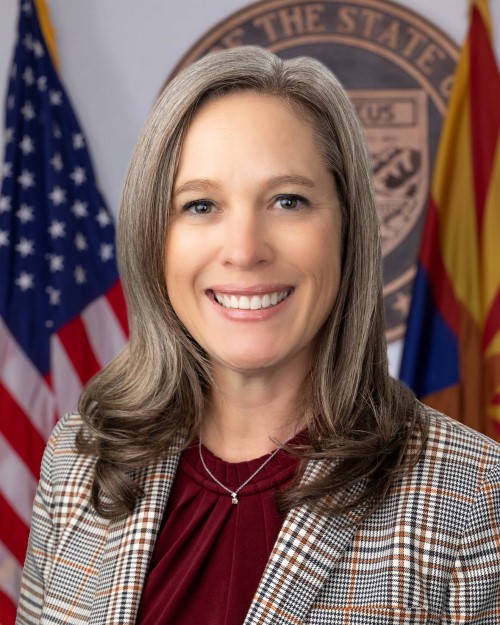
Photo of Shawnna Bolick
R Arizona Senate · District 2 On the 2026 ballot

Sen. Shawnna Bolick

Compare
Total votes
2,265
all sessions
Attendance
98%
49 missed
Higher than 76% of chamber peers
With party
96%
of cast votes
Near the chamber average
Bipartisan score
3%
crosses aisle rarely
Near the chamber average
Sponsored
187
bills & resolutions
Near the chamber average
Committees
4
assignments
187 bills and resolutions

Sponsored bills

Total
187
Primary
107
Co-sponsor
80
This page
187
matching current filters
Co-sponsor SB 1629
Introduced · Arizona Senate · Co-sponsor
inmates; release to nursing institutions

Maddy summarySB 1629 allows Arizona prison directors to release inmates with terminal illnesses or conditions requiring end-of-life care to state-contracted nursing care facilities. It applies only to inmates who are so debilitated they pose no danger to themselves or others, excluding those convicted of first-degree murder. The bill requires prison officials to periodically review medical records to confirm ongoing eligibility, and if an inmate no longer meets criteria, they must be returned to custody. This policy change directly affects terminally ill inmates in Arizona prisons who qualify under these specific medical and safety conditions.

Introduced Feb 11, 2025 1 co-sponsor
Primary SB 1342
Introduced · Arizona Senate · Lead sponsor
time-limited offer; liability insurer; settlement

Maddy summarySB 1342 requires liability insurers to provide written settlement offers with specific, detailed terms for personal injury, property damage, or wrongful death claims. Offers must include claim numbers, loss details, a 30-day acceptance window, full release of claims, medical lien resolution, and supporting documentation like unredacted medical records. Insurers are protected from extracontractual damages (additional penalties beyond insurance limits) if they strictly follow these requirements. This directly affects insurers, claimants, and tortfeasors in settlement negotiations for covered claims.

Introduced Feb 4, 2025 0 co-sponsors
Co-sponsor SB 1223
Introduced · Arizona Senate · Co-sponsor
ACJC; continuation

Maddy summaryArizona's SB 1223 sets a termination date for the Arizona Criminal Justice Commission (ACJC), ending its operations on July 1, 2033. The bill repeals certain existing provisions (including Section 41-3025.01) and specifies that Sections 41-2404, 41-2405, and the new termination section will be repealed on January 1, 2034. This bill directly affects the ACJC and the agencies it coordinates with, ensuring a formal end to the commission's role in facilitating criminal justice information exchange. The legislation is procedural, establishing a clear timeline for the commission's termination without creating new policies or funding changes.

Introduced Jan 28, 2025 1 co-sponsor
Co-sponsor HB 2276
Introduced · Arizona House · Co-sponsor
legislative ratification; rulemaking; regulatory costs

Maddy summaryHB 2276 requires Arizona state agencies to submit proposed rules expected to increase regulatory costs for businesses by more than $100,000 within five years for review by the Office of Economic Opportunity. If the cost exceeds $500,000, the rule cannot take effect until the legislature passes separate legislation approving it. Agencies cannot finalize such rules without this legislative approval, and if the legislature doesn't act during the session, the proposed rule must be terminated. This directly affects state agencies creating new rules and businesses subject to those rules, adding a legislative review step for high-cost regulations.

Introduced Jan 22, 2025 1 co-sponsor
Primary SB 1630
Signed into law · Arizona Senate · Lead sponsor
sex offender management working group

Maddy summaryThis bill establishes a Sex Offender Management Board in Arizona to develop and update procedures for managing and treating adult sex offenders, including those with developmental disabilities. The board will be composed of representatives from various sectors, such as the judiciary, corrections, mental health, law enforcement, victim advocacy, and education, who will serve without pay but can receive expense reimbursement. Its primary duties include creating evidence-based guidelines for evaluating offender risk, recommending treatment plans, and ensuring that intervention methods prioritize public safety while addressing the specific needs of offenders. The board must present its recommendations to the state legislature, aiming to create a flexible system of care that includes options like counseling and therapeutic communities.

Signed into law Jun 21, 2024 0 co-sponsors
Co-sponsor HB 2618
Signed into law · Arizona House · Co-sponsor
spirituous liquor; DHS; inspection; exemption

Maddy summaryThis bill amends the powers and duties of the Arizona Department of Health Services director, specifically expanding authority to inspect premises and vehicles for health violations. It allows the director to enter a wider range of locations, including restaurants and factories, to enforce health laws and requires public hearings before leasing state hospital property to third parties. Additionally, the legislation grants the director flexibility to delegate certain functions to local health agencies and establish emergency measures for controlling infectious diseases. The changes aim to streamline public health enforcement and improve the management of state hospital assets without altering the core structure of the department.

Signed into law Jun 21, 2024 1 co-sponsor
Primary SB 1370
Signed into law · Arizona Senate · Lead sponsor
youth businesses; licenses; tax; exemption

Maddy summaryThis bill exempts young entrepreneurs from certain business requirements in Arizona. It prevents cities and counties from requiring licenses or permits for businesses run by individuals under eighteen or those who have not yet graduated from high school, provided the business operates only occasionally. Additionally, the legislation allows these young business owners to avoid paying transaction privilege taxes if their annual gross income does not exceed $10,000.

Signed into law Jun 21, 2024 0 co-sponsors
Co-sponsor SB 1639
Signed into law · Arizona Senate · Co-sponsor
gold; silver; currency; study committee

Maddy summaryThis Arizona bill creates a temporary study committee to investigate the state's potential use of gold and silver as currency and as investment assets. The committee will be composed of representatives from the state treasury, insurance department, accounting, law enforcement, and securities industries, with no compensation for their service. Its main task is to research prudent investment practices and fiduciary management for these metals before submitting a report with findings and recommendations to state leaders by November 2024. The entire committee and its authority are set to expire on September 30, 2025, after which the bill will no longer be in effect.

Signed into law Jun 21, 2024 1 co-sponsor
Co-sponsor SJR 1001
Signed into law · Arizona Senate · Co-sponsor
private property; sale; veterans affairs.

Maddy summaryThis bill authorizes the sale of four specific private property parcels in Phoenix to the U.S. Department of Veterans Affairs. It grants the state's consent for the transfer of these lands, which are located on Devonshire Avenue and North 7th Street, for use by the federal government. The legislation includes the precise legal descriptions of the properties and is designated as an emergency measure to take effect immediately upon signing.

Signed into law Jun 21, 2024 1 co-sponsor
Primary SB 1435
Vetoed · Arizona Senate · Lead sponsor
public entity liability; sexual offenses

Maddy summaryThis bill modifies Arizona's tort immunity laws to clarify when public entities can be held financially responsible for criminal acts committed by their employees. It generally shields public entities from liability for felonies unless the entity knew the employee had a history of such behavior, with specific exceptions for sexual offenses involving minors or children with disabilities where the entity failed in its duty to investigate or report. Additionally, the legislation protects public officers from liability when providing emergency medical care in good faith, unless their actions constitute gross negligence. The bill would have applied to sexual offenses occurring on or after its effective date of December 31, 2026, but it was vetoed by the Governor.

Vetoed Jun 18, 2024 0 co-sponsors
Showing 111 to 120 of 187 bills
Previous 1 … 11 12 13 … 19 Next