

Maddy summaryArizona's SB 1495 requires the state's National Guard to stay within Arizona unless Congress formally declares war or takes specific action under the U.S. Constitution (Article I, Section 8, Clause 15) to call the Guard for specific purposes like enforcing federal law or repelling invasion. The bill defines "active duty combat" as participating in armed conflict, performing hazardous duties related to conflict abroad, or using "instrumentality of war." It mandates the governor to ensure compliance with these requirements before deploying the Guard. This bill directly affects Arizona's National Guard deployment decisions and the governor's authority to release troops. The measure is procedural, focusing on constitutional requirements for Guard mobilization.
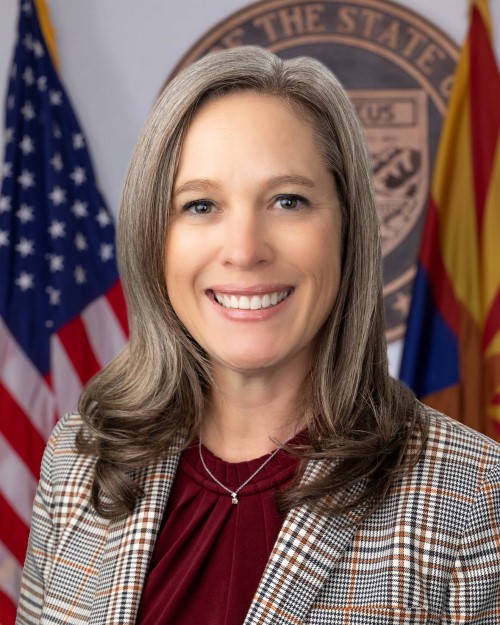
Sen. Shawnna Bolick
Sponsored bills
Maddy summarySB 1104 requires Arizona law enforcement agencies to provide victims of crime with standardized materials detailing their rights and available services. It directly affects victims by ensuring they receive clear information about their rights under Arizona's Victims' Bill of Rights, access to crisis services, domestic violence protections, and how to request case status updates (including a 30-day notification if no arrest is made). Key mechanisms include mandating specific content in victim notification materials, establishing procedures for law enforcement to report victim requests/waivers to probation and prosecutors, and ensuring juvenile case notifications follow consistent timelines. The bill amends Arizona Revised Statutes §8-386 (for juvenile cases) and §13-4405 (for all criminal offenses) to standardize these victim notification processes.
Maddy summarySB 1660 creates a new fee for individuals convicted of sex offenses, requiring courts to order payments ranging from $200 for misdemeanors to $2,000 for serious felonies. The collected funds will be deposited into a dedicated "sex offender surcharge fund" to support related services. The bill also establishes a new "sex offender management board" with diverse members (including judges, mental health professionals, law enforcement, victims' advocates, and county representatives) tasked with developing standardized evaluation procedures, treatment recommendations, and safety-focused intervention methods for both adult and juvenile offenders. The board must prioritize victim safety and use evidence-based approaches in its work. This bill passed the Arizona legislature on March 13, 2025.
Maddy summaryArizona's SCR 1027 (a proposed law requiring voter approval) prohibits foreign nationals from funding election administration or ballot measure activities. It requires vendors providing election services to certify they receive no foreign donations (with annual updates), and mandates government entities to report these vendors quarterly. Violations can lead to contract termination, misdemeanor charges ($5,000+ penalties for intentional violations), or civil lawsuits by citizens seeking $1,000/day in damages until compliance. The bill directly affects election vendors, ballot initiative committees, and local governments handling election services. It applies to all election-related spending, excluding "common goods" like standard office supplies.
Maddy summarySB 1227 establishes a state-funded school safety program in Arizona to support safe learning environments. It specifically allows school districts and charter schools to apply for funding to implement policies limiting cell phone use in classrooms, alongside funding for school resource officers, counselors, and social workers. Schools must submit detailed proposals describing safety needs, implementation plans, and cost breakdowns for cell phone policies. Approved programs receive state funds for up to three years, with annual reporting on effectiveness and impact. The program is administered by the Arizona Department of Education, which reviews proposals using safety data and verifies school applications.
Maddy summarySB 1506 requires Arizona's Department of Corrections to post all statutorily required reports, forms, plans, and summaries on its public website. This replaces physical submissions to relevant entities, as posting online will be treated as if the department had formally submitted the documents. The director must notify those entities when the information is posted online. The bill directly affects the Department of Corrections and the government entities that receive these reports, streamlining reporting through digital access.
Maddy summarySB 1105 regulates where nonprofit medical marijuana dispensaries can operate in Arizona. It requires dispensaries to avoid locations within 500 feet of schools, child care facilities, or preschools and limits their density based on pharmacy numbers (max one dispensary per ten pharmacies, with exceptions for county coverage). Local governments can set zoning rules but cannot impose stricter restrictions than this law or prohibit dispensaries without justification. The bill applies to all new dispensary registrations and licenses issued after its effective date.
Maddy summarySB 1229 prohibits Arizona municipalities with over 70,000 residents from restricting home buyers' design choices or imposing certain development rules. It bans local requirements for shared amenities (like community pools), screening walls/fences, minimum lot sizes over 3,000 sq. ft. for new single-family homes, larger home size standards than other housing types, and excessive building setbacks (e.g., front setbacks over 10 feet, except for garages). The law directly affects home buyers, developers, and homeowners in qualifying cities by overriding local zoning and design regulations, while exempting building/fire codes, tribal land, and military zones. It applies only to new developments after the law’s effective date and does not affect existing housing or require municipalities to waive utility or safety standards.
Maddy summarySB 1234 amends Arizona's animal cruelty law to explicitly prohibit failing to provide necessary medical care to prevent unreasonable suffering in domestic animals under a person's custody. It directly affects pet owners, breeders, and anyone responsible for domestic animals. The key change adds a specific violation for "intentionally, knowingly or recklessly fails to provide medical attention necessary to prevent unreasonable suffering." Violations range from class 1 misdemeanors (for neglect) to class 5 or 6 felonies (for severe harm or killing), with penalties including compensation for service animal replacement costs.
Maddy summarySB 1627 requires Arizona state agencies to submit federal guidance, interpretations, or directives about implementing federal rules to legislative leaders within 30 days of receipt and post these materials on their websites. It directly affects all Arizona state agencies responsible for implementing federal programs. The key provision mandates this transparency process to ensure legislative oversight of how federal rule guidance is handled within the state, changing the statutory chapter title to reflect this focus on federal rule implementation. The bill passed the Arizona legislature in early March 2025.