

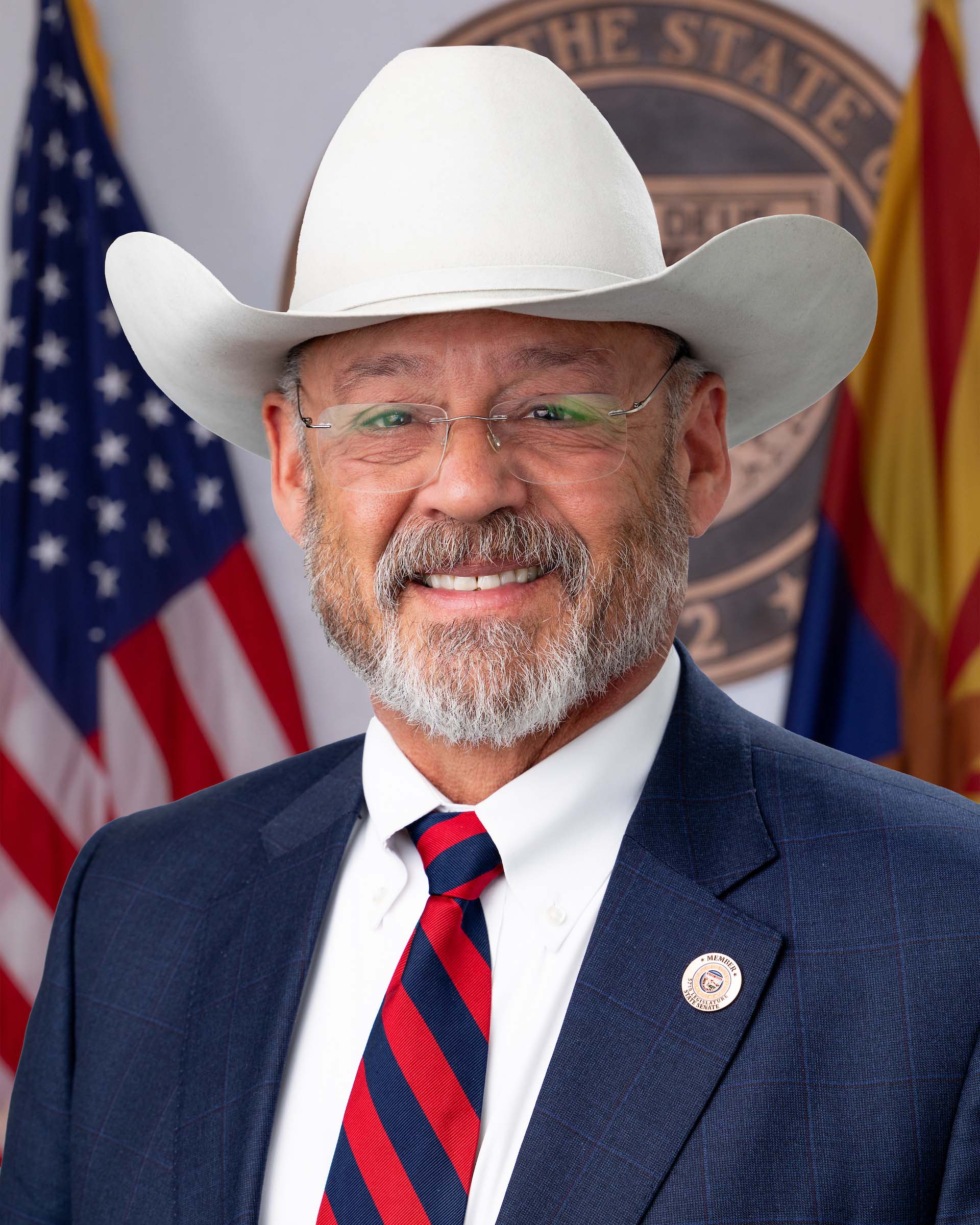
Photo of Mark Finchem
R Arizona Senate · District 1 On the 2026 ballot

Sen. Mark Finchem

Compare
Total votes
4,578
all sessions
Attendance
97%
116 missed
Near the chamber average
With party
94%
of cast votes
Near the chamber average
Bipartisan score
4%
crosses aisle rarely
Near the chamber average
Sponsored
447
bills & resolutions
Near the chamber average
Committees
6
assignments
447 bills and resolutions

Sponsored bills

Total
447
Primary
176
Co-sponsor
271
This page
447
matching current filters
Primary SB 1064
Vetoed · Arizona Senate · Lead sponsor
voting; equipment; internet; custody; violation

Maddy summarySB 1064 establishes security requirements for voting equipment in Arizona elections, prohibiting internet access, remote connectivity, and unauthorized data access in all voting machines, tabulating devices, and counting center equipment. The bill mandates tamper-proof seals on accessible ports, detailed chain-of-custody logs for equipment handling, and nonstop video recording at counting centers that must be posted online. Violations of these rules are classified as class 1 misdemeanors. These provisions apply to all voting equipment used in federal, state, and county elections, aiming to prevent tampering and ensure election integrity.

Vetoed May 12, 2025 0 co-sponsors
Primary SB 1373
Vetoed · Arizona Senate · Lead sponsor
digital assets strategic reserve fund

Maddy summarySB 1373 establishes Arizona's Digital Assets Strategic Reserve Fund to hold digital assets seized by the state (like cryptocurrency from criminal cases) and state appropriations. The fund requires strict custody rules: assets must be stored via secure solutions meeting specific technical standards (e.g., no smartphone access, two geographically separate data centers, regular security audits). The state treasurer may invest no more than 10% of the fund's value annually and can loan assets to generate returns without increasing state financial risk. The bill was passed by the legislature in May 2025 but vetoed by the Governor on May 12, 2025, so it is not currently law.

Vetoed May 12, 2025 0 co-sponsors
Co-sponsor SB 1586
Vetoed · Arizona Senate · Co-sponsor
gender transition procedures; provider liability

Maddy summarySB 1586 creates strict liability for healthcare providers who perform gender transition procedures on minors in Arizona. It requires providers to cover all costs of subsequent detransition procedures (reversing gender transition care) for 25 years after treatment begins, and allows minors to sue for medical expenses, damages, and attorney fees up to age 26. The bill prohibits providers from using contracts to waive this liability, stating such waivers violate public policy. The legislation was passed by the Arizona legislature in May 2025 but was vetoed by the governor on May 12, 2025, preventing it from becoming law.

Vetoed May 12, 2025 1 co-sponsor
Co-sponsor SB 1268
Vetoed · Arizona Senate · Co-sponsor
hospitals; patient immigration status; reporting

Maddy summarySB 1268 requires Arizona hospitals to add a question on patient admission forms asking whether individuals are U.S. citizens, lawfully present, or not lawfully present in the U.S. Patients must be informed their response won't affect care or be shared with immigration authorities. Hospitals must submit quarterly reports to the state on admission numbers by immigration status category, and the state must annually report to lawmakers on costs of uncompensated care for undocumented patients and its impact on hospital services. The bill was passed by the legislature in May 2025 but was vetoed by the governor on May 12, 2025, so it did not become law.

Vetoed May 12, 2025 1 co-sponsor
Co-sponsor SB 1591
Vetoed · Arizona Senate · Co-sponsor
concealed weapons permits; fees

Maddy summarySB 1591 modifies Arizona's concealed weapons permit process by exempting state residents from application fees while requiring non-residents to pay a reasonable fee. It outlines specific eligibility requirements, including age, residency, criminal history checks, and proof of firearm competency, and specifies that permits are valid for five years (with extensions for military members deployed overseas). The bill also details procedures for permit suspension upon arrest for qualifying offenses and civil penalties for failing to present a permit during a law enforcement stop. The legislation was passed by the Arizona legislature on May 6, 2025, but was vetoed by the Governor on May 12, 2025, preventing it from becoming law.

Vetoed May 12, 2025 1 co-sponsor
Primary SB 1435
Vetoed · Arizona Senate · Lead sponsor
attorney discipline investigations; costs

Maddy summarySB 1435 requires the State Bar of Arizona to cover certain costs when an attorney wins a discipline case. It directly affects attorneys who are cleared of discipline charges, ensuring they receive reimbursement for attorney fees, lost wages during the investigation and appeal process, and court costs. The bill mandates the State Bar pay these expenses instead of the attorney bearing them. This applies to all stages of the discipline process, including investigations, hearings, and any court litigation or appeals.

Vetoed May 12, 2025 0 co-sponsors
Co-sponsor HB 2099
Vetoed · Arizona House · Co-sponsor
governor; attorney general; duties; immigration

Maddy summaryHB 2099 requires Arizona cities, towns, and counties to enforce, administer, and cooperate with federal immigration enforcement actions. It also adds a similar duty for the governor to work with federal immigration authorities. The law would expire on January 19, 2029, and does not create new immigration enforcement powers but mandates state/local coordination with federal programs. The bill was passed by the legislature in April 2025 but vetoed by the governor on May 2, 2025.

Vetoed May 2, 2025 1 co-sponsor
Primary SB 1375
Vetoed · Arizona Senate · Lead sponsor
voter registration rolls; internet access

Maddy summarySB 1375 amends Arizona voter registration laws to require county recorders to publicly report the number of registered voters who did not provide citizenship proof when registering, and to post this data on their websites. It mandates that county recorders electronically share detailed voter lists - including names, addresses, voting history, and early ballot data - with political parties via standardized digital formats. The bill specifies exactly which voter information parties may receive (e.g., party preference, birth year, voting history) and sets deadlines for delivering this data. The bill passed the Arizona legislature in April 2025 but was vetoed by the governor on May 2, 2025. (Note: The bill title's reference to "internet access" is misleading; it concerns voter data reporting, not internet access policies.)

Vetoed May 2, 2025 0 co-sponsors
Primary SB 1280
Vetoed · Arizona Senate · Lead sponsor
cast vote record; public record

Maddy summarySB 1280 requires Arizona county recorders to send unaltered electronic "cast vote records" (anonymized ballot data showing voter selections without identifying voters) to the secretary of state within 48 hours after county canvassing. For precincts with fewer than 25 registered voters, only voter counts - not individual records - must be transmitted. The bill designates these records as public records, ensuring transparency while preventing randomization or alteration of original files. The bill passed the legislature in April 2025 but was vetoed by the governor on May 2, 2025, so it is not currently law.

Vetoed May 2, 2025 0 co-sponsors
Primary SB 1296
Vetoed · Arizona Senate · Lead sponsor
unemployment benefits; requirements; disqualifications; determinations

Maddy summarySB 1296 amends Arizona's unemployment benefit laws to clarify when benefits can be denied for failing to accept suitable work or actively seek employment. It defines "suitable work" as positions paying at least the weekly benefit amount plus supplemental benefits and meeting state minimum wage standards. The bill also strengthens requirements for employers using Arizona's shared work program (reducing hours instead of laying off workers), mandating detailed plans about wage continuity, benefits, and layoffs avoided. These changes would directly affect unemployed workers seeking benefits and employers participating in shared work programs. The bill passed the legislature in April 2025 but was vetoed by the Governor on May 2, 2025.

Vetoed May 2, 2025 0 co-sponsors
Showing 91 to 100 of 447 bills
Previous 1 … 9 10 11 … 45 Next