

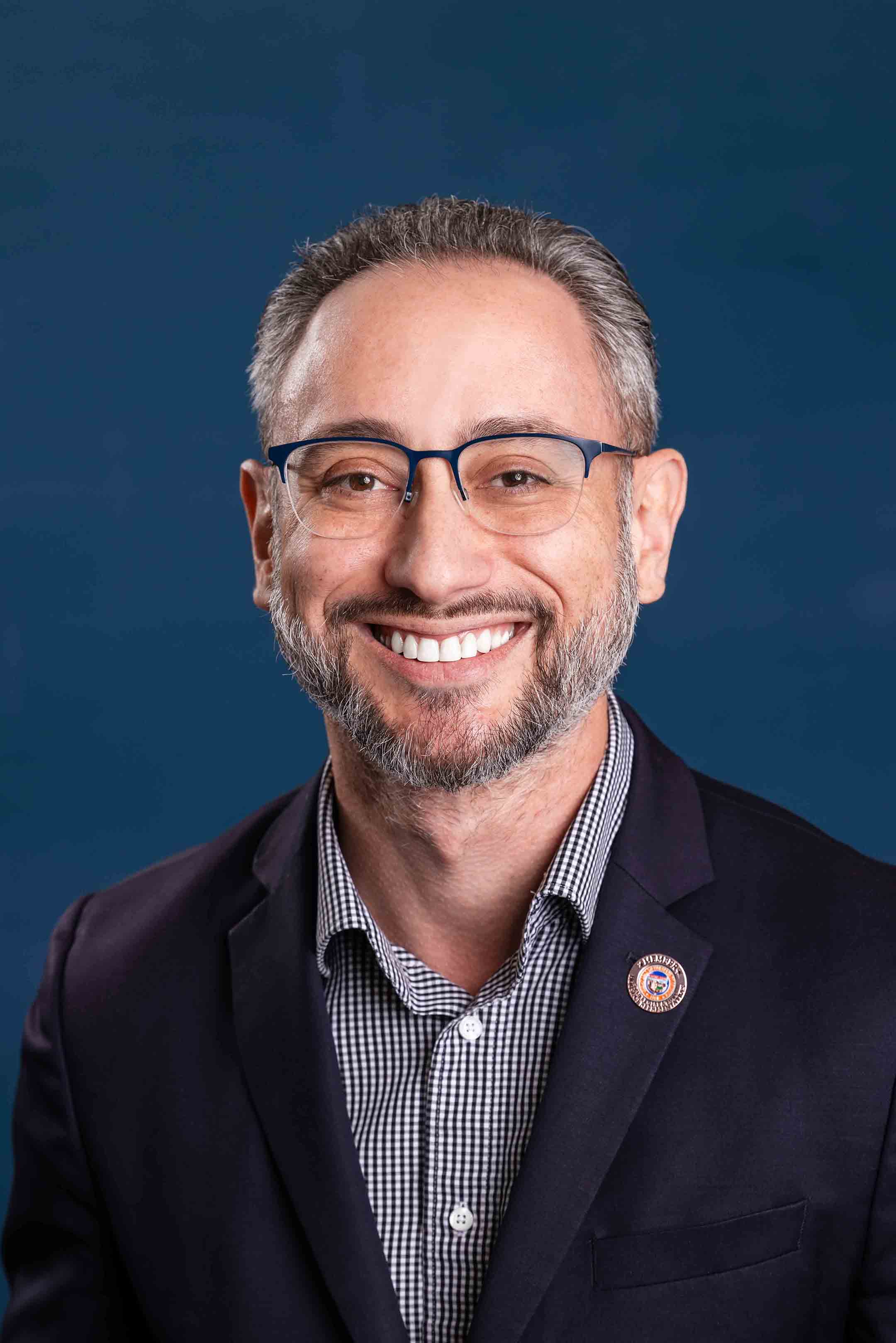
Photo of Seth Blattman
D Arizona House · District 9

Rep. Seth Blattman

Compare
Total votes
2,940
all sessions
Attendance
75%
729 missed
Lower than 99% of chamber peers
With party
93%
of cast votes
Near the chamber average
Bipartisan score
6%
crosses aisle rarely
Near the chamber average
Sponsored
270
bills & resolutions
Near the chamber average
Committees
3
assignments
270 bills and resolutions

Sponsored bills

Total
270
Primary
29
Co-sponsor
241
This page
270
matching current filters
Co-sponsor HB 2316
Introduced · Arizona House · Co-sponsor
middle school students; CTE courses

Maddy summaryHB 2316 allows Arizona middle schools (grades 6-8) to offer career technical education (CTE) courses that count toward both 8th-grade promotion and high school graduation. Schools must partner with approved CTE providers like community colleges or state-approved programs, and students must pass courses to earn credit. The bill requires schools to report course offerings and completions annually, with a final report due by 2029, and expires in 2037. It permits CTE districts to fund middle school CTE courses without raising property taxes but prohibits counting middle school students in district enrollment totals.

Introduced Jan 21, 2026 1 co-sponsor
Co-sponsor HB 2295
Introduced · Arizona House · Co-sponsor
minimum wage increase

Maddy summaryHB 2295 raises Arizona's minimum wage to $18 per hour by January 1, 2027, with scheduled increases from $10 in 2017 up to $12 in 2020. After 2020, the wage will automatically adjust annually based on the Consumer Price Index (measuring cost-of-living changes) to maintain its value. The bill also allows employers to pay tipped workers a base wage up to $3 less per hour, provided total tips plus wages meet the minimum wage requirement. This applies to most hourly workers in Arizona covered by state minimum wage law, including those in restaurants and service industries. The bill requires a three-fourths legislative vote to take effect.

Introduced Jan 21, 2026 1 co-sponsor
Co-sponsor HB 2301
Introduced · Arizona House · Co-sponsor
pricing; emergency; enforcement; attorney general.

Maddy summaryHB 2301 prohibits businesses from charging more than 10% above pre-emergency prices for essential goods (like food, water, medical supplies, and rent) during a declared state of emergency. It classifies violations as felonies: selling over $500 worth of such goods in 24 hours during an emergency is a class 5 felony, while under $500 is a class 6 felony. The Arizona Attorney General is authorized to investigate and enforce these rules under existing consumer protection laws. This bill directly affects businesses selling essential commodities during emergencies, not the general public.

Introduced Jan 21, 2026 1 co-sponsor
Co-sponsor HB 2302
Introduced · Arizona House · Co-sponsor
student loan servicers; licensure

Maddy summaryHB 2302 requires student loan servicers operating in Arizona to obtain a state license, with exemptions for banks, credit unions, and their wholly-owned subsidiaries. It establishes a Student Loan Ombudsman to handle borrower complaints, provide education on loan terms (including repayment options and forgiveness), and compile complaint data. The licensing process mandates application fees ($1,800 total), financial disclosures, background checks, and proof of financial stability to ensure servicers operate fairly. The ombudsman must also create a mandatory borrower education course by October 1, 2026, covering key loan terms and rights. This bill directly affects student loan servicers and borrowers in Arizona by setting licensing standards and improving complaint resolution.

Introduced Jan 21, 2026 1 co-sponsor
Co-sponsor HB 2581
Introduced · Arizona House · Co-sponsor
health insurance claims; consumer assistance

Maddy summaryHB 2581 establishes a state-run health care claims consumer assistance program within Arizona's Department of Insurance to help individuals enrolled in or seeking health insurance plans. The program assists consumers with filing complaints, appeals, and resolving disputed claims against health insurers. Key provisions require insurers to pay double the amount of any wrongfully denied or underpaid claim (including attorney fees) and face civil penalties of at least $25,000 per violation for repeated denials. Insurers must report denial data to the department, and the department must publish annual public reports detailing claim denials, wrongful denials, and enforcement actions by insurer.

Introduced Jan 21, 2026 1 co-sponsor
Co-sponsor HB 2466
Introduced · Arizona House · Co-sponsor
employment; labor standards; meal breaks

Maddy summaryArizona's HB 2466 requires most Arizona employers to provide employees with specific break and pay protections. It mandates a 30-minute unpaid meal break after 5 hours of work (and an additional break after 12 hours), a paid 10-minute rest break every 4 hours, and extra pay rates: 1.5 times the regular wage for hours worked beyond 8 but not exceeding 12 in a day or for the first 8 hours on the seventh consecutive workday, and double the regular wage for hours beyond 12 in a day or beyond 8 hours on the seventh consecutive workday. The law applies to employers with annual sales of $100,000 or more or those engaged in interstate commerce, aligning with federal labor standards. This directly affects hourly workers and employers across Arizona who fall under these thresholds.

Introduced Jan 21, 2026 1 co-sponsor
Co-sponsor HB 2468
Introduced · Arizona House · Co-sponsor
peace pole monument; governmental mall

Maddy summaryHB 2468 authorizes placing a Rotary International peace pole monument in a designated area of Arizona's governmental mall. The bill requires Rotary International to cover all costs for fundraising, design, and construction - state funds cannot be used, and the government cannot facilitate fundraising. It also specifies the monument authorization expires on September 30, 2029. This is a procedural bill focused on monument placement with clear funding restrictions and a sunset date.

Introduced Jan 21, 2026 1 co-sponsor
Co-sponsor HB 2299
Introduced · Arizona House · Co-sponsor
price tags; unfair pricing; penalties

Maddy summaryHB 2299 requires Arizona businesses to include all mandatory fees in advertised prices and clearly explain refund processes on receipts. It prohibits digital shelf labels (like remote-updating price tags) and limits price increases to 10% during a governor-declared state of emergency. Businesses violating these rules face civil penalties up to $5,000, with the Attorney General empowered to enforce compliance. The law directly affects retailers and service providers selling goods or services in Arizona, focusing on transparent pricing and preventing sudden cost hikes during emergencies.

Introduced Jan 21, 2026 1 co-sponsor
Co-sponsor HB 2475
Introduced · Arizona House · Co-sponsor
law enforcement; face coverings; prohibition

Maddy summaryHB 2475 prohibits Arizona law enforcement officers from wearing face coverings that conceal their face while on duty, directly affecting all police departments, sheriff's offices, and state law enforcement agencies. It requires each agency to create and publicly post a policy restricting face coverings to specific exceptions: active undercover work (with authorization), tactical operations requiring protective gear, or special weapons teams during active duties. The bill explicitly excludes clear masks, medical masks, safety gear for hazardous conditions, and motorcycle helmets from the prohibition. This law aims to increase officer visibility and public trust during routine interactions.

Introduced Jan 21, 2026 1 co-sponsor
Co-sponsor HB 2578
Introduced · Arizona House · Co-sponsor
failure to secure weapon; minor

Maddy summaryHB 2578 amends Arizona law to add a new provision (Section 13-3102, subsection 17) making it a crime for an adult to fail to take reasonable measures to prevent a minor from accessing a firearm. This directly affects parents, guardians, or anyone responsible for minors who have firearms in their care. The key mechanism requires adults to secure weapons so minors cannot access them, with penalties for negligence in this duty. The law does not prohibit firearm ownership but targets preventable access by children through specific safety measures. (This summary focuses solely on the policy change described in the bill text.)

Introduced Jan 21, 2026 1 co-sponsor
Showing 51 to 60 of 270 bills
Previous 1 5 6 7 27 Next