

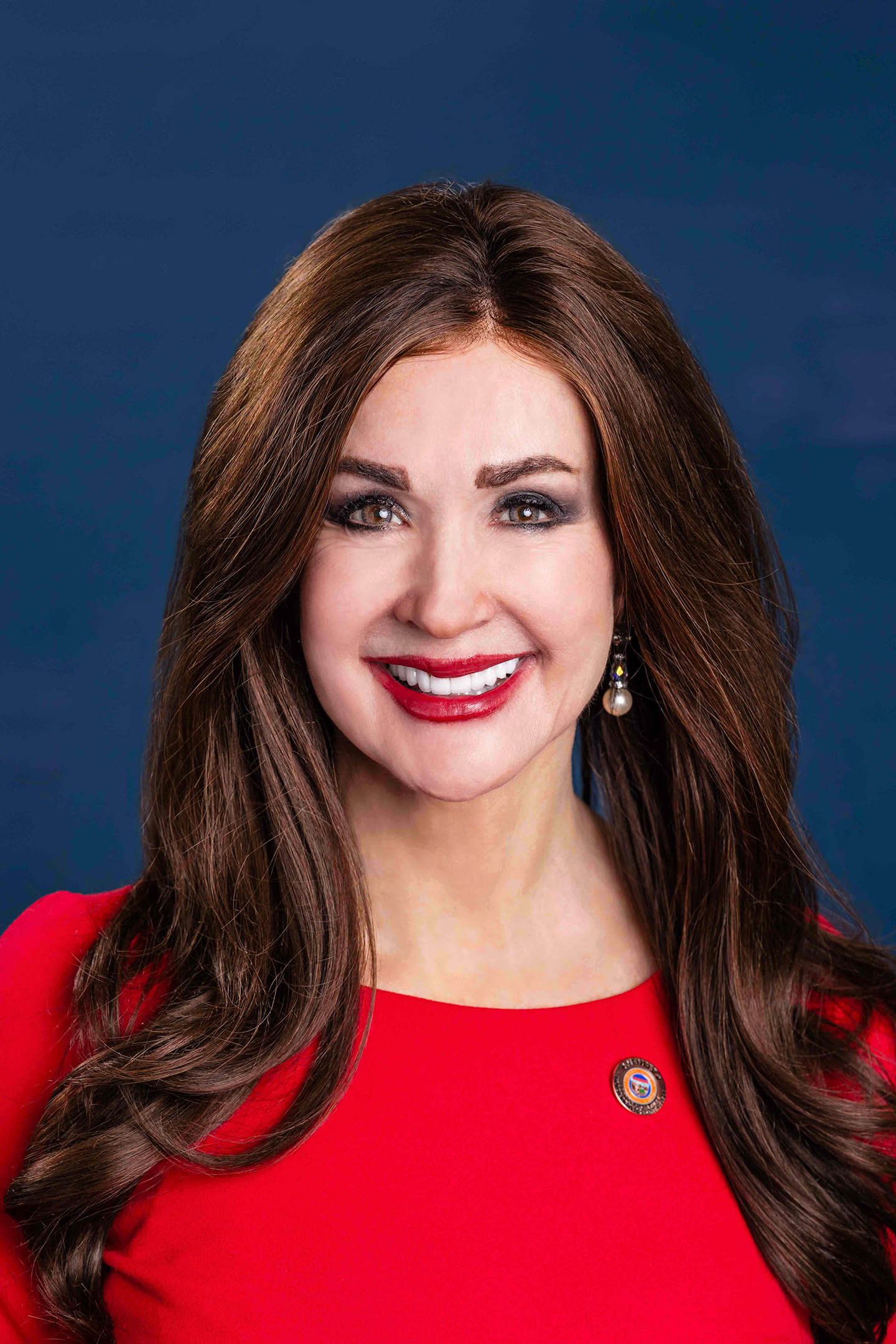
Photo of Pamela Carter
R Arizona House · District 4 On the 2026 ballot

Rep. Pamela Carter

Compare
Total votes
1,672
all sessions
Attendance
99%
16 missed
Near the chamber average
With party
93%
of cast votes
Near the chamber average
Bipartisan score
6%
crosses aisle rarely
Near the chamber average
Sponsored
109
bills & resolutions
Lower than 80% of chamber peers
Committees
3
assignments
109 bills and resolutions

Sponsored bills

Total
109
Primary
20
Co-sponsor
89
This page
109
matching current filters
Co-sponsor HB 2552
Passed · Arizona House · Co-sponsor
dogs; hunting; rules; prohibition

Maddy summaryHB 2552 amends Arizona wildlife laws to explicitly prohibit rules that would ban the use of dogs for hunting. It directly affects hunters using dogs and wildlife management commissions by requiring that commission rules "shall not prohibit the use of dogs to take wildlife." The bill adds a new requirement for the commission to consider economic impacts on resource-dependent communities when making wildlife management policies. Key provisions include clarifying that hunters may legally use dogs to take wildlife and mandating that economic impact assessments be part of rulemaking processes.

Passed Mar 4, 2025 1 co-sponsor
Co-sponsor HCR 2014
Introduced · Arizona House · Co-sponsor
house of representatives; designated seats

Maddy summaryHCR 2014 is a proposed constitutional amendment that would change how Arizona's House of Representatives seats are designated and establish an independent redistricting commission. Starting in 2027, each legislative district would elect two representatives whose seats would be labeled "A" and "B" based on the alphabetical order of their names (surname then first name), requiring candidates to run for a specific seat. It also creates a five-member independent redistricting commission with strict rules to ensure political balance (no more than two members from the same party) and requires members to have been registered voters for at least three years without recent political office or lobbying roles. This amendment must be approved by Arizona voters to take effect.

Introduced Feb 25, 2025 1 co-sponsor
Primary HB 2930
In committee · Arizona House · Lead sponsor
DPS; ballistic shield fund; appropriation

Maddy summaryHB 2930 creates a state fund to help county sheriffs' departments and municipal police departments purchase ballistic shields that protect against high-powered firearms. Law enforcement agencies receiving funds must contribute a 50% match from their own resources. The bill appropriates $2 million from the state general fund for fiscal year 2025-2026, with the funds continuously available to avoid expiration under standard appropriation rules. This directly affects local law enforcement agencies that employ certified peace officers in Arizona.

In committee Feb 20, 2025 0 co-sponsors
Co-sponsor HCR 2060
Introduced · Arizona House · Co-sponsor
open primaries; repeal

Maddy summaryHCR 2060 proposes repealing Arizona's current open primary system by amending the state constitution. It would eliminate the provision allowing voters registered as "no party preference" or independents to vote in any political party's primary election. If approved by voters, this change would restrict primary voting to only registered members of the party holding that primary. The bill is currently in early legislative stages (House first and second readings) and requires voter approval to take effect.

Introduced Feb 13, 2025 1 co-sponsor
Primary HCM 2016
Introduced · Arizona House · Lead sponsor
Palo Verde; urging support

Maddy summaryHCM 2016 is a symbolic resolution (not a binding bill) passed by the Arizona House of Representatives. It urges the U.S. Congress to support the Palo Verde Generating Station, Arizona's largest nuclear power plant, highlighting its role as a major clean energy source (supplying 70% of Arizona's carbon-free energy), economic contributor ($2.3 billion annual impact), and employer (2,000+ full-time workers). The resolution cites the plant's use of recycled water, lower costs compared to solar, and public support for nuclear energy (56% in a 2024 survey) to make its case. It does not create new policy but requests congressional recognition and support for the facility.

Introduced Feb 13, 2025 0 co-sponsors
Primary HB 2929
Introduced · Arizona House · Lead sponsor
missing children; cellular; location disclosure

Maddy summaryHB 2929 requires Arizona law enforcement agencies to report missing, kidnapped, or runaway children to state and national databases within two hours, including photos and details, and update records within 30 days. It specifically mandates that cellular carriers must share a child’s location data (if under 18) with police when there’s reasonable suspicion the child is in danger and a parent recently made an emergency 911 call. The bill directly affects law enforcement agencies, cellular carriers, and children under 18 reported missing, particularly those in foster care who trigger additional notifications to the National Center for Missing and Exploited Children. Key provisions include streamlined data sharing for faster searches and legal protection for carriers who comply. This law aims to improve response times for missing minors using existing emergency communication channels.

Introduced Feb 13, 2025 0 co-sponsors
Co-sponsor HB 2822
Introduced · Arizona House · Co-sponsor
nongovernmental organizations; contracts; transparency

Maddy summaryHB 2822 requires nongovernmental organizations (NGOs) in Arizona that receive state contracts and operate near the state's international border to submit quarterly financial reports. These reports must detail all funding sources (including private, federal, and state money) and all expenditures related to the state contract. The bill directly affects border-area NGOs receiving state contracts, mandating transparency to the Senate President and House Speaker. It does not change how contracts are awarded but adds specific reporting obligations for these organizations. The bill is currently in early legislative stages (first and second reading in February 2025).

Introduced Feb 12, 2025 1 co-sponsor
Co-sponsor HB 2870
Introduced · Arizona House · Co-sponsor
law enforcement agencies; applicants; summary

Maddy summaryHB 2870 requires Arizona law enforcement agencies (including police departments, sheriff's offices, and public safety departments) to provide written explanations to job applicants who were not hired or advanced in the hiring process. The summary must detail specific reasons, such as concerning background information, physical fitness test failures, medical concerns from exams, polygraph results, or psychological exam issues. This bill directly affects applicants whose hiring was denied or delayed by these agencies. It aims to increase transparency in hiring decisions by standardizing the information provided to applicants. The bill is currently in early legislative stages (House first and second readings).

Introduced Feb 12, 2025 1 co-sponsor
Co-sponsor SB 1686
Introduced · Arizona Senate · Co-sponsor
election duties; county recorders

Maddy summarySB 1686 clarifies that the county recorder is the "officer in charge of elections" for Arizona counties, directly affecting county election officials. It updates rules for establishing election precinct boundaries and designating polling places, requiring county recorders to set boundaries by October 1 before elections and follow specific guidelines for combining precincts or using voting centers. The bill also mandates that public schools must provide space for polling places unless principals deny requests with written reasons like lack of space or safety concerns. These changes aim to standardize election administration procedures for county recorders managing polling locations.

Introduced Feb 11, 2025 1 co-sponsor
Co-sponsor HB 2766
Introduced · Arizona House · Co-sponsor
municipal tax; exemption; food

Maddy summaryHB 2766 requires Arizona cities and towns to apply municipal sales taxes uniformly to all food items (without differential rates), while exempting most food for home consumption, food packaging, and sales paid with SNAP benefits. It specifically excludes candy, confectionaries, soft drinks, and soda from the general food exemption, ensuring these remain taxable. The bill also exempts low-cost food sales to vulnerable groups (elderly, homeless, disabled) when purchased using SNAP benefits through approved programs. This amendment, effective January 1, 2026, modifies existing tax code to standardize food taxation and expand specific exemptions.

Introduced Feb 11, 2025 1 co-sponsor
Showing 91 to 100 of 109 bills