

Maddy summaryHB 2234 requires Arizona's Department of Transportation to complete a detailed environmental and engineering study (specifically a "Tier 2" assessment) for the proposed Interstate 11 corridor. This bill directly affects the state transportation department, mandating them to finalize this study as a prerequisite for any future I-11 construction. The key provision is the binding requirement for the department to conduct and complete this specific assessment, which evaluates environmental impacts and engineering feasibility. The bill does not fund construction or alter existing plans, only setting a procedural step for the study. (Note: This is a procedural bill, so a concise summary is appropriate.)
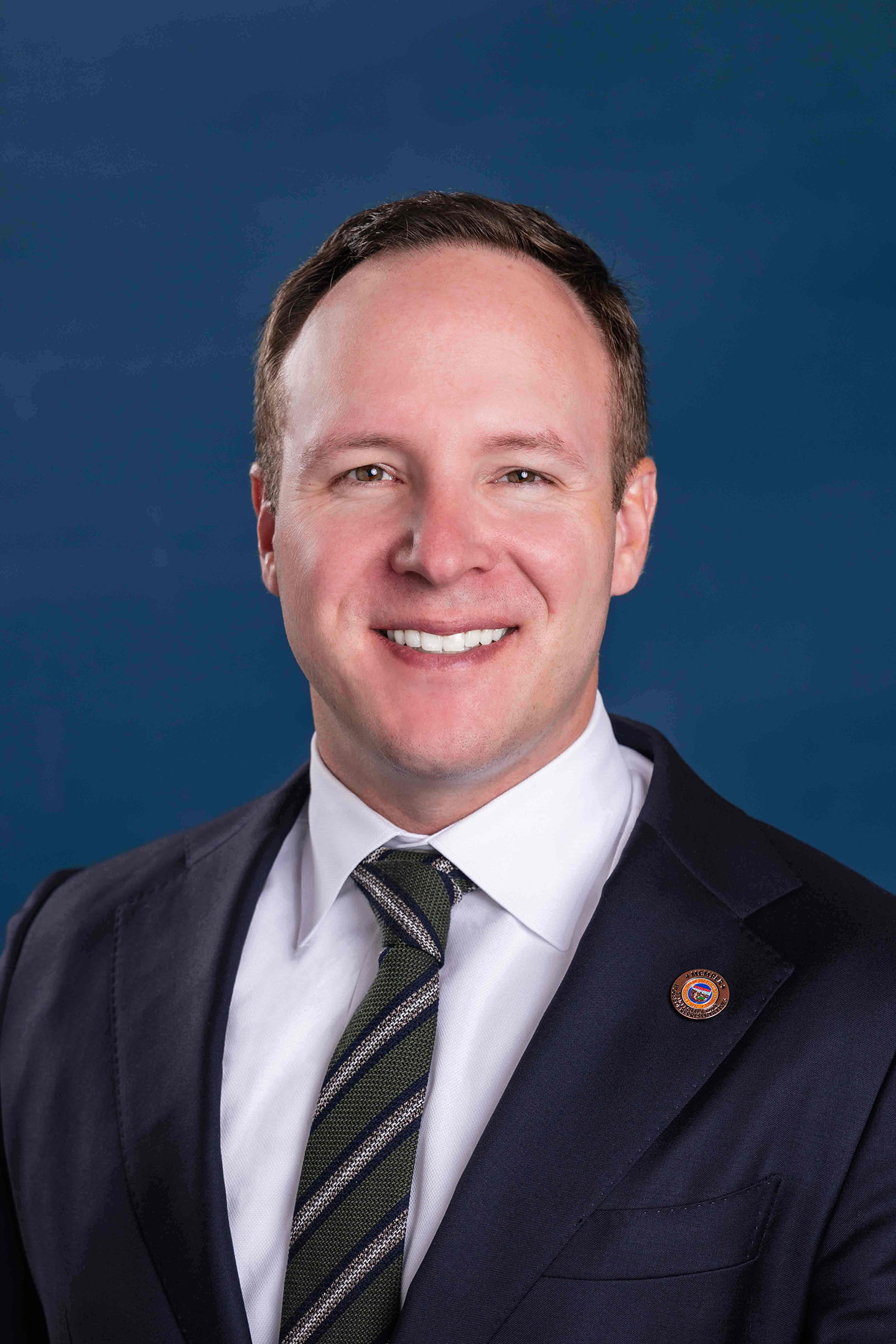
Rep. Matt Gress
Sponsored bills
Maddy summaryHB 2855 declares that drug cartels operating in Arizona are terrorist organizations under state law. It defines "drug cartel" to include groups involved in human smuggling, drug trafficking, or terrorism, and requires the Arizona Department of Homeland Security to address the threat they pose. The bill explicitly states this definition does not affect individuals' claims for asylum under federal law. This legislation aims to empower state agencies to combat border-related criminal activity, based on voter-approved findings about public safety concerns linked to transnational cartels.
Maddy summaryHB 2115 makes it illegal to observe a nude minor solely for the purpose of sexual gratification, classifying this as a class 2 felony. The law directly affects individuals who engage in this conduct, applying to all minors regardless of age. This amendment to Arizona law (Section 13-3553) specifically adds "observing a nude minor for sexual gratification" as a new prohibited act under sexual exploitation of a minor charges.
Maddy summaryHB 2696 prohibits Arizona critical infrastructure providers (including utilities, telecoms, emergency services, and water systems) from using software, equipment, or vendors owned or controlled by foreign adversaries - defined as countries designated under federal law (15 CFR §791.4). It requires replacing existing equipment from federally banned corporations with U.S.-made alternatives by 2025, mandates annual certification to the attorney general, and bans government contracts with prohibited vendors. The law applies to all critical infrastructure service providers and government entities purchasing equipment like routers, modems, or traffic enforcement systems. The attorney general must publish an annual list of banned vendors on their website, starting December 2025.
Maddy summaryHB 2433 requires Arizona county treasurers and chief deputy treasurers to complete 10 hours of annual continuing education, including at least one hour focused on preventing waste, fraud, and abuse. The education must cover specific topics like investment strategies, cybersecurity, cash management, and accounting standards, and must be provided by a county board-approved provider (such as government entities or accredited institutions). The county board of supervisors covers all costs, and officials must submit proof of completion by December 31 each year. Failure to comply may result in a civil penalty of up to $500.
Maddy summaryHB 2434 amends Arizona law to require charter school applicants and staff with direct student contact to undergo background checks. It mandates that all applicants submit full fingerprints for criminal records checks before a charter is issued, and requires teachers, administrators, and school governing body members to hold valid fingerprint clearance cards. This applies directly to charter school operators, staff, and governing members seeking to establish or work at charter schools in Arizona. The bill focuses on safety screenings rather than emergency response plans, as the title suggests.
Maddy summaryHB 2167 requires Arizona school districts to maintain a uniform system of financial records. If a district fails to comply within 90 days of notice, the state may withhold up to 10% of its state funds until corrected. After 18 months of noncompliance, the state can impose monthly civil penalties equal to 1% of the district's budget, with funds deposited into a school financial transparency fund. This bill directly affects all public school districts in Arizona by establishing clear financial accountability measures and consequences for noncompliance.
Maddy summaryHB 2020 requires Arizona charter schools to publicly post average teacher salaries (current and previous year, including dollar and percentage changes) and teacher counts by subject/grade on their websites. It also mandates the Arizona Department of Education to conduct an annual comprehensive study tracking teacher retention rates, turnover, vacancies, and demographics across all school districts and charter schools, broken down by subject, grade, location, experience level, and certification type. The department must compile the data into a public online dashboard and submit annual reports to state leaders by December 31. This law directly affects charter schools (through salary reporting) and the Department of Education (through the study and reporting requirements). The goal is to increase transparency around teacher compensation and retention patterns statewide.
Maddy summarySB 1442 allocates $25 million from Arizona's state general fund for fiscal year 2025-2026 to fund new or retrofitted secure behavioral health residential facilities. It directly affects licensed facilities serving two specific populations: individuals with serious mental illness who are chronically treatment-resistant (court-ordered under A.R.S. § 36-550.09) or those committed via court order (A.R.S. § 13-4521). Funds must be used solely for facility construction or retrofitting, with recipients required to measure clinical outcomes, independent living skills, program participation, and physical health metrics. Facilities must report these results annually to state leadership, and the appropriation is exempt from standard funding lapsing rules. The bill requires a request for proposals by January 2026, prioritizing facilities that can open within 12 months and meet geographic needs.
Maddy summaryHB 2725 requires Arizona public schools to display U.S. flags (made in the U.S.) and provide Constitution/Bill of Rights copies (also U.S.-made) in classrooms for grades 7-12, and to set aside time daily for students to recite the Pledge of Allegiance. Schools must notify parents if a student skips the Pledge during this designated time. The bill also mandates a 1-2 minute daily moment of silence at the start of each school day for all grades (K-12), with teachers encouraged to discuss its use with parents but not suggesting specific reflections. Private schools, parochial schools, and homeschools are exempt from these requirements.