

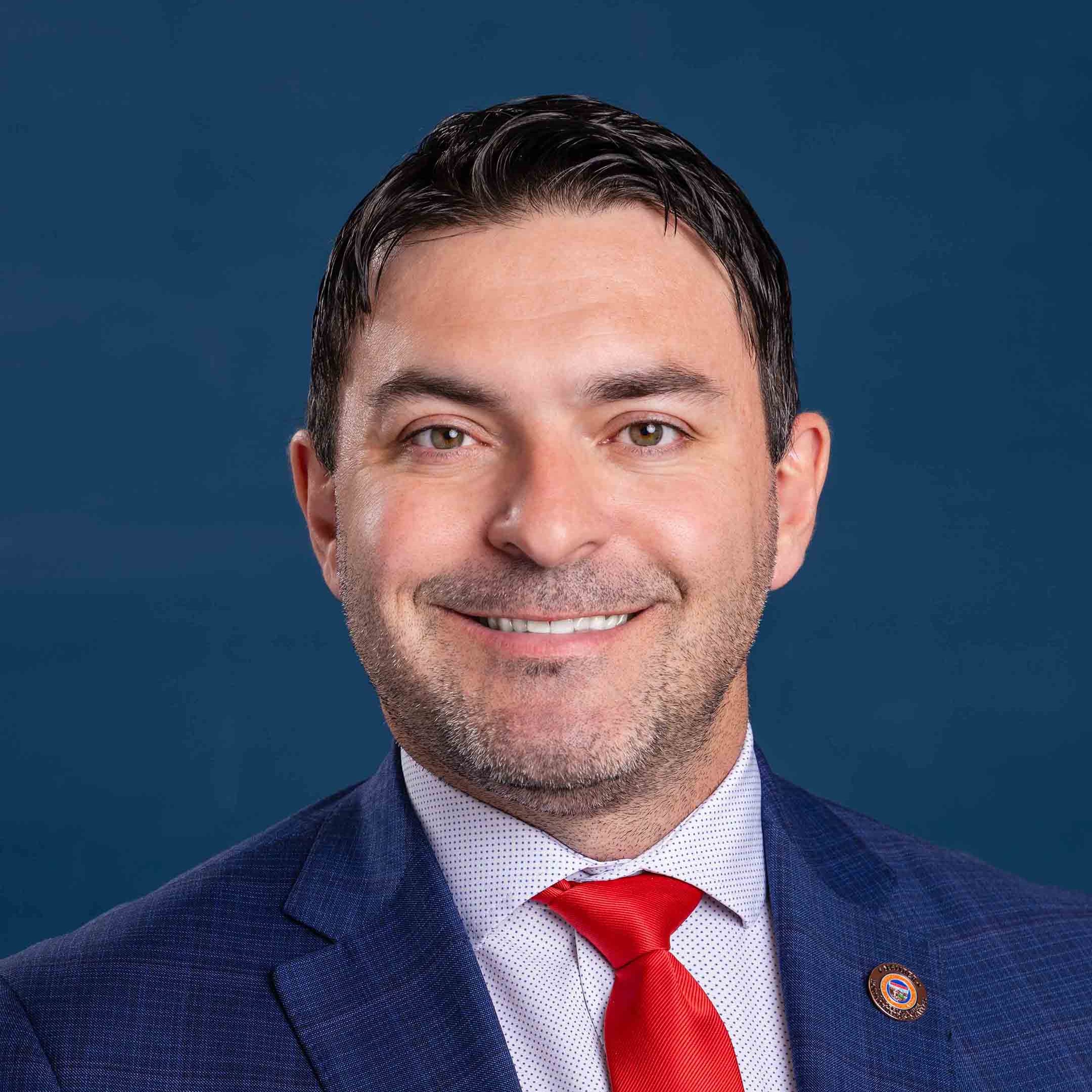
Photo of Leo Biasiucci
R Arizona House · District 30

Rep. Leo Biasiucci

Compare
Total votes
5,339
all sessions
Attendance
98%
115 missed
Near the chamber average
With party
96%
of cast votes
Near the chamber average
Bipartisan score
4%
crosses aisle rarely
Near the chamber average
Sponsored
731
bills & resolutions
Near the chamber average
Committees
4
assignments
731 bills and resolutions

Sponsored bills

Total
731
Primary
175
Co-sponsor
556
This page
731
matching current filters
Co-sponsor HB 2921
Introduced · Arizona House · Co-sponsor
physical education instruction; public schools

Maddy summaryHB 2921 requires Arizona public school districts to provide daily physical education for all K-12 students, with at least 60% of that time spent in moderate activity. The bill mandates instruction including team activities (like dance), career pathways in health/fitness, and skills for lifelong physical activity. Exceptions allow excusal for students on school sports teams (with minimum weekly activity), medical reasons, chronic health conditions, IEP team decisions, or parental requests. It also prohibits outdoor activities during extreme weather, directly affecting all public school students and their districts' physical education programs.

Introduced Jan 29, 2026 1 co-sponsor
Co-sponsor HB 2677
Introduced · Arizona House · Co-sponsor
places of worship; unlawful imprisonment

Maddy summaryHB 2677 amends Arizona law to specifically prohibit preventing someone from entering or exiting a place of worship through physical blocking, detention, or force/threats. This directly affects individuals or entities who obstruct access to religious sites, such as security personnel or others blocking entrances. The bill classifies this act as a class 6 felony (unless the victim is safely released before arrest, making it a misdemeanor), adding it as a specific scenario under unlawful imprisonment. It defines "place of worship" per existing law and clarifies that this provision applies to the specific act of hindering religious access.

Introduced Jan 28, 2026 1 co-sponsor
Co-sponsor HB 2920
Introduced · Arizona House · Co-sponsor
software applications; minors; requirements

Maddy summaryHB 2920 requires app stores operating in Arizona to verify the age of users creating accounts and link accounts of minors (under 18, excluding married/emancipated individuals) to verified parent accounts. App stores must obtain parental permission before minors can download apps, make purchases, or access in-app purchases, and re-verify consent after significant app changes like new ads or in-app purchases. The bill mandates that app stores provide clear disclosures about age ratings, data collection, and privacy practices to parents before granting permission. It directly affects app store providers, minors under 18, and their parents within Arizona, with exemptions for preinstalled apps and core device functions.

Introduced Jan 28, 2026 1 co-sponsor
Primary HB 2259
Introduced · Arizona House · Lead sponsor
TPT; distribution; HURF

Maddy summaryHB 2259 creates a new revenue stream for Arizona's highway fund by directing 10% of transaction tax revenues from businesses leasing or renting public-access electric vehicle (EV) charging stations to the Arizona Highway User Revenue Fund. It directly affects EV charging station operators who provide services accessible to the general public under the state's personal property rental classification. The bill amends tax statutes to specify that this 10% distribution applies to "state transaction privilege tax revenues collected under section 42-5010" from such EV charging rentals. This policy change establishes a dedicated funding source for highway maintenance and improvements without altering existing tax rates or creating new taxes.

Introduced Jan 28, 2026 0 co-sponsors
Co-sponsor HB 2555
Introduced · Arizona House · Co-sponsor
businesses; requirement to accept cash

Maddy summaryHB 2555 requires Arizona retail businesses with physical locations to accept cash for transactions of $100 or less without charging fees or penalties. It directly affects in-person retail stores (excluding online sales) by mandating cash acceptance and creating a legal remedy: customers denied cash payments or charged fees can sue for $1,000 per violation (capped at $5,000 per person), plus attorney fees. The law exempts businesses with pre-agreed written payment terms and online transactions. Damages adjust annually for inflation, but the bill does not apply to digital services or agreements specifying payment methods.

Introduced Jan 27, 2026 1 co-sponsor
Co-sponsor HB 2810
Introduced · Arizona House · Co-sponsor
health education; abortion providers; prohibitions

Maddy summaryHB 2810 prohibits public schools in Arizona from allowing abortion clinics or related entities to provide health education instruction, programs, or materials to students or staff. It specifically bans involvement by abortion providers (including clinics, their controlling entities, or franchised partners) in school health education. Schools failing to comply face potential withholding of state education funding after a 90-day correction period. The law directly affects public schools and their health education programs by restricting partnerships with abortion-related organizations.

Introduced Jan 26, 2026 1 co-sponsor
Primary HB 2840
Introduced · Arizona House · Lead sponsor
schools; nutrition education; physical activity

Maddy summaryHB 2840 requires Arizona public schools and charter schools to provide annual nutrition education for all students from kindergarten through 12th grade. This includes teaching practical healthy eating habits, scientific evidence on diet/exercise, disease prevention, and meal planning skills, with a focus on nutrient-dense foods and the impacts of ultraprocessed foods. The bill also mandates 30 minutes of daily physical activity for all students, allowing options like physical education classes, scheduled breaks, or active classroom time, while permitting medical exemptions. These requirements directly affect all Arizona K-12 schools and their students, aiming to integrate health education into daily school routines.

Introduced Jan 26, 2026 0 co-sponsors
Primary HCR 2017
Introduced · Arizona House · Lead sponsor
property tax; exemption; primary residence

Maddy summaryHCR 2017 is a proposed constitutional amendment that would create a new property tax exemption for Arizona residents aged 62 or older who own their primary residence without a mortgage and have lived there as their main home for at least two years. If approved by voters, this exemption would apply to tax years beginning after December 31, 2026. The amendment would specifically affect seniors meeting these criteria by eliminating property tax liability on their primary residence. This proposal requires voter approval and is not yet law, as it is currently in the early legislative review stages.

Introduced Jan 26, 2026 0 co-sponsors
Primary HB 2393
Introduced · Arizona House · Lead sponsor
alternative products; furnishing underage persons

Maddy summaryHB 2393 prohibits selling or giving tobacco products, alternative nicotine products (like e-cigarettes), vapor products, or related paraphernalia (e.g., hookahs) to anyone under 21 in Arizona. Minors who buy, possess, or falsely claim age to obtain these items face petty offenses with fines starting at $100 or 30 hours of community service. Businesses violating the law face escalating penalties: first violations incur $500-$750 fines plus mandatory education, while repeat offenses can lead to misdemeanor charges, $10,000 fines, or even felony convictions with sales bans. The law exempts religious use of shisha and gifts not intended for minor use.

Introduced Jan 26, 2026 0 co-sponsors
Primary HB 2394
Introduced · Arizona House · Lead sponsor
property tax; residential property

Maddy summaryHB 2394 amends Arizona's property tax code to create new deductions for contractors in the "prime contracting classification," primarily affecting construction businesses and manufactured building dealers. It allows contractors to exclude specific costs from their taxable base, including land sales (up to fair market value), groundwater monitoring equipment, unattached furniture/fixtures, military reuse zone projects (with qualification), environmental cleanup work, and machinery/equipment with "independent functional utility." To claim certain deductions (like military or environmental projects), contractors must obtain a pre-work letter of qualification from the Department of Revenue. This bill does not change tax rates for homeowners but adjusts taxable income for specific contractor activities. The title referencing "residential property" is misleading, as the changes apply to contractor tax calculations, not residential property owners.

Introduced Jan 26, 2026 0 co-sponsors
Showing 71 to 80 of 731 bills
Previous 1 … 7 8 9 … 74 Next