

Maddy summaryThis bill establishes new rules for Arizona's Supplemental Nutrition Assistance Program (SNAP) to improve oversight and limit income thresholds for eligible recipients. It mandates that the state cap gross income limits for certain SNAP applicants at 185% of the federal poverty level and requires the Department of Economic Security to regularly cross-check applicant data with tax records, lottery winnings, and other government databases to verify eligibility. The legislation also sets a target to reduce payment error rates to 3% by 2030, requiring quarterly reports to the legislature and imposing financial penalties on the department if it fails to meet interim goals. Additionally, the bill mandates public reporting on fraud investigations and improper payments while authorizing an independent audit to identify factors contributing to payment errors.
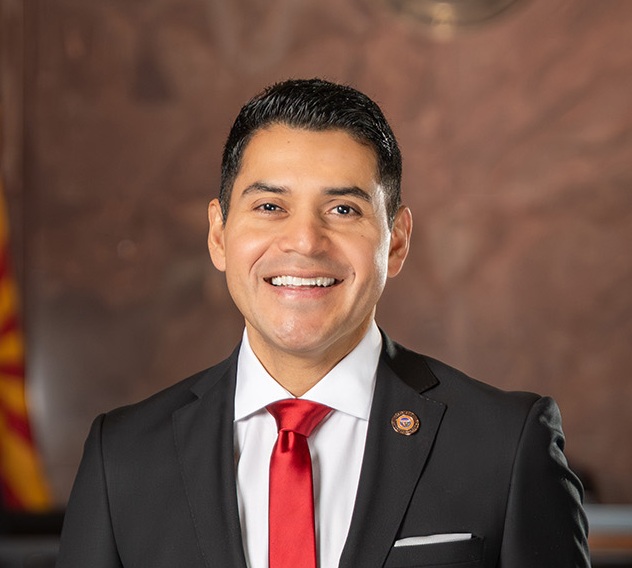
Rep. Steve Montenegro
Sponsored bills
Maddy summaryThis bill, known as the 2026-2027 General Appropriations Act, allocates state funds to various Arizona agencies and departments for the upcoming fiscal year. It directly affects government entities such as the Department of Administration, the State Board of Accountancy, and the Acupuncture Board of Examiners by authorizing specific lump-sum payments and staffing levels. The legislation details how money from different state funds will be used for operations, risk management, technology projects, and assistance to smaller counties for retirement contributions and essential services. Additionally, the bill includes reporting requirements that mandate government officials submit financial and project status updates to legislative committees and the governor by specific deadlines. Although the bill passed the legislature, it was vetoed by the Governor, preventing these specific appropriations from becoming law.
Maddy summaryThis bill allows counties with fewer than 250,000 people to use up to $1.25 million from any revenue source to pay general county bills, even if that money was originally intended for a specific purpose. It applies only to fiscal year 2026-2027 and requires these counties to report to the state budget committee by October 1, 2026, detailing which funds were used for non-intended purposes and how much they plan to use next year. The legislation was passed by the legislature but was vetoed by the Governor.
Maddy summaryThis bill outlines how specific environmental funds in Arizona can be used during the 2026-2027 fiscal year. It allows money from the underground storage tank fund to cover administrative costs and address sewage discharge problems in border areas like Naco. The legislation also permits the use of water banking and water protection funds to pay legal fees and cover departmental administrative expenses. Additionally, it sets a $15 million spending cap for the water quality assurance revolving fund and keeps vehicle emissions testing fees at their 2025 levels. Although the bill passed the legislature, it was vetoed by the Governor.
Maddy summaryThis bill sets specific rental rates for state-owned buildings in Arizona for the 2026-2027 fiscal year, directly affecting entities that lease space from the state. It establishes a rate of $17.87 per square foot for office space and $6.43 per square foot for storage space, overriding previous statutory guidelines. The legislation was passed by the state legislature but was subsequently vetoed by the Governor, preventing it from becoming law.
Maddy summaryThis bill amends Arizona state law to clarify how public funds are distributed to charter schools sponsored by state agencies, universities, or community colleges. It establishes specific rules for calculating financial support, including adjustments for small schools and provisions to prevent double-counting funds if a student is enrolled in both a charter and a traditional public school. Additionally, the legislation requires these schools to revise their student counts and budgets by mid-May and ensures that any grants received for basic operations reduce the state's financial contribution to avoid taxpayer duplication.
Maddy summaryHB 4141 allocates state funds for the 2026-2027 fiscal year to support capital projects across several Arizona departments, including transportation, corrections, and building maintenance. The bill provides $432.663 million to the Department of Transportation for highway construction and planning, while also funding major repairs for state buildings, a veterans' home facility, and facilities for corrections and game and fish departments. It establishes specific reporting requirements for transportation spending and debt levels by November 2026 and includes conditions for spending on the veterans' home project, such as requiring federal funding commitments and site approval.
Maddy summaryArizona's HCR 2043 is a state legislative resolution applying to Congress under Article V of the U.S. Constitution to call a convention proposing term limits for U.S. Congress members. It specifically requests a convention to establish term limits for both House and Senate seats, joining 22 other states that previously sought similar limits but were overruled by the Supreme Court. The resolution states Arizona’s application will be counted toward the two-thirds of states needed to compel Congress to act, aggregating with other states’ identical requests. This is a procedural step by Arizona’s legislature to pressure Congress, not a direct policy change affecting voters or officials.
Maddy summaryHCR 2047 is a symbolic Arizona legislative resolution recognizing the historical and biblical significance of "Judea and Samaria" as the ancestral homeland of the Jewish people. It formally rejects the term "West Bank" as a political construct and mandates that Arizona state government use "Judea and Samaria" in all official communications and documents regarding the territory. The resolution cites biblical references, historical claims, and legal arguments (including the San Remo Resolution and League of Nations Mandate) to support its position. As a concurrent resolution, it has no legal effect on international borders or U.S. policy but reflects Arizona's official stance on terminology. It does not alter any existing laws or policies related to the region.
Maddy summaryArizona's HCM 2002 is a legislative memorial urging the federal government to review whether the Council on American-Islamic Relations (CAIR) meets criteria for a foreign terrorist organization designation under U.S. law. It specifically requests President and Congress conduct a formal review and pass H.R. 4097, the "Designate CAIR as a Terrorist Organization Act," to assess CAIR's ties to terrorism. The memorial directs Arizona's Secretary of State to send this request to federal officials, including the State Department and Treasury. This procedural request does not create new law but seeks federal action based on existing legal mechanisms for terrorism designation. The bill directly affects CAIR's potential federal status and targets the executive and legislative branches for review.