

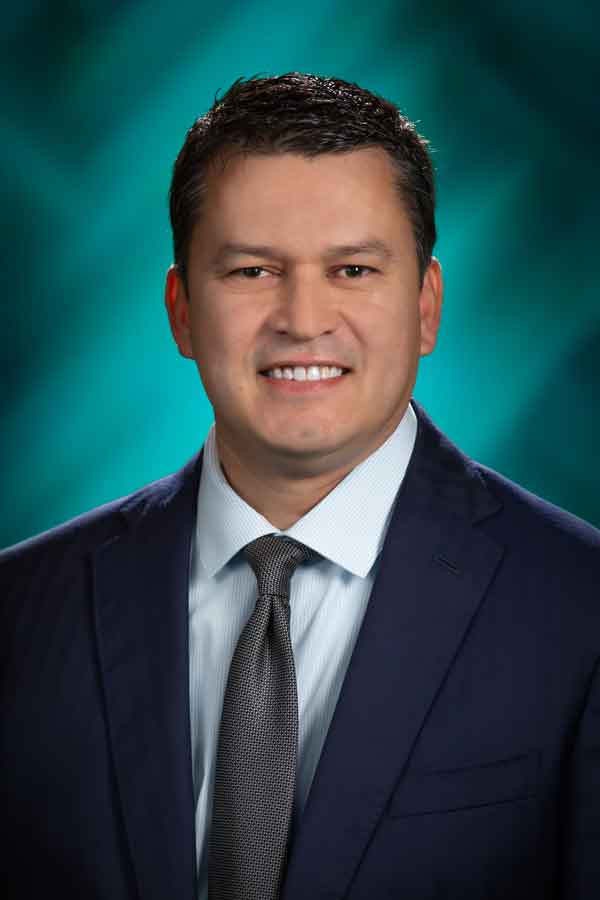
Photo of Tony Rivero
R Arizona House · District 27 On the 2026 ballot

Rep. Tony Rivero

Compare
Total votes
3,209
all sessions
Attendance
95%
172 missed
Near the chamber average
With party
97%
of cast votes
Higher than 82% of chamber peers
Bipartisan score
3%
crosses aisle rarely
Lower than 78% of chamber peers
Sponsored
249
bills & resolutions
Lower than 77% of chamber peers
Committees
2
assignments
249 bills and resolutions

Sponsored bills

Total
249
Primary
76
Co-sponsor
173
This page
249
matching current filters
Co-sponsor HB 2666
Signed into law · Arizona House · Co-sponsor
sexual extortion; classification

Maddy summaryHB 2666 reclassifies threatening to share explicit images or force sexual acts as a felony. It increases penalties based on the victim’s age: a class 3 felony for adults, class 2 for teens aged 15-17 (requiring consecutive sentences with no probation), and class 2 for children under 15. Offenders cannot receive probation, early release, or sentence suspension for these crimes. The bill defines "sexual extortion" as threatening to damage property, harm reputation, or distribute explicit images of the victim.

Signed into law Apr 13, 2026 1 co-sponsor
Co-sponsor HB 4026
Passed · Arizona House · Co-sponsor
public infrastructure improvements; distribution limit

Maddy summaryHB 4026 creates a state-funded program where Arizona cities, towns, and counties receive payments for public infrastructure improvements (like roads or utilities) supporting new or expanding manufacturing facilities. To qualify, manufacturers must certify minimum capital investments ($50 million for smaller counties, $500 million for larger ones) and sign agreements detailing project costs. Payments are capped at 80% of infrastructure costs or annual state tax revenues from qualifying projects, with a yearly maximum of $75 million total. The program requires local governments to return excess funds if payments exceed the cap and ensures funds are used exclusively for infrastructure tied to the manufacturing facility.

Passed Mar 31, 2026 1 co-sponsor
Co-sponsor HB 4109
Passed · Arizona House · Co-sponsor
safety; school procedures; criminal classification

Maddy summaryHB 4109 requires Arizona school districts to adopt specific public safety policies. These policies must clearly outline safety procedures, designate the superintendent as the responsible official, and mandate immediate notification to parents, staff, and law enforcement about life-threatening violence or weapons incidents on school property. School superintendents must confiscate weapons used in such incidents and notify police, while prohibiting retaliation against anyone reporting violations. Failure to comply results in felony charges (class 6 or 4, depending on injury) for superintendents or school board members. The bill directly affects school districts, their leadership, and the safety protocols for students and staff.

Passed Mar 25, 2026 1 co-sponsor
Primary HB 2750
Passed · Arizona House · Lead sponsor
Arizona-Sonora trade commission

Maddy summaryHB 2750 establishes the Arizona-Sonora Trade Commission to strengthen economic ties between Arizona and Sonora, Mexico. The commission, composed of four members appointed by Arizona's legislative leaders (two by the Senate president, two by the House speaker), is tasked with promoting trade, investment, business exchanges, and infrastructure collaboration between the two regions. It must submit annual reports to state lawmakers starting in 2027 and will terminate on July 1, 2031, with all related provisions repealed by January 1, 2032. The bill directly affects Arizona state officials, businesses, and academic institutions engaged in cross-border economic activity with Sonora.

Passed Mar 25, 2026 0 co-sponsors
Co-sponsor HB 2671
Passed · Arizona House · Co-sponsor
chronic felony offenders; juveniles

Maddy summaryHB 2671 changes Arizona's rules for prosecuting juveniles (ages 14-17) as adults, specifically targeting those with prior felony convictions. It requires prosecutors to file notice if a juvenile is a "chronic felony offender" (defined as having two prior felony convictions classified as serious offenses), triggering a court hearing to confirm this status. If confirmed, the juvenile faces adult criminal sentencing; if not, the case transfers to juvenile court. This directly affects juveniles with prior felony convictions who commit new serious offenses, shifting jurisdiction from juvenile to criminal court. The bill creates a clear process for determining chronic offender status before trial.

Passed Mar 25, 2026 1 co-sponsor
Co-sponsor HB 2976
Passed · Arizona House · Co-sponsor
justice courts; administration; due process

Maddy summaryHB 2976 strengthens due process protections for Arizona justices of the peace when state or county entities take administrative actions that affect their statutory duties, such as changing authority or imposing new operational costs. The bill requires these entities to provide written notice, a hearing before an independent officer, clear evidence, and the right to counsel before making such decisions. It also mandates that administrative orders affecting justice courts be reported to the legislature within 10 days with fiscal impact statements, and prevents counties from implementing new requirements without state funding. This directly impacts elected justices of the peace, county governments, and state/county administrative bodies overseeing justice courts.

Passed Mar 25, 2026 1 co-sponsor
Primary HCR 2058
Passed · Arizona House · Lead sponsor
AHCCCS; comprehensive claims audit

Maddy summaryHCR 2058 requires a comprehensive audit of Arizona's Medicaid program (AHCCCS) to identify improper payments made over the past three years, such as duplicate claims, incorrect coding, or payments for ineligible services. The audit, to be conducted by qualified auditors and coordinated with federal Medicaid services, will categorize mispayments by provider type and managed care organization. Any recovered funds from mispayments will cover the audit costs, with remaining recoveries deposited into the state general fund. This voter-approved measure (requiring referendum) mandates a final report to state leaders within nine months of the audit and expires December 31, 2030.

Passed Mar 18, 2026 0 co-sponsors
Co-sponsor HB 4027
Passed · Arizona House · Co-sponsor
Charlie Kirk highway.

Maddy summaryHB 4027 renames Arizona's Loop 202 highway as the "Charlie Kirk Highway" for official records and signage. The bill requires all state documents, records, and transportation department signage to include the new name after enactment, without replacing any existing designations. This is a ceremonial procedural bill with no policy or funding changes.

Passed Mar 17, 2026 1 co-sponsor
Co-sponsor HB 2951
Passed · Arizona House · Co-sponsor
automatic subscription renewals; contracts; requirements

Maddy summaryHB 2951 requires businesses offering automatic subscription renewals to clearly disclose key terms (like cancellation policies and recurring charges) before consumers agree. It mandates explicit consumer consent before charging, provides simple one-click cancellation options, and requires advance notice (25-40 days before renewal) for all auto-renewing contracts. The law directly affects consumers who subscribe to services with automatic renewal and businesses selling such subscriptions in Arizona. Key provisions include standardized disclosures, verified consent records, and clear language to prevent surprise charges.

Passed Mar 16, 2026 1 co-sponsor
Co-sponsor HB 2993
Vetoed · Arizona House · Co-sponsor
DPS; legal representation; appropriation

Maddy summaryHB 2993 amends Arizona law to clarify when state agencies can hire their own legal counsel. Typically, agencies must use the Attorney General's office for legal representation, but exceptions allow them to hire outside lawyers if the Attorney General is disqualified (e.g., due to a conflict of interest) or in specific cases like pesticide complaints involving the Department of Agriculture. The bill also requires agencies with their own legal divisions (funded by non-general revenue) to reimburse the state general fund for legal services provided by the Attorney General. This affects all state agencies, including the Department of Public Safety (DPS), by defining their legal representation options and reimbursement obligations.

Vetoed Mar 12, 2026 1 co-sponsor
Showing 21 to 30 of 249 bills
Previous 1 … 2 3 4 … 25 Next