

Maddy summaryHB 2676 allows individuals adjudicated delinquent as juveniles in Arizona to petition a court for restored firearm rights after meeting specific conditions. It directly affects people who were minors when convicted of certain offenses but not adults. The bill establishes two waiting periods: 25 years for those convicted of serious offenses like burglary or arson, or a two-year wait for other felonies after completing probation or court-ordered conditions. The process requires a court application with no filing fee, served to the county attorney, and is handled by juvenile court judges. This changes the legal pathway for juvenile offenders to regain firearm rights under defined circumstances.
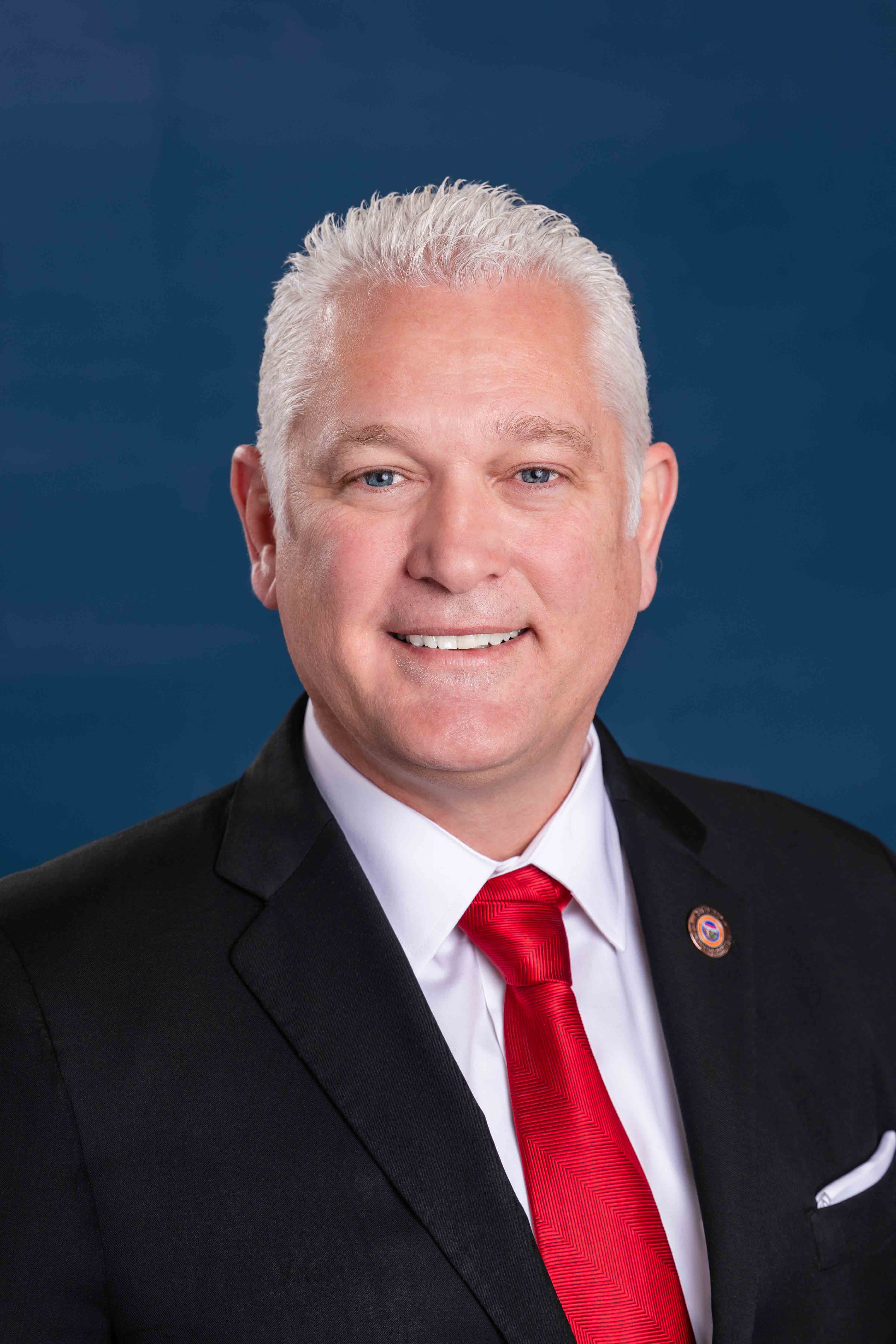
Rep. Michael Carbone
Sponsored bills
Maddy summaryThis bill establishes the 2026-2027 budget for Arizona's Department of Corrections, allocating approximately $1.6 billion to fund state prisons, private prisons, and correctional programs. It mandates that the department submit detailed monthly and annual reports to the legislature regarding spending, staffing levels, bed capacity, and inmate healthcare performance. The legislation also requires that any plans to open or close one hundred or more prison beds be reviewed by the joint legislative budget committee before implementation. Additionally, it sets specific rules for how funds from various correctional funds must be used and transferred to support the department's operations and retirement contributions.
Maddy summaryThis Arizona House resolution honors Daniel Kayde Blackman, a 31-year-old resident of Snowflake who passed away in May 2026. The bill formally expresses the legislature's condolences to his family and community while recognizing his contributions as a robotics club founder, Eagle Scout candidate, and volunteer tutor. It serves as a commemorative measure to acknowledge his life of service and faith rather than establishing new laws or policies.
Maddy summaryHB 2991 requires major social media platforms to obtain parental consent before allowing minors under 14 to create accounts, and to terminate accounts for 14-15 year olds without parental consent. Platforms must delete all personal data after account termination and provide dispute windows (90 days for under-14s, 90 days for 14-15 year olds). The bill directly affects social media platforms with significant under-16 user engagement and minors under 16. It passed the Arizona House on March 5, 2026, and was sent to the Senate.
Maddy summaryHB 2494 creates special zoning districts for aggregate mining operations in Arizona counties. It requires county boards to establish these districts based on petitions from residents near existing operations and form committees with equal representation from mining operators and community members to set local rules. The bill exempts aggregate mining from standard zoning restrictions within designated districts while requiring operators to follow specific environmental and operational standards for dust, noise, and site reclamation. This directly affects counties establishing zoning districts and aggregate mining operators seeking to expand or operate within these areas.
Maddy summaryHB 2557 amends Arizona law to allow individuals convicted of certain offenses to petition courts to seal their criminal records after meeting specific requirements. It directly affects people with felony or misdemeanor convictions who have completed sentences, paid all fines/restitution, and waited set periods (e.g., 10 years for serious felonies, 5 years for less serious ones). Key mechanisms include mandatory victim notification, court review for public safety, and restrictions on how sealed records may be used (e.g., still admissible in future criminal cases). The bill does not change eligibility for voting or candidacy, despite its misleading title, and focuses solely on record sealing procedures.
Maddy summaryThis bill amends Arizona state law to establish a specific order for how money from the state lottery fund is spent each year. It requires that funds first cover lottery operating costs and bond debt payments, followed by fixed annual allocations to various programs such as the Arizona Game and Fish Commission, child safety, health education, and disease control. The legislation also mandates that a minimum amount be deposited into the state general fund before other specific grants, like those for homeless shelters or university capital improvements, can be distributed. Ultimately, any remaining lottery money after these required payments and allocations must be sent to the state general fund.
Maddy summaryThis bill requires the Arizona Department of Transportation to submit an annual report by July 31 detailing progress in reducing wait times at motor vehicle offices and speeding up mail-in vehicle registration renewals. The report must follow a format similar to previous submissions made to the Joint Legislative Budget Committee. Although the bill passed the legislature, it was vetoed by the Governor and did not become law.
Maddy summaryThis bill directs that unrestricted federal funds received between July 1, 2026, and June 30, 2027, be placed into the state general fund to cover essential government services. It temporarily suspends standard rules for the budget stabilization fund during fiscal years 2026-2027 and 2027-2028, allowing the fund to remain unappropriated and preventing the transfer of its surplus to the general fund. Additionally, the legislation requires the governor's 2027-2028 budget proposal to include a detailed report explaining how the state will achieve $100 million in savings through the government efficiency and reform initiative.
Maddy summaryThis Arizona bill would require commercial horse racing operators to pay a 0.5 percent regulatory fee on all wagers placed during the 2026-2027 fiscal year. The fee would be collected from the money taken out of betting pools by the racing permits. Additionally, the bill allows first-time race starters to compete if they have official gate approval and have completed two timed workouts, with one workout occurring within 60 days of the race. These changes would apply to both live and simulcast horse racing events in the state for the specified years.