

Maddy summaryHB 2679 establishes a new framework for Arizona public power entities (like municipal utilities) to finance infrastructure upgrades by issuing "Transition Bonds." These bonds are secured by future customer payments called "Financing Charges," which become nonbypassable fees added to all customers' utility bills until the costs are fully recovered. The bill creates specific definitions for terms like "Financing Charges," "Qualified Special Purpose Entity," and "Transition Bonds," ensuring these payments cannot be avoided regardless of the customer's service provider or asset ownership. This mechanism allows public power entities to shift financing costs to customers over time rather than relying solely on traditional rate increases.
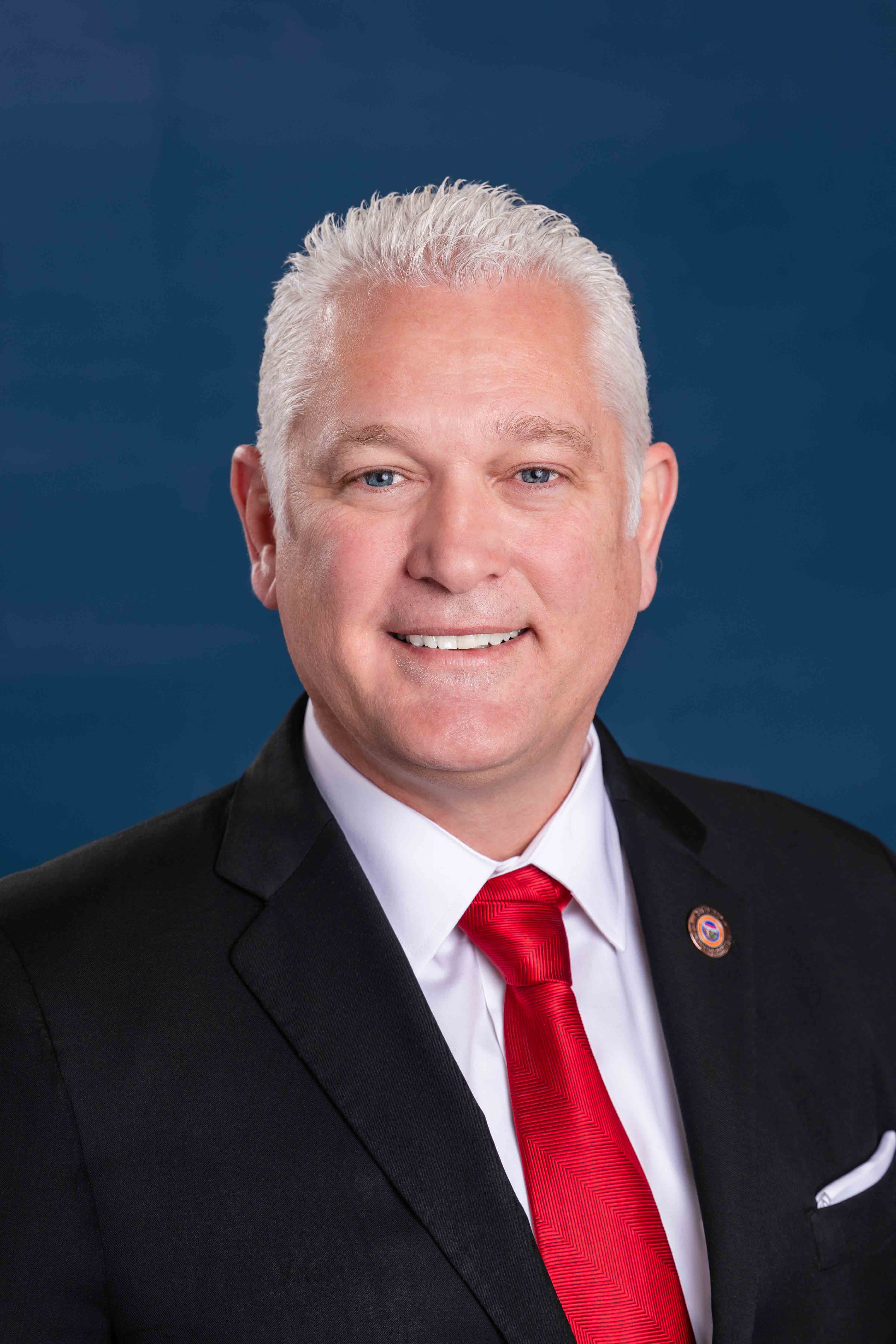
Rep. Michael Carbone
Sponsored bills
Maddy summaryHB 2170 requires Arizona public schools to document whether a student with a specific learning disability has been diagnosed with dyslexia in their individualized education program (IEP). This directly affects students with dyslexia and their IEP teams, including parents and educators. The bill clarifies that students with special education needs, including dyslexia, are not automatically required to pass certain standardized tests to graduate unless their IEP team specifically agrees to this requirement after parental discussion. It also ensures testing accommodations are included in IEPs and maintains that special education services remain free for families.
Maddy summaryHB 2868 prohibits Arizona cities and counties from establishing diversity, equity, and inclusion (DEI) offices, requiring DEI statements or training, or giving preference based on race, sex, color, or ethnicity in employment or programs. The bill directly affects local government entities by banning specific DEI-related policies and mandating disciplinary action for violations. Key provisions define "diversity, equity and inclusion" broadly to include concepts like systemic oppression and gender theory, while allowing limited compliance training approved by legal counsel. This bill was passed by the Arizona legislature in May 2025 but was vetoed by the governor on May 13, 2025, preventing it from becoming law.
Maddy summaryHB 2895 requires cities, counties, school districts, and state agencies in Arizona to publicly post task order contracts (for ongoing services or supplies) on their websites. It mandates that contracts must include the total dollar amount, contractor name, service description, and contract length - these items cannot be redacted. Contractors may redact personal or proprietary information beyond these four required details. The bill was passed by the legislature in May 2025 but was vetoed by the Governor on May 13, 2025, preventing it from becoming law.
Maddy summaryHB 2927 requires all Arizona public bodies (including cities, counties, school boards, and commissions) to post meeting minutes and recordings online within specific timeframes. It mandates that minutes include voting records, legal actions discussed, and speaker details, with cities/towns required to post summaries within 2 days after approved minutes. The bill also specifies that recordings must be available online within three business days for most meetings, and public bodies must provide adequate seating for attendees. These requirements aim to increase transparency by making government deliberations more accessible to the public.
Maddy summaryHB 2730 requires fingerprinting and criminal history checks for all employees, contractors, volunteers, and visitors with direct contact (unsupervised or supervised) with "committed youth" in Arizona's secure care facilities under state jurisdiction. It mandates these checks within 7-10 days of hire or contact, conditioning employment and facility access on clearance. Individuals with certain disqualifying offenses - including sexual abuse, murder, violent crimes, drug trafficking, or child exploitation - face immediate termination from roles involving direct youth contact, though "good cause" exceptions may apply. Contracts with service providers can be canceled if these requirements aren't met, aiming to enhance safety for youth in state custody.
Maddy summaryHB 2742 streamlines the process for requesting court-ordered mental health evaluations in Arizona. It requires standardized application forms with specific details about the person needing evaluation (including behavioral evidence, treatment history, and witness information), and mandates that screening agencies process applications within 48 hours. The bill explicitly protects individuals receiving treatment through recognized religious practices from involuntary evaluation unless a court determines they pose a danger to self or others. This affects individuals with serious mental health concerns who are unwilling or unable to seek voluntary care, as well as healthcare providers, law enforcement, and courts handling such cases.
Maddy summaryHB 2112 requires websites and social media platforms hosting over one-third sexual material harmful to minors to implement age verification, confirming users are 18+ using methods that do not transmit or retain personal data to government entities. It prohibits commercial entities from sharing or keeping user identifying information during verification and imposes penalties of up to $10,000 per day for non-compliance or $250,000 if minors access restricted content. The law directly affects commercial online platforms but exempts news organizations, search engines, and internet service providers from liability for content they host but do not create. Violators face civil lawsuits with potential fines and attorney fee recovery for affected minors or parents. It defines "harmful to minors" material as content exploiting sexual acts or prurient interests without artistic/scientific value for youth.
Maddy summaryHCR 2051 is a symbolic resolution (not a law) passed by Arizona's legislature to formally declare its intent to protect Yuma agriculture and Arizona's Colorado River water rights. It highlights Yuma's unique role as the source of 90% of North America's leafy greens during winter, its $4.2 billion economic contribution, and its status as the most water-efficient agricultural area in the Colorado River basin. The resolution does not create new laws or funding but serves as a public statement of legislative support. It directly affects Arizona's water policy discussions and Yuma's agricultural interests by affirming their national significance. This resolution was adopted by both chambers and transmitted to the Secretary of State on May 6, 2025.
Maddy summaryHB 2880 prohibits unauthorized encampments on Arizona university and community college campuses, requiring immediate dismantling if established without prior authorization. It mandates that campus officials direct occupants to leave, warn of criminal trespass charges (pursuant to Arizona law), and pursue legal action for removal if refused. Students who refuse to vacate face disciplinary action under their institution's code of conduct, while individuals establishing encampments are liable for all property damage costs and may face criminal prosecution for property damage. The law directly affects students, campus administrators, and anyone attempting to establish protest or temporary housing on campus grounds without approval.