

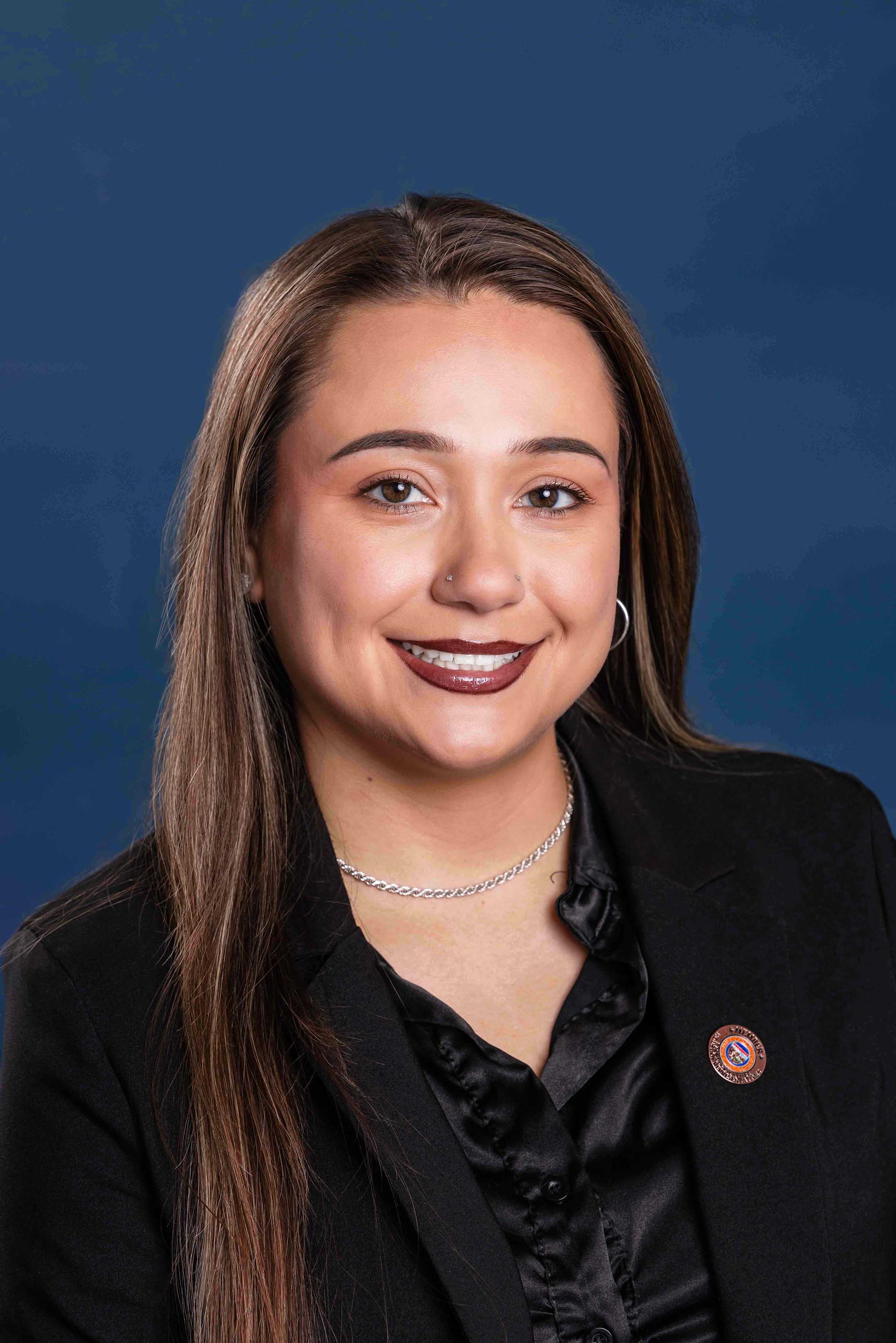
Photo of Anna Abeytia
D Arizona House · District 24

Rep. Anna Abeytia

Compare
Total votes
1,672
all sessions
Attendance
76%
405 missed
Lower than 89% of chamber peers
With party
93%
of cast votes
Near the chamber average
Bipartisan score
6%
crosses aisle rarely
Near the chamber average
Sponsored
264
bills & resolutions
Higher than 75% of chamber peers
Committees
2
assignments
264 bills and resolutions

Sponsored bills

Total
264
Primary
14
Co-sponsor
250
This page
264
matching current filters
Co-sponsor HB 2711
Introduced · Arizona House · Co-sponsor
housing trust fund; unclaimed property

Maddy summaryHB 2711 modifies how Arizona allocates unclaimed property funds, such as abandoned bank accounts and stocks, that would otherwise go to the state general fund. It directs 55% of these funds to the housing trust fund, with 40% of that portion (22% of total funds) specifically reserved for rural housing development. The bill also specifies that $2 million goes to a trust fund for housing the seriously mentally ill, $2.5 million to the general housing trust fund, and $24.5 million to the department of revenue's administrative fund. This policy change affects state fund distribution without directly altering individual rights or services.

Introduced Jan 21, 2026 1 co-sponsor
Co-sponsor HB 2295
Introduced · Arizona House · Co-sponsor
minimum wage increase

Maddy summaryHB 2295 raises Arizona's minimum wage to $18 per hour by January 1, 2027, with scheduled increases from $10 in 2017 up to $12 in 2020. After 2020, the wage will automatically adjust annually based on the Consumer Price Index (measuring cost-of-living changes) to maintain its value. The bill also allows employers to pay tipped workers a base wage up to $3 less per hour, provided total tips plus wages meet the minimum wage requirement. This applies to most hourly workers in Arizona covered by state minimum wage law, including those in restaurants and service industries. The bill requires a three-fourths legislative vote to take effect.

Introduced Jan 21, 2026 1 co-sponsor
Co-sponsor HB 2626
Introduced · Arizona House · Co-sponsor
child care workforce; scholarship program

Maddy summaryHB 2626 creates a state-funded scholarship program for child care workers in Arizona earning below 85% of the state median income. It directly affects teachers, educators, and support staff at department-contracted child care providers, preschools, kindergartens, and K-12 schools. The program provides $200 million in state funding for fiscal year 2026-2027, with scholarship money paid directly to child care providers (not individual workers) on a first-come, first-served basis. This aims to support workforce retention by covering costs for eligible providers.

Introduced Jan 21, 2026 1 co-sponsor
Co-sponsor HB 2708
Introduced · Arizona House · Co-sponsor
landlord tenant; judgment; fees; satisfaction

Maddy summaryHB 2708 limits late fees landlords can charge to $50 or 5% of rent, whichever is greater, and bans rental agreements that prevent tenants from calling emergency services or penalize them for doing so. It also requires a 5-day waiting period after an eviction judgment before a landlord can enforce a writ of restitution. Landlords cannot force tenants to waive legal rights or pay excessive fees, and tenants may recover damages if landlords knowingly include prohibited lease terms. The bill applies directly to all residential rental agreements in Arizona, affecting both landlords and tenants in housing disputes.

Introduced Jan 21, 2026 1 co-sponsor
Co-sponsor HB 2627
Introduced · Arizona House · Co-sponsor
workers' rights; public health emergency

Maddy summaryHB 2627 creates new protections for workers during public health emergencies in Arizona. It prohibits employers from retaliating against workers who report health/safety concerns, wear higher-level personal protective equipment (like masks recommended by health agencies), or refuse forced confidentiality agreements about workplace hazards. Employers must post notices of these rights and face civil penalties of at least $100 per day for violations, with options for reinstatement or back pay if workers are fired for exercising these rights. The law applies to most employers and entities contracting with five or more independent contractors, enforced by the state Labor Department.

Introduced Jan 21, 2026 1 co-sponsor
Co-sponsor HB 2391
Introduced · Arizona House · Co-sponsor
vloggers; minors; compensation; trust accounts

Maddy summaryHB 2391 requires vloggers (parents or guardians creating compensated video content featuring minors) to set aside earnings for minor children when their name, likeness, or image appears in at least 30% of compensated videos meeting platform compensation thresholds or $0.10 per view. For single minors, 15% of the relevant earnings must be held in a trust; for multiple minors, 10% of the combined earnings is distributed equally. Minors can later request permanent deletion of their content from platforms upon reaching 18, with platforms required to comply. The bill applies to Arizona-based vloggers using minors' content for compensation, defining key terms like "minor child" (under 18 residing in Arizona) and "content percentage."

Introduced Jan 21, 2026 1 co-sponsor
Co-sponsor HB 2302
Introduced · Arizona House · Co-sponsor
student loan servicers; licensure

Maddy summaryHB 2302 requires student loan servicers operating in Arizona to obtain a state license, with exemptions for banks, credit unions, and their wholly-owned subsidiaries. It establishes a Student Loan Ombudsman to handle borrower complaints, provide education on loan terms (including repayment options and forgiveness), and compile complaint data. The licensing process mandates application fees ($1,800 total), financial disclosures, background checks, and proof of financial stability to ensure servicers operate fairly. The ombudsman must also create a mandatory borrower education course by October 1, 2026, covering key loan terms and rights. This bill directly affects student loan servicers and borrowers in Arizona by setting licensing standards and improving complaint resolution.

Introduced Jan 21, 2026 1 co-sponsor
Co-sponsor HB 2634
Introduced · Arizona House · Co-sponsor
study committee; educator health insurance

Maddy summaryHB 2634 establishes a study committee to examine health insurance costs for Arizona educators and their families. The committee, composed of representatives from school districts, teachers' organizations, health insurers, and school boards, will analyze current insurance plans and costs for both school districts and employees. It must recommend affordable ways to provide high-quality health coverage for educators and their dependents, then submit a report to state leaders by November 2027. The committee will dissolve on October 31, 2028. This is a procedural bill focused on research, not immediate policy changes.

Introduced Jan 21, 2026 1 co-sponsor
Co-sponsor HB 2466
Introduced · Arizona House · Co-sponsor
employment; labor standards; meal breaks

Maddy summaryArizona's HB 2466 requires most Arizona employers to provide employees with specific break and pay protections. It mandates a 30-minute unpaid meal break after 5 hours of work (and an additional break after 12 hours), a paid 10-minute rest break every 4 hours, and extra pay rates: 1.5 times the regular wage for hours worked beyond 8 but not exceeding 12 in a day or for the first 8 hours on the seventh consecutive workday, and double the regular wage for hours beyond 12 in a day or beyond 8 hours on the seventh consecutive workday. The law applies to employers with annual sales of $100,000 or more or those engaged in interstate commerce, aligning with federal labor standards. This directly affects hourly workers and employers across Arizona who fall under these thresholds.

Introduced Jan 21, 2026 1 co-sponsor
Co-sponsor HB 2468
Introduced · Arizona House · Co-sponsor
peace pole monument; governmental mall

Maddy summaryHB 2468 authorizes placing a Rotary International peace pole monument in a designated area of Arizona's governmental mall. The bill requires Rotary International to cover all costs for fundraising, design, and construction - state funds cannot be used, and the government cannot facilitate fundraising. It also specifies the monument authorization expires on September 30, 2029. This is a procedural bill focused on monument placement with clear funding restrictions and a sunset date.

Introduced Jan 21, 2026 1 co-sponsor
Showing 71 to 80 of 264 bills
Previous 1 … 7 8 9 … 27 Next