

Maddy summaryHB 2493 requires private education providers that accept Arizona empowerment scholarship funds to follow the same financial reporting and audit rules as public schools. These providers must submit financial data using the state's standard system, comply with annual achievement profile reporting, and undergo performance audits conducted by the auditor general. The bill directly affects private schools, tutoring services, or other educational entities receiving scholarship funds, mandating transparency in their financial operations. Key provisions include standardized financial recordkeeping, inclusion in state achievement reports, and specific audit requirements tailored for private businesses. This bill focuses on oversight rather than changing scholarship eligibility or funding amounts.
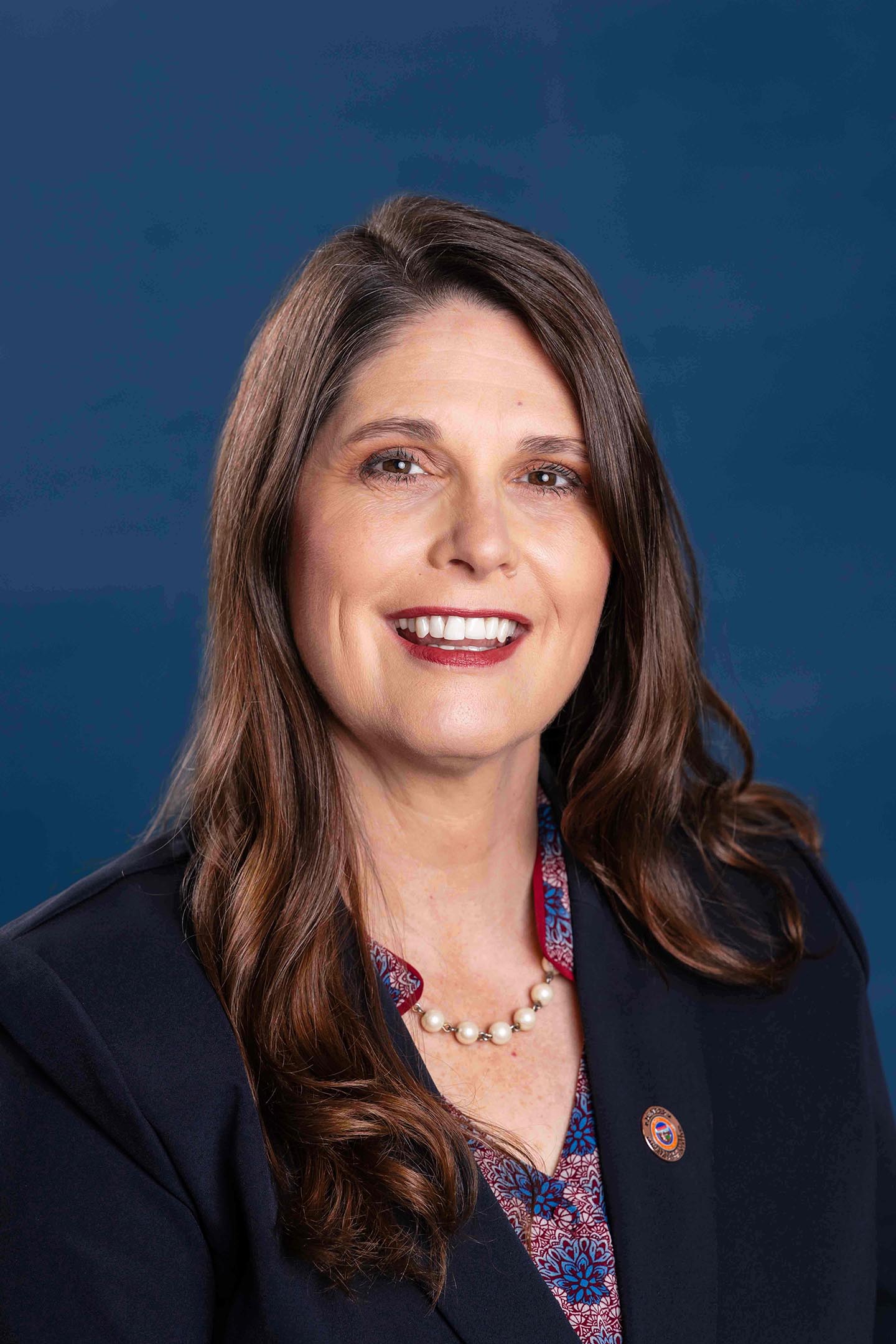
Rep. Stephanie Stahl Hamilton
Sponsored bills
Maddy summaryHB 2590 amends Arizona law to clarify key definitions related to residential rental properties. It defines "residential rental property" as property leased for residential use or rented to lodgers for less than 30 days, excluding the mobile home itself in mobile home parks if owned by the tenant (not the space owner). The bill also defines "slum property" by specific hazardous conditions like structural damage, lack of water/sanitation, or dangerous waste accumulation. This bill directly affects landlords, tenants, and property managers by establishing clear terms for enforcement and regulation. As a definitional bill, it does not create new requirements but provides precise language for future legal or regulatory actions.
Maddy summaryHCM 2006 is a memorial resolution naming a truss bridge in Cameron, Arizona, the Jimmie Preston Memorial Bridge. It honors Jimmie Preston, a Navajo Code Talker who served with the U.S. Marine Corps during WWII and later contributed to his community in Arizona. The resolution directs Arizona's geographic naming boards and the Arizona Department of Transportation to officially adopt the name and install signage. This is a procedural naming action with no policy changes, passed by the Arizona legislature on May 6, 2025.
Maddy summaryHB 2677 allows Arizona middle school students (grades 6-8) to earn career and technical education (CTE) course credits that count toward both 8th-grade promotion and high school graduation. Schools offering these courses must partner with approved CTE providers, such as career districts, state-approved schools, or community colleges. They must report annually to the state on course offerings and student completions, with a final summary due by December 2028. The law applies only through the 2027-2028 school year and expires December 31, 2036.
Maddy summarySB 1446 allocates $3 million from the state general fund for fiscal year 2025-2026 to expand training opportunities for nurse anesthetist students in Arizona. It establishes a grant program through the Arizona State Board of Nursing to fund healthcare institutions (licensed under state law) that provide clinical rotations, with priority for obstetrics, pediatrics, cardiovascular, thoracic, and neurological care training. Grants cover direct and indirect costs but cannot replace existing program funding, limit indirect costs to 20% of the award, and require unused funds to be returned. This directly affects healthcare institutions training nurse anesthetist students and aims to increase capacity in high-need specialty areas. The bill passed in March 2025 and exempts the appropriation from standard lapse rules.
Maddy summaryThis bill amends Arizona's child neglect definitions in Section 8-201 of the Revised Statutes. It adds specific criteria for "abandoned" (e.g., minimal parental effort after six months) and expands "abuse" to explicitly include sexual offenses against minors and certain hazardous situations. The changes clarify how child neglect and abuse are legally defined, affecting cases handled by the Department of Child Safety (DCS) and juvenile courts. It does not create new financial assistance or policy changes - it only refines existing legal terminology for consistency. The bill is currently in early legislative stages (House First Reading).
Maddy summaryHB 2789 requires construction projects designed to reach at least 60 feet above ground level or 48 feet below ground level to include a functional elevator for employee use. The elevator must be installed and operational once the structure reaches 36 feet in height, measured from ground level to the highest point of the structure (excluding antennas, smokestacks, and similar attachments). This bill directly affects construction companies building large-scale projects in Arizona, mandating elevator access for workers before significant height is achieved. The law specifies exact height measurements and what structures count toward those measurements to clarify compliance.
Maddy summaryHB 2289 would increase Arizona's minimum wage in phased steps, starting at $10 per hour in 2017 and rising to $18 per hour by 2025. After 2025, the wage would automatically adjust annually based on the U.S. Consumer Price Index (CPI) to account for cost-of-living changes. The bill also allows employers to pay tipped workers a base wage up to $3 less per hour, provided total tips and wages meet the minimum wage requirement for all hours worked. This applies to most covered employees in Arizona, excluding certain agricultural or seasonal workers as defined by existing law. The bill requires a three-fourths vote in both legislative chambers to become effective.
Maddy summaryHCR 2030 requires Arizona public schools to identify the primary language of all new students and assess English proficiency using state-approved tests. It mandates that students not proficient in English be enrolled in structured English immersion programs with specific daily instructional time (120 minutes for K-5, 100 minutes for grades 6-12). The bill repeals older language education rules and creates a framework for the state board to approve research-based English instruction models, including annual reviews and budget procedures for schools. This directly affects English language learners (ELLs) and their schools, focusing on standardized assessment, program enrollment, and funding mechanisms. The bill establishes the Arizona English Language Learner Fund to support these programs.
Maddy summaryHB 2819 requires Arizona's insurance department to annually compile and publicly post detailed data about residential property insurers on its website. This includes premiums charged, coverage denials (by zip code and reason), policy lapses, claims paid, and fire protection rating scores tied to premiums. The bill also mandates that insurers file underwriting guidelines with the department, which must be actuarily justified, reasonable, and non-discriminatory. These provisions directly affect residential property insurers (including fire and homeowner's policies) by increasing transparency for consumers and regulators.