

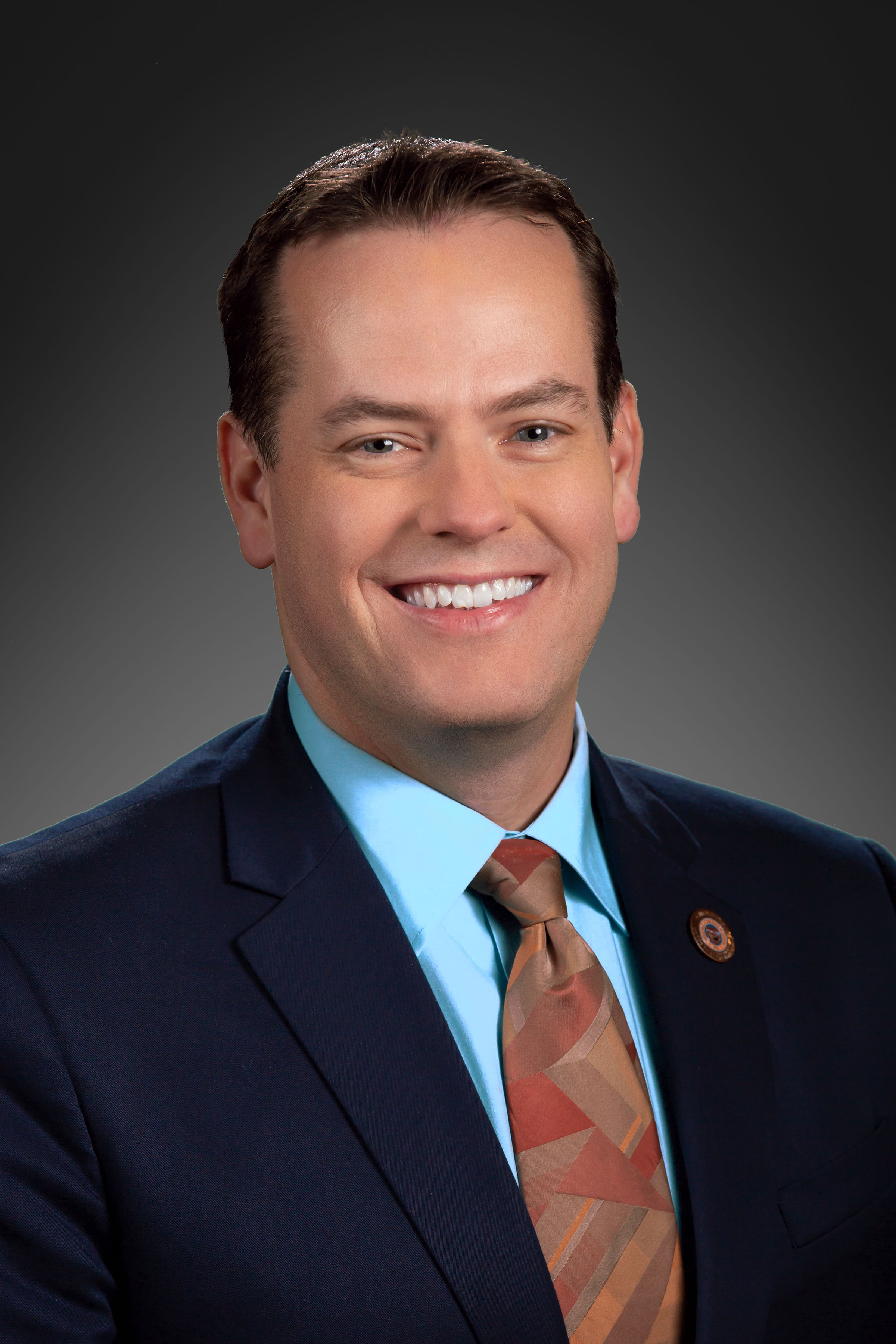
Photo of Justin Wilmeth
R Arizona House · District 2 On the 2026 ballot

Rep. Justin Wilmeth

Compare
Total votes
4,392
all sessions
Attendance
97%
148 missed
Lower than 76% of chamber peers
With party
96%
of cast votes
Higher than 85% of chamber peers
Bipartisan score
4%
crosses aisle rarely
Lower than 76% of chamber peers
Sponsored
489
bills & resolutions
Near the chamber average
Committees
6
assignments
489 bills and resolutions

Sponsored bills

Total
489
Primary
102
Co-sponsor
387
This page
489
matching current filters
Co-sponsor HR 2006
Passed · Arizona House · Co-sponsor
Yvonne Fedderson; death resolution

Maddy summaryHR 2006 is a ceremonial resolution passed by the Arizona House of Representatives honoring Yvonne Glee Lime Fedderson, who died on January 23, 2026. The resolution expresses the House's sympathy to her family and admirers while recognizing her founding role in Childhelp and her decades of work advancing child welfare programs, including establishing the first national child abuse hotline and advocacy centers. It directs the Secretary of State to transmit copies of the resolution to her family and Childhelp organization. As a non-binding commemorative measure, it does not create new laws or affect any policies.

Passed Feb 18, 2026 1 co-sponsor
Co-sponsor HB 2304
In committee · Arizona House · Co-sponsor
appropriations; transportation projects

Maddy summaryHB 2304 allocates $41,384,400 from Arizona's state general fund for transportation projects in fiscal year 2026-2027. It directly funds 52 specific infrastructure improvements across 25 cities, counties, and tribal nations, including road reconstructions (e.g., Bullhead City's Baseline Road), bridge replacements (e.g., Globe's Pinal Creek Bridge), trail projects (e.g., Lake Havasu City's State Route 95 Multi-Use Trail), and pedestrian safety upgrades (e.g., Clarkdale's Broadway Street). The bill provides no new policy changes but authorizes state funding for pre-approved local projects. This is a routine appropriations measure, not a substantive legislative policy.

In committee Feb 18, 2026 1 co-sponsor
Co-sponsor HB 4088
Failed · Arizona House · Co-sponsor
commercial motor vehicle; liability insurance

Maddy summaryHB 4088 requires motor carriers transporting agricultural commodities (like produce, livestock, or feed) for intrastate commerce in Arizona to maintain liability insurance covering emergency towing and recovery services. If a towing operator isn't paid for these services (directed by law enforcement), they can place a lien on the commercial vehicle and the transported commodities, which must be recorded with the Secretary of State. The bill excludes farm-to-field operations, farmer self-hauling, and non-commercial vehicles. It defines "agricultural commodity" broadly and "emergency towing" as services performed under law enforcement direction. The bill failed to pass on February 17, 2026.

Failed Feb 17, 2026 1 co-sponsor
Co-sponsor HB 4135
Introduced · Arizona House · Co-sponsor
income tax; credit; child care

Maddy summaryHB 4135 creates a new child care tax credit for Arizona taxpayers with children under five who use certified child care providers. The credit provides $2,000 per child for families with federal adjusted gross income of $75,000 or less, and $1,000 for incomes between $75,000 and $150,000 annually. A total of $15 million in credits is available each year on a first-come, first-served basis, with excess credits paid as refunds. The credit applies to tax returns filed for 2026 and later, supporting working families seeking quality early childhood care.

Introduced Feb 12, 2026 1 co-sponsor
Co-sponsor HB 4083
Introduced · Arizona House · Co-sponsor
bailable offenses; requirements; release

Maddy summaryThis bill changes Arizona's bail rules for certain serious offenses. It specifies that defendants charged with capital offenses, sexual assault, or specific child molestation crimes (like those involving victims under 13 or a 10-year age gap) cannot be released on bail. It also adds that serious felony charges involving suspected illegal immigration status may prevent bail, requiring courts to consider factors like ICE holds or immigration evidence. Additionally, the bill expands factors judges must weigh when setting bail, including victim input, prior violent offenses, gang membership, and immigration status, while requiring expedited hearings for detention decisions.

Introduced Feb 11, 2026 1 co-sponsor
Co-sponsor HB 2448
In committee · Arizona House · Co-sponsor
SNAP; work requirement waivers; exemptions

Maddy summaryHB 2448 prohibits Arizona's Department of Economic Security from seeking, accepting, or renewing federal waivers that would exempt able-bodied adults without dependents from SNAP work requirements unless explicitly authorized by state law. It also blocks the state from granting exemptions from these work requirements without specific legislative approval. The bill directly affects SNAP recipients who might otherwise qualify for work requirement exemptions under federal rules. This is a procedural measure restricting state authority to bypass federal SNAP rules without clear legislative direction.

In committee Feb 11, 2026 1 co-sponsor
Co-sponsor HB 2442
In committee · Arizona House · Co-sponsor
SNAP; mandatory employment and training

Maddy summaryArizona's HB 2442 requires able-bodied adults under 60 receiving SNAP benefits to join a state-mandated employment and training program, unless they qualify for specific exemptions. The bill directly affects SNAP recipients who are not exempt, such as those not working 30+ hours weekly, not caring for young children, or not enrolled full-time in school. Key exemptions include being a full-time student, caring for a child under six, participating in addiction treatment, or already working 30+ hours per week. This aligns with federal SNAP work requirements but sets Arizona-specific implementation rules for the program.

In committee Feb 11, 2026 1 co-sponsor
Co-sponsor HB 4015
Introduced · Arizona House · Co-sponsor
prisoners; contracts; telecommute

Maddy summaryHB 4015 amends Arizona law to establish a new category of prison labor: telecommuting contracts between private companies and the state prison system. It requires a minimum wage of $2.00 per hour for prisoners working remotely under these contracts, higher than the standard $1.50 limit for regular prison labor. This directly affects prisoners participating in private telecommuting programs, who will receive higher compensation but remain classified as non-employees without workers' compensation rights. The bill also updates deduction rules for earnings from these contracts, including mandatory contributions to transition programs and court costs.

Introduced Feb 10, 2026 1 co-sponsor
Co-sponsor HB 2554
In committee · Arizona House · Co-sponsor
biennial budget

Maddy summaryHB 2554 amends Arizona's budget process by requiring the governor to submit a two-year budget plan (biennial budget) with separate annual breakdowns, instead of a single-year plan. It mandates that state agencies submit detailed financial estimates by September 1 each even-numbered year, including costs from local minimum wage increases exceeding state levels. The bill also establishes a continuous budget planning process, requires a February 15 appropriations estimate report, and specifies detailed contents for the governor's budget report (like balance sheets, income/expenditure schedules, and performance measures). This procedural bill affects the governor's office, state agencies, and the legislature by standardizing budget submission and reporting requirements for the next two fiscal years.

In committee Feb 9, 2026 1 co-sponsor
Co-sponsor HB 2682
In committee · Arizona House · Co-sponsor
rental assistance program; appropriation

Maddy summaryHB 2682 creates Arizona's Rental Assistance Program, providing limited financial help to eligible renters facing temporary hardship. It directly affects tenants with at least one child under 18 who have lived in their rental for 12 months, are no more than two months behind on rent, and face an unexpected financial emergency. The program offers up to $5,000 or two months of rent per year (paid directly to landlords), requires proof of future income, and prohibits evictions for covered months. The state appropriates $5 million for this program in fiscal year 2026-2027, and tenants must also complete free financial literacy classes.

In committee Feb 3, 2026 1 co-sponsor
Showing 51 to 60 of 489 bills
Previous 1 … 5 6 7 … 49 Next