

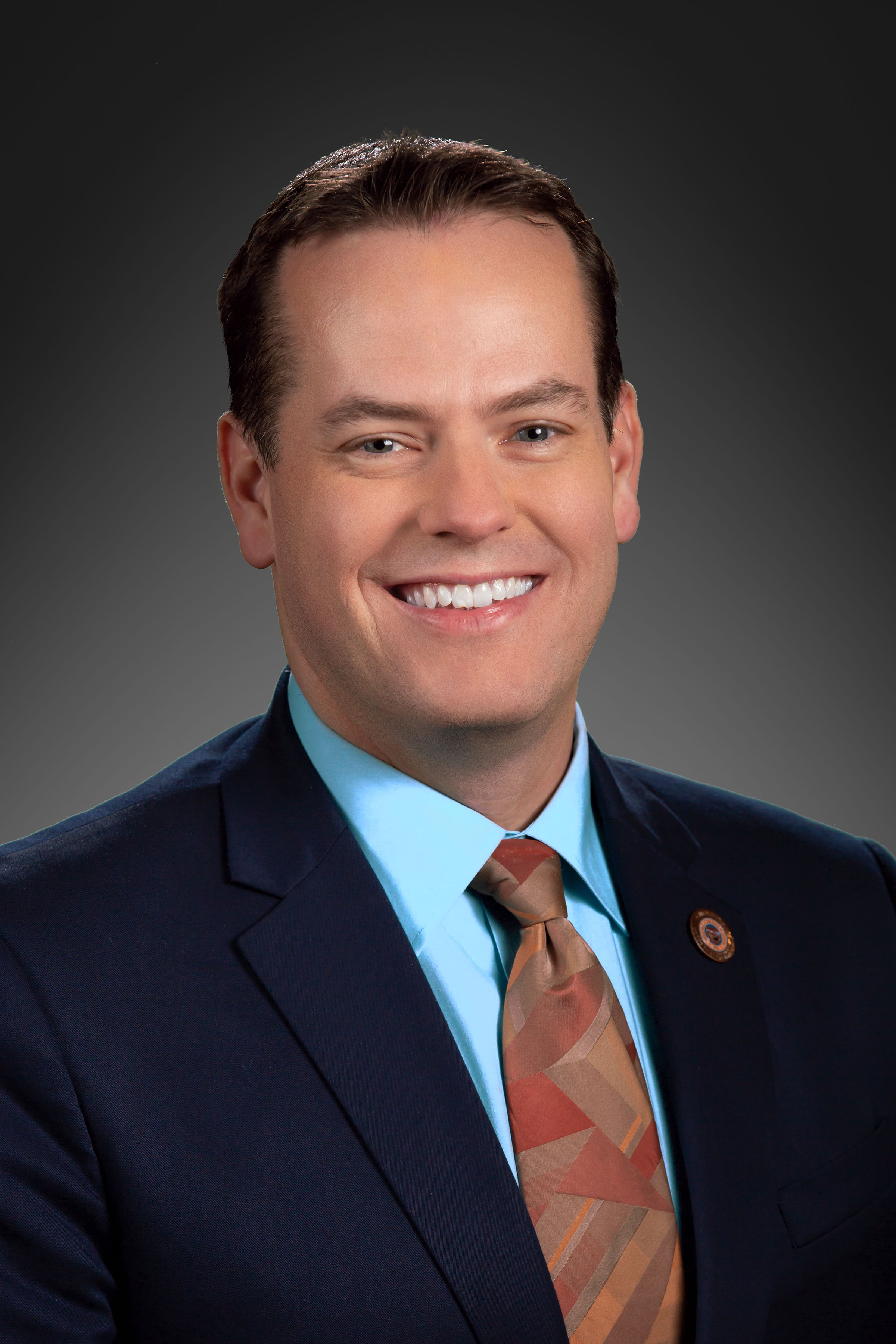
Photo of Justin Wilmeth
R Arizona House · District 2 On the 2026 ballot

Rep. Justin Wilmeth

Compare
Total votes
4,392
all sessions
Attendance
97%
148 missed
Near the chamber average
With party
96%
of cast votes
Higher than 81% of chamber peers
Bipartisan score
4%
crosses aisle rarely
Lower than 76% of chamber peers
Sponsored
489
bills & resolutions
Near the chamber average
Committees
6
assignments
489 bills and resolutions

Sponsored bills

Total
489
Primary
102
Co-sponsor
387
This page
489
matching current filters
Co-sponsor HB 2395
Signed into law · Arizona House · Co-sponsor
fitness program; school report cards

Maddy summaryHB 2395 establishes a voluntary Arizona school fitness program under the Department of Education, allowing public schools to participate in nationally recognized physical fitness tests. Schools that choose to join the program can add a "fitness program designation" to their existing school report cards, which are required by law. The Department of Education will develop guidelines, best practices, and resources to support schools participating in the program. This bill does not require schools to participate or change current fitness standards, only offering a voluntary recognition option for those that opt in.

Signed into law Apr 13, 2026 1 co-sponsor
Co-sponsor HB 2575
Passed · Arizona House · Co-sponsor
antisemitism; public schools; prohibition; penalties

Maddy summaryHB 2575 prohibits public schools, teachers, and administrators in Arizona from teaching, promoting, or requiring students to advocate for antisemitism or anti-Semitic conduct that creates a hostile school environment. The bill bans using public funds for curriculum, training, or materials promoting antisemitism, and protects staff who refuse to teach such material from adverse employment actions. Violations can be reported to school officials, with investigations leading to corrective actions within 30 days, and repeated violations by educators may result in formal reprimands, certificate suspensions, or revocation. The law directly affects public school staff, curriculum decisions, and funding allocations related to classroom instruction.

Passed Apr 9, 2026 1 co-sponsor
Co-sponsor HB 4026
Passed · Arizona House · Co-sponsor
public infrastructure improvements; distribution limit

Maddy summaryHB 4026 creates a state-funded program where Arizona cities, towns, and counties receive payments for public infrastructure improvements (like roads or utilities) supporting new or expanding manufacturing facilities. To qualify, manufacturers must certify minimum capital investments ($50 million for smaller counties, $500 million for larger ones) and sign agreements detailing project costs. Payments are capped at 80% of infrastructure costs or annual state tax revenues from qualifying projects, with a yearly maximum of $75 million total. The program requires local governments to return excess funds if payments exceed the cap and ensures funds are used exclusively for infrastructure tied to the manufacturing facility.

Passed Mar 31, 2026 1 co-sponsor
Co-sponsor HB 2446
Passed · Arizona House · Co-sponsor
motor carriers; English proficiency

Maddy summaryHB 2446 requires all motor carriers operating in Arizona to demonstrate English proficiency during roadside inspections, directly affecting commercial drivers and trucking companies. The bill mandates that inspectors conduct all inspections in English without using interpreters, translation tools, or other communication aids. If a motor carrier cannot prove sufficient English skills - such as understanding verbal questions or electronic traffic signs - an inspector may issue an out-of-service order. This law aims to ensure clear communication during safety checks but does not change existing safety standards beyond the language requirement.

Passed Mar 31, 2026 1 co-sponsor
Co-sponsor HB 2680
Passed · Arizona House · Co-sponsor
worker's compensation; notice; fraud; commission

Maddy summaryHB 2680 creates a public database requiring Arizona employers to disclose workers' compensation insurance details. It mandates insurers to submit policy information - including employer name, insurer, policy expiration, and employee counts - to the state commission, with each policy including a QR code linking to the database. Employers claiming "zero estimated exposure" (no employees) must sign an affidavit confirming this, and must notify contractors directly if they hold such a policy. This affects all employers with workers' comp coverage, insurers, and contractors who receive zero-exposure notifications.

Passed Mar 25, 2026 1 co-sponsor
Co-sponsor HB 2445
Passed · Arizona House · Co-sponsor
task order contracts; website; posting

Maddy summaryHB 2445, titled the "Government Transparency Act," requires Arizona cities, towns, counties, school districts, and state agencies to post task order contracts online. These contracts - used for ongoing services or supplies over time - must include the total dollar amount, contractor name, service description, and contract length, with no redaction allowed for these details. Contractors may still redact personal or proprietary information beyond these four required elements. The bill applies to all public entities using this type of contract structure across Arizona.

Passed Mar 25, 2026 1 co-sponsor
Co-sponsor HB 2671
Passed · Arizona House · Co-sponsor
chronic felony offenders; juveniles

Maddy summaryHB 2671 changes Arizona's rules for prosecuting juveniles (ages 14-17) as adults, specifically targeting those with prior felony convictions. It requires prosecutors to file notice if a juvenile is a "chronic felony offender" (defined as having two prior felony convictions classified as serious offenses), triggering a court hearing to confirm this status. If confirmed, the juvenile faces adult criminal sentencing; if not, the case transfers to juvenile court. This directly affects juveniles with prior felony convictions who commit new serious offenses, shifting jurisdiction from juvenile to criminal court. The bill creates a clear process for determining chronic offender status before trial.

Passed Mar 25, 2026 1 co-sponsor
Co-sponsor HB 2444
Passed · Arizona House · Co-sponsor
pharmacists; independent testing; treatment

Maddy summaryHB 2444 allows Arizona pharmacists to independently order, perform, and interpret certain FDA-waived tests (like flu, strep, or COVID-19 tests) and initiate treatment for specific conditions - including influenza, strep throat, HIV prevention, and other public health threats - without a physician's direct order. It directly affects pharmacists (who gain new clinical authority) and patients aged six or older who need treatment for those conditions. Key provisions require pharmacists to follow a statewide protocol covering documentation, referrals, patient screening, and evidence-based guidelines, while mandating notification to a patient’s primary care provider within 72 hours of treatment. The bill also prohibits pharmacists from prescribing opioids or treating minors without parental consent.

Passed Mar 17, 2026 1 co-sponsor
Co-sponsor HB 2951
Passed · Arizona House · Co-sponsor
automatic subscription renewals; contracts; requirements

Maddy summaryHB 2951 requires businesses offering automatic subscription renewals to clearly disclose key terms (like cancellation policies and recurring charges) before consumers agree. It mandates explicit consumer consent before charging, provides simple one-click cancellation options, and requires advance notice (25-40 days before renewal) for all auto-renewing contracts. The law directly affects consumers who subscribe to services with automatic renewal and businesses selling such subscriptions in Arizona. Key provisions include standardized disclosures, verified consent records, and clear language to prevent surprise charges.

Passed Mar 16, 2026 1 co-sponsor
Co-sponsor HB 2993
Vetoed · Arizona House · Co-sponsor
DPS; legal representation; appropriation

Maddy summaryHB 2993 amends Arizona law to clarify when state agencies can hire their own legal counsel. Typically, agencies must use the Attorney General's office for legal representation, but exceptions allow them to hire outside lawyers if the Attorney General is disqualified (e.g., due to a conflict of interest) or in specific cases like pesticide complaints involving the Department of Agriculture. The bill also requires agencies with their own legal divisions (funded by non-general revenue) to reimburse the state general fund for legal services provided by the Attorney General. This affects all state agencies, including the Department of Public Safety (DPS), by defining their legal representation options and reimbursement obligations.

Vetoed Mar 12, 2026 1 co-sponsor
Showing 31 to 40 of 489 bills
Previous 1 3 4 5 49 Next