

Maddy summaryHB 2263 standardizes inspections of smoke and fire dampers in building fire protection systems, requiring local inspections to follow nationally recognized standards. It authorizes the state fire marshal to provide certified inspectors and resources to local authorities upon request. The bill also clarifies county code adoption rules, prohibiting counties from banning fire sprinklers in single-family homes or small residential buildings (up to two units) and preventing fines for not installing them. Additionally, it prevents counties from requiring fire sprinklers as part of fire apparatus access road requirements for single-family properties.
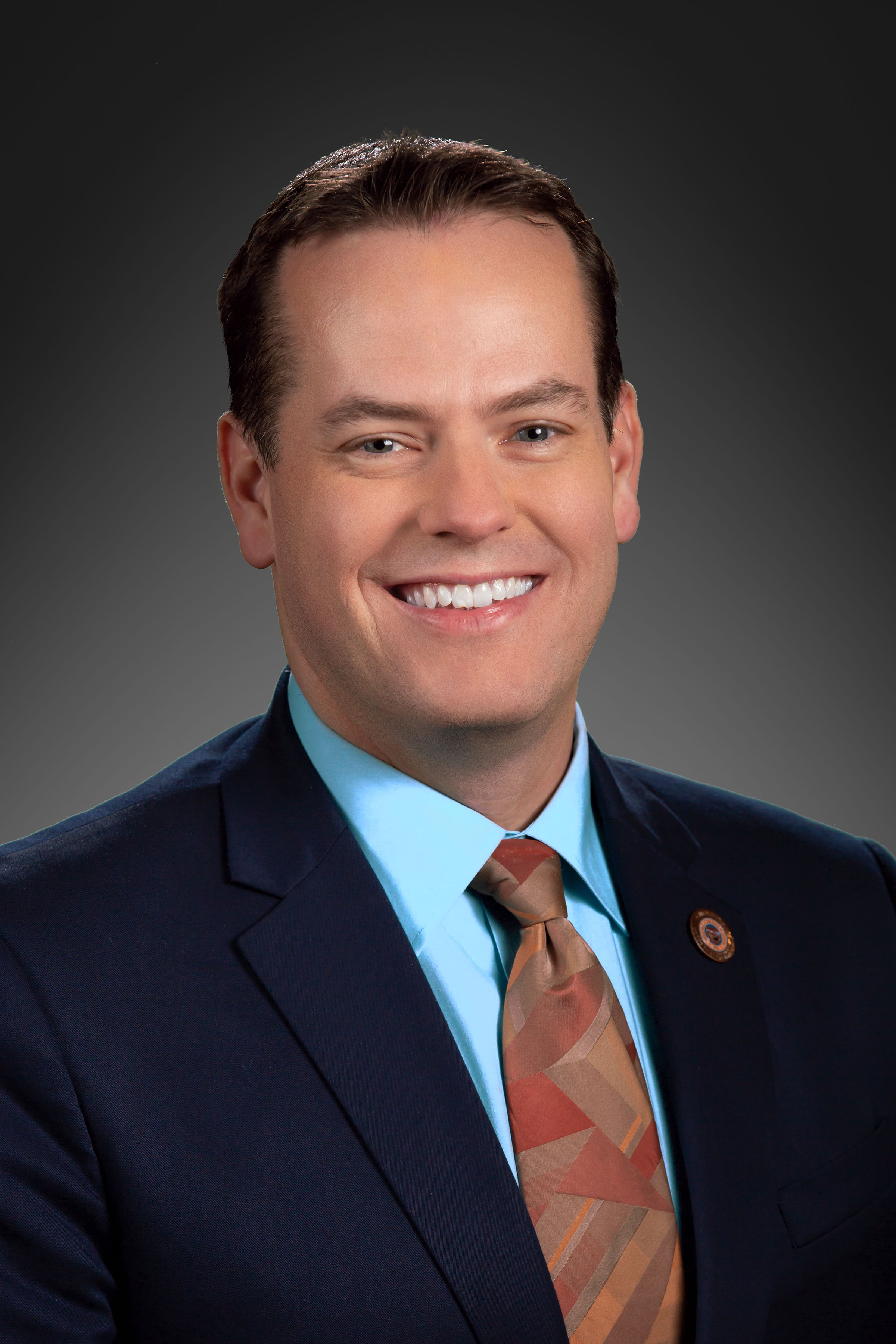
Rep. Justin Wilmeth
Sponsored bills
Maddy summaryHB 2873 establishes a framework for Arizona municipalities and counties to create "tourism improvement areas" (TIAs) where lodging businesses (like hotels) can be assessed a fee on room rentals to fund tourism promotion. To form a TIA, lodging business owners must petition with signatures representing 67% of available rooms, and the proposed fee structure must be based on benefit (e.g., property size or room count). Funds collected must directly support tourism activities - such as marketing, events, or infrastructure - that enhance local tourism and economic development, but cannot replace standard government services. The bill also sets strict deadlines (30 days) for challenging fee validity and requires transparent planning details for each proposed TIA.
Maddy summaryHB 2660 extends Arizona's affordable housing tax credit program, allowing developers and investors in qualifying low-income housing projects to claim a state tax credit equal to at least 50% of the federal low-income housing tax credit they receive. The bill requires the Arizona Department of Housing to issue eligibility statements for projects meeting federal criteria, with annual funding limits of $4 million (2022-2025) and $10 million (2026-2030). Taxpayers can apply the credit against insurance premium tax liability, carry forward unused credits for up to five years, and avoid retaliatory taxes under Section 20-230. The program directly affects developers and investors in affordable housing projects that qualify for federal low-income housing tax credits.
Maddy summaryHB 2764 proposes to make "Howdy" the official state greeting of Arizona by adding it to the Arizona Revised Statutes. This symbolic bill would require state government communications, documents, or interactions to use "Howdy" as the designated greeting. It directly affects state agencies and official state communications but has no practical policy impact on residents or services. The bill is purely ceremonial and does not alter any laws, taxes, or regulations. (Procedural bill; summary limited to 2 sentences as requested.)
Maddy summaryHCR 2014 is a proposed constitutional amendment that would change how Arizona's House of Representatives seats are designated and establish an independent redistricting commission. Starting in 2027, each legislative district would elect two representatives whose seats would be labeled "A" and "B" based on the alphabetical order of their names (surname then first name), requiring candidates to run for a specific seat. It also creates a five-member independent redistricting commission with strict rules to ensure political balance (no more than two members from the same party) and requires members to have been registered voters for at least three years without recent political office or lobbying roles. This amendment must be approved by Arizona voters to take effect.
Maddy summaryHCM 2016 is a symbolic resolution (not a binding bill) passed by the Arizona House of Representatives. It urges the U.S. Congress to support the Palo Verde Generating Station, Arizona's largest nuclear power plant, highlighting its role as a major clean energy source (supplying 70% of Arizona's carbon-free energy), economic contributor ($2.3 billion annual impact), and employer (2,000+ full-time workers). The resolution cites the plant's use of recycled water, lower costs compared to solar, and public support for nuclear energy (56% in a 2024 survey) to make its case. It does not create new policy but requests congressional recognition and support for the facility.
Maddy summaryHB 2822 requires nongovernmental organizations (NGOs) in Arizona that receive state contracts and operate near the state's international border to submit quarterly financial reports. These reports must detail all funding sources (including private, federal, and state money) and all expenditures related to the state contract. The bill directly affects border-area NGOs receiving state contracts, mandating transparency to the Senate President and House Speaker. It does not change how contracts are awarded but adds specific reporting obligations for these organizations. The bill is currently in early legislative stages (first and second reading in February 2025).
Maddy summaryHB 2770 requires all Arizona school district governing board members to complete either eight hours of professional development training or attend a training workshop related to school governance. This new requirement (Section 15-349) directly affects all current and future school board members statewide, replacing the previous option of meeting education or experience standards as a qualification path. The bill amends qualification rules (Section 15-421) to allow the training to satisfy the "two years of experience" requirement in areas like school finance, student safety, or governance. It does not change existing residency, voter registration, or conflict-of-interest rules but adds training as a concrete, accessible pathway for candidates.
Maddy summarySB 1630 establishes a study committee to examine issues affecting Arizona inmates aged 55+ who are aging within the state correctional system. The committee, composed of legislative members, corrections and healthcare officials, and community representatives (including a former inmate or family member), will research release programs, healthcare access, and transitions to long-term care. It must develop recommendations for a step-by-step release plan and a healthcare roadmap, submitting a final report to state leaders by December 31, 2025. This is a procedural bill creating a study body - not a policy change - and directly affects aging incarcerated individuals in Arizona.
Maddy summaryHB 2766 requires Arizona cities and towns to apply municipal sales taxes uniformly to all food items (without differential rates), while exempting most food for home consumption, food packaging, and sales paid with SNAP benefits. It specifically excludes candy, confectionaries, soft drinks, and soda from the general food exemption, ensuring these remain taxable. The bill also exempts low-cost food sales to vulnerable groups (elderly, homeless, disabled) when purchased using SNAP benefits through approved programs. This amendment, effective January 1, 2026, modifies existing tax code to standardize food taxation and expand specific exemptions.