

Maddy summaryHCR 2045 is a ceremonial resolution honoring the late U.S. Representative Raúl Grijalva (D-AZ), who died on March 13, 2025. The resolution expresses the Arizona Legislature’s "profound sorrow" at his passing and recognizes his 50+ years of public service, including 12 terms in the U.S. House representing Southern Arizona. It highlights his work on environmental protection, tribal sovereignty (notably the Grand Canyon Tribal Coalition), and advocacy for public education and social justice. As a memorial resolution, it has no policy impact or direct effect on constituents - it is purely a symbolic tribute. The Arizona House and Senate approved it in January 2026.
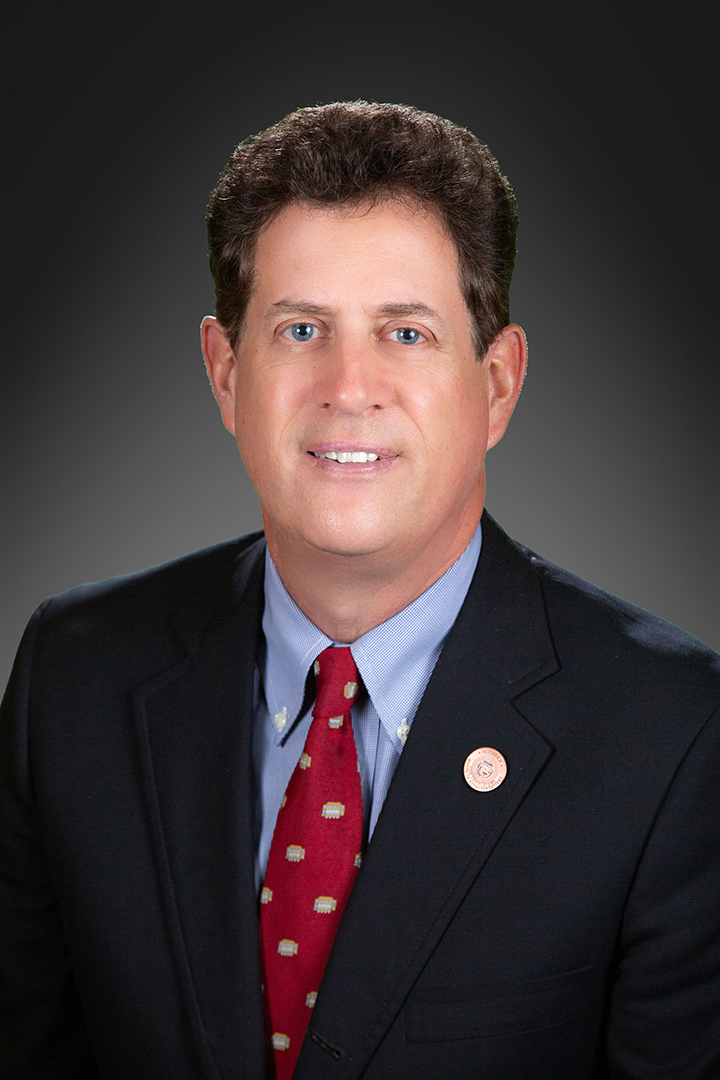
Rep. Chris Mathis
Sponsored bills
Maddy summaryHB 2922 amends Arizona law to exempt homeowners from obstruction charges when refusing police entry to their residential property. Specifically, it removes the criminal penalty for a residential property owner who declines to open a door to a peace officer seeking entry. The bill does not affect commercial properties or alter police authority to obtain warrants for searches. This change directly impacts homeowners who may refuse entry during routine police inquiries without facing felony charges under the obstruction statute.
Maddy summaryHB 2547 requires well drillers and property owners in Arizona to include GPS coordinates in all new well-drilling applications. The bill mandates that applications must detail the well's exact location via GPS, along with specifications like depth, casing type, and intended water use. For domestic water wells on properties of five acres or less, it adds a requirement for a site plan showing the well's location relative to septic systems and including county health authority approval. This law directly affects anyone seeking to drill or deepen wells in Arizona, standardizing location documentation and adding site plan requirements for small-scale domestic water systems.
Maddy summaryHB 2552 repeals two existing Arizona statutes: Section 9-500.36 (regarding energy measuring) and Section 11-269.14 (regarding reporting prohibitions). This bill directly affects entities previously subject to those reporting requirements, such as energy providers or utilities. The key mechanism is the removal of these specific legal provisions from the Arizona Revised Statutes. As a procedural repeal bill with no new requirements, it does not create new policy but simply eliminates outdated code.
Maddy summaryHB 2545 requires developers to obtain a "certificate of assured water supply" from the Arizona director before selling or leasing subdivided lands in active water management areas, or secure a written water service commitment from a designated city, town, or private water company. It establishes a process where the director designates cities, towns, and water companies with verified water supplies, and mandates that subdivisions must comply with these requirements before plat approval or real estate registration. This directly affects developers of new housing subdivisions, local governments approving land plats, and private water providers serving those areas. The bill also allows for reduced water demand requirements if gray water reuse systems are installed, as defined by state environmental rules.
Maddy summaryHB 2538 amends Arizona law to establish new water quality regulations for the state's waters, directly affecting businesses, municipalities, and agricultural operations that discharge pollutants. The bill requires the director to adopt rules for permitting discharges into "Waters of the United States" (WOTUS) and non-WOTUS protected waters, including exemptions for farming activities, irrigation ditches, and soil conservation practices. Key mechanisms include creating permit programs for point-source discharges, nonpoint-source pollution control, aquifer protection, and reclaimed water reuse, while setting fees for permits that fund water quality programs. These changes update Arizona's regulatory framework to align with federal Clean Water Act requirements for water quality management.
Maddy summaryHB 2473 creates a program to fund curbside composting in Arizona cities through grants. It establishes a special fund financed by fees from managing waste classified as hazardous in its state of origin but not in Arizona (e.g., waste transported from other states). Municipalities can apply for grants to start composting programs under rules set by the environmental agency, with the fund also covering administration of both the composting program and the hazardous waste management system. The bill directly affects cities seeking to expand waste reduction efforts, using existing fee structures to support new sustainability initiatives.
Maddy summaryHB 2543 amends Arizona's building permit and land division laws to clarify county authority and protect applicant choices. It prohibits counties from denying building permits based on the chosen utility provider (water, gas, or electric) and ensures permit fees don’t unfairly restrict utility options. For single-family homes in subdivisions, the bill requires applicants to identify property ownership interests and, if owning six or more properties, submit a public report - unless exempt under specific conditions like active water management areas. These changes directly affect homebuilders, subdivisions, and county permitting offices by standardizing processes and limiting county overreach.
Maddy summaryHB 2551 establishes an Office of Resiliency within the governor’s office and sets a 50% renewable energy target for Arizona’s electric utilities by 2035. The bill directly affects electric utilities (requiring them to generate half their power from sources like solar, wind, or geothermal) and Arizonans (through potential changes in electricity rates and infrastructure planning). Key provisions include creating a state office to develop a climate resiliency plan, advise on water/energy/transportation policies, and assess climate risks to systems like water resources and infrastructure. The bill does not yet take effect, as it is in early legislative stages (House first/second reading).
Maddy summaryHB 2549 modifies Arizona's groundwater replenishment rules for districts managing member lands and service areas. It requires districts to replenish groundwater in the same subbasin where water was withdrawn (starting December 31, 2029), directly affecting landowners in designated areas and groundwater districts. The bill also establishes a 10-year transition for municipal water providers with "assured water supply" designations to gradually assume replenishment obligations from member lands, beginning with 10% in the first year and increasing annually to 100% by year 10. This policy change aims to align replenishment locations with water usage and streamline responsibility between districts and municipal providers.