

Maddy summaryHB 2666 reclassifies threatening to share explicit images or force sexual acts as a felony. It increases penalties based on the victim’s age: a class 3 felony for adults, class 2 for teens aged 15-17 (requiring consecutive sentences with no probation), and class 2 for children under 15. Offenders cannot receive probation, early release, or sentence suspension for these crimes. The bill defines "sexual extortion" as threatening to damage property, harm reputation, or distribute explicit images of the victim.
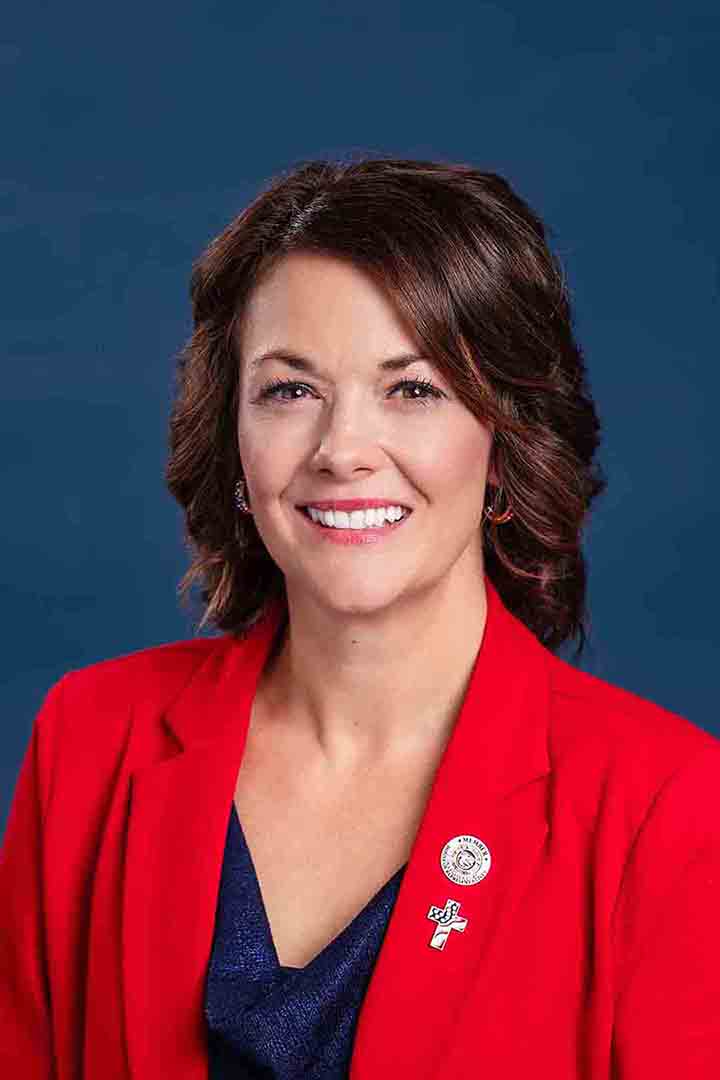
Rep. Rachel Keshel
Sponsored bills
Maddy summaryHB 2060 prohibits abortions at public educational facilities in Arizona except when necessary to save a woman's life. It applies to all public schools, colleges, universities (including those under the Arizona Board of Regents), and their employees acting in their official capacity. The bill explicitly bans institutions from performing abortions or encouraging/facilitating them, with exceptions only for life-saving medical emergencies as defined in existing law. This affects all public educational institutions and their staff, restricting abortion access on campus grounds. The legislation amends Arizona Revised Statutes sections 15-115.01 and 15-1630 to enforce these restrictions.
Maddy summaryHB 2040 would require Arizona public schools to provide students with information about current U.S. adoption practices and state adoption resources whenever school staff discuss contraception, STI testing, or dispense contraception. It also mandates that sex education curricula for grades 7-12 include specific content about adoption practices, resources, and related laws. Schools must make curriculum materials available for parental review and hold public hearings before adopting or updating programs. The bill is currently pending in the Arizona legislature and has not been enacted.
Maddy summaryHB 2615 establishes new requirements for supervised parenting time in Arizona family court cases. It mandates professional supervision (by trained paid supervisors) in high-risk cases - such as those involving domestic violence, child abuse, or recent protection orders - or when parties have a history of such offenses. For lower-risk cases without protection orders, courts may allow nonprofessional supervision (by trained unpaid volunteers meeting basic standards). The bill specifies detailed qualifications for both supervisor types, including specialized training on trauma, domestic violence, and safety protocols, plus background checks and documentation standards. This directly affects courts, parents in custody disputes, and individuals appointed as supervisors.
Maddy summaryThis Arizona bill (HB 2364) bans mailing, shipping, or delivering abortion-inducing drugs via courier, delivery, or mail services. It makes selling such drugs through these methods a class 5 felony (or class 4 for healthcare workers acting in their job), and receiving them this way a class 1 misdemeanor. The law specifically excludes drugs prescribed for non-abortion medical purposes. It defines "abortion-inducing drug" as any substance used for medication abortion.
Maddy summaryThis Arizona bill (HB 4004) requires child protective services to investigate all credible reports of child abuse or neglect, even if one parent is deemed a "protective parent" (a parent who can ensure the child's safety). It mandates investigations regardless of existing custody arrangements or the protective parent's resources, and directs agencies to develop safety plans, provide support services, and recommend modifications to parenting time when harm is suspected. The bill also requires annual public reporting on cases where investigations were declined, including reasons and outcomes. It directly affects child welfare agencies, parents in abuse allegations, and children involved in such cases.
Maddy summaryHCR 2016 is a proposed constitutional amendment that would establish rules for voting centers in Arizona elections. It allows counties to create voting centers (where voters can cast ballots at any location in the county) but prohibits using them "in place of or in addition to" designated polling places. The bill requires county boards of supervisors to approve voting centers through specific resolutions, with emergency centers needing separate board approval for particular election dates. This measure would affect county election administrators and voters by changing how polling locations are designated, pending voter approval.
Maddy summaryHB 2968 changes how family courts handle evidence in cases involving child custody or parenting time. It requires courts to admit relevant evidence about a child’s safety, well-being, trauma, or expressed wishes, as well as evidence about parent behavior, regardless of its format or whether it fits traditional "hearsay" rules. The bill mandates that criminal records of parents must be admitted in these cases and requires courts to make written findings on evidence relevance and credibility, with failure to do so being grounds for appeal. It also ensures both parents can submit evidence equally, and courts cannot allow one parent to present evidence more freely than the other without immediate appeal rights. This directly affects family courts, parents in custody disputes, and children’s safety considerations in legal decisions.
Maddy summaryHB 4027 renames Arizona's Loop 202 highway as the "Charlie Kirk Highway" for official records and signage. The bill requires all state documents, records, and transportation department signage to include the new name after enactment, without replacing any existing designations. This is a ceremonial procedural bill with no policy or funding changes.
Maddy summaryHB 2367 clarifies that certain low-speed neighborhood electric vehicles (NEVs) meeting federal safety standards (49 CFR §571.500) and designed for 20 mph or less are excluded from Arizona's standard vehicle classification for registration. This specifically exempts these vehicles from the typical vehicle license tax rules that apply to other alternative-fuel vehicles, meaning owners won't pay the standard $4-$5 annual tax. The bill directly affects owners of qualifying NEVs, such as neighborhood electric shuttles or low-speed electric vehicles without a VIN. It updates Arizona law to define these vehicles separately, ensuring they aren't subject to standard vehicle registration requirements.