

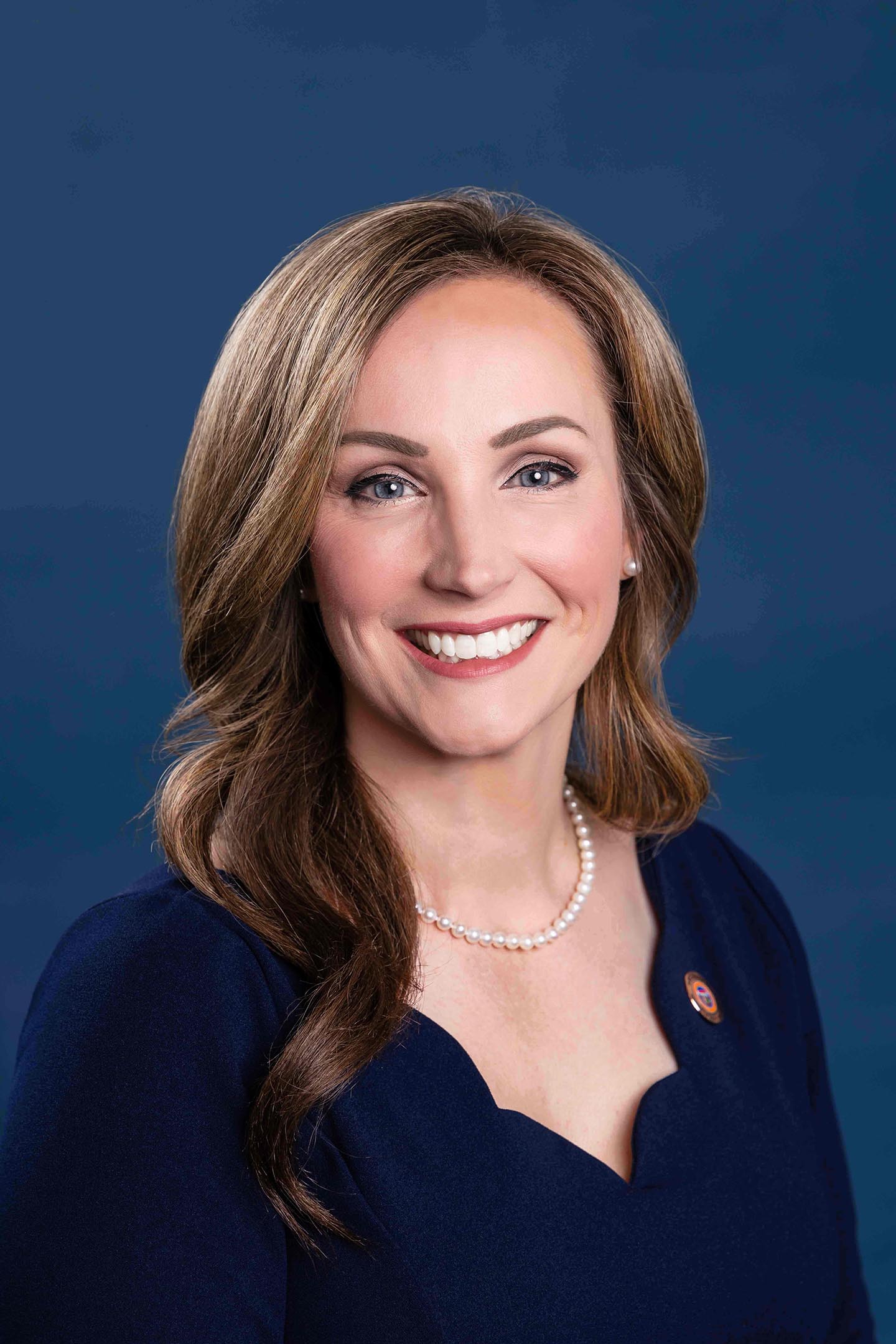
Photo of Julie Willoughby
R Arizona House · District 13

Rep. Julie Willoughby

Compare
Total votes
2,519
all sessions
Attendance
97%
83 missed
Near the chamber average
With party
96%
of cast votes
Higher than 80% of chamber peers
Bipartisan score
4%
crosses aisle rarely
Lower than 88% of chamber peers
Sponsored
263
bills & resolutions
Near the chamber average
Committees
6
assignments
263 bills and resolutions

Sponsored bills

Total
263
Primary
91
Co-sponsor
172
This page
263
matching current filters
Co-sponsor HB 4088
Failed · Arizona House · Co-sponsor
commercial motor vehicle; liability insurance

Maddy summaryHB 4088 requires motor carriers transporting agricultural commodities (like produce, livestock, or feed) for intrastate commerce in Arizona to maintain liability insurance covering emergency towing and recovery services. If a towing operator isn't paid for these services (directed by law enforcement), they can place a lien on the commercial vehicle and the transported commodities, which must be recorded with the Secretary of State. The bill excludes farm-to-field operations, farmer self-hauling, and non-commercial vehicles. It defines "agricultural commodity" broadly and "emergency towing" as services performed under law enforcement direction. The bill failed to pass on February 17, 2026.

Failed Feb 17, 2026 1 co-sponsor
Primary HB 2182
Introduced · Arizona House · Lead sponsor
emergency medical services; patient transport

Maddy summaryHB 2182 regulates how Arizona emergency medical technicians (EMTs) handle patient transport decisions. It prohibits EMTs from giving patients a medical diagnosis to encourage declining transport (unless requested) or advising against transport outside approved programs. EMTs must now clearly explain the health risks of not being transported. The bill also clarifies that informing patients of their right to decline transport is permitted, unless done to coerce them. These rules apply directly to EMTs and patients in Arizona's emergency medical services system.

Introduced Feb 16, 2026 0 co-sponsors
Co-sponsor HB 2958
In committee · Arizona House · Co-sponsor
AHCCCS; dental care; pregnant women

Maddy summaryHB 2958 expands dental coverage under Arizona's Medicaid program (AHCCCS) to include comprehensive dental care for pregnant women aged 21 and older, including extractions, without the annual $1,000 spending limit that applies to non-pregnant adults. This change ensures pregnant women enrolled in AHCCCS can access full dental treatment as part of prenatal care, removing prior financial restrictions. The bill directly affects pregnant women in the Medicaid program by adding this specific benefit to existing coverage. It does not alter dental coverage for non-pregnant adults or other program provisions.

In committee Feb 9, 2026 1 co-sponsor
Co-sponsor HB 2679
Introduced · Arizona House · Co-sponsor
firefighter; occupational disease; presumption

Maddy summaryHB 2679 creates a presumption that certain heart-related, perivascular, or pulmonary injuries, illnesses, or deaths in firefighters are work-related occupational diseases if they occur within 24 hours of a known incident during duty. To qualify, firefighters must have passed pre-employment physicals (without pre-existing conditions), followed NFPA 1582 medical standards, and been exposed to a specific event. Employers can only rebut this presumption with clear evidence of a pre-existing non-work condition that independently caused the issue, excluding factors like age, family history, or lifestyle. The bill explicitly states that tobacco use outside work duties cannot be used to challenge the presumption.

Introduced Feb 4, 2026 1 co-sponsor
Primary HB 2180
In committee · Arizona House · Lead sponsor
appropriation; AZ REACH

Maddy summaryHB 2180 appropriates $2.5 million from Arizona's general fund for the University of Arizona's AZ REACH program during fiscal year 2026-2027. The bill directly affects the University of Arizona as the recipient of this state funding. The legislature intends this appropriation to be ongoing in future years, establishing a recurring funding source for AZ REACH. This is a procedural funding bill with no substantive policy changes beyond the allocation amount and recipient.

In committee Feb 4, 2026 0 co-sponsors
Primary HB 2181
Introduced · Arizona House · Lead sponsor
death certificates; funeral establishments; timeline

Maddy summaryHB 2181 establishes a 21-day deadline for funeral homes and responsible persons to complete and submit death certificates after receiving human remains, replacing the previous "as soon as practicable" standard. It requires local registrars to register death certificates within 72 hours of receipt if they are complete and accurate, and mandates medical examiners to complete medical certification of death within 72 hours (excluding weekends/holidays) or note "pending" for the cause of death if unresolved. Final disposition of remains (e.g., burial or cremation) cannot occur until medical examiners release remains when the cause of death is pending. This bill directly affects funeral homes, medical examiners, and local registrars in Arizona by standardizing timelines for death certificate processing.

Introduced Feb 3, 2026 0 co-sponsors
Co-sponsor HB 2961
Introduced · Arizona House · Co-sponsor
special plate; returning warrior

Maddy summaryHB 2961 creates "returning warrior" special license plates for Arizona vehicle owners who pay a $32,000 one-time fee to design the plate. The department issues these plates after receiving the fee, with the plate design subject to department approval. Annual fees include a $17 donation to the "returning warrior special plate fund" (established by this bill), while $8 covers administration. This affects veterans or others who choose this plate option, directing funds to the specified fund rather than general state revenue.

Introduced Feb 3, 2026 1 co-sponsor
Co-sponsor HB 2942
Introduced · Arizona House · Co-sponsor
appropriation; DES; rehabilitation group homes

Maddy summaryHB 2942 allocates $12 million from Arizona’s general fund and $36 million in Medicaid funds annually for fiscal years 2026-2031 to increase reimbursement rates for rehabilitation group homes serving individuals with intellectual and developmental disabilities. The bill directly affects licensed group homes that provide care for these individuals, ensuring they receive higher payments under the health care coding system code T2016. Key provisions include mandatory annual funding increases to cover rising operational costs for these facilities. This policy change aims to stabilize funding for critical support services without altering eligibility or care standards.

Introduced Jan 29, 2026 1 co-sponsor
Co-sponsor HB 2677
Introduced · Arizona House · Co-sponsor
places of worship; unlawful imprisonment

Maddy summaryHB 2677 amends Arizona law to specifically prohibit preventing someone from entering or exiting a place of worship through physical blocking, detention, or force/threats. This directly affects individuals or entities who obstruct access to religious sites, such as security personnel or others blocking entrances. The bill classifies this act as a class 6 felony (unless the victim is safely released before arrest, making it a misdemeanor), adding it as a specific scenario under unlawful imprisonment. It defines "place of worship" per existing law and clarifies that this provision applies to the specific act of hindering religious access.

Introduced Jan 28, 2026 1 co-sponsor
Primary HB 2186
In committee · Arizona House · Lead sponsor
identity evidence; civil traffic violations

Maddy summaryHB 2186 requires drivers and passengers to provide specific identity evidence during traffic stops when requested by police. Drivers must show a document containing their full name, date of birth, address, physical description (including height, weight, eye/hair color, and sex), and signature, or verbally provide name, DOB, and address if not driving. It amends Arizona law to classify failing to comply with this requirement as a class 2 misdemeanor, with a defense available if a valid driver license is later presented to court. The bill directly affects individuals stopped for traffic violations who cannot produce a driver license. It specifies concrete ID requirements to standardize enforcement during traffic stops.

In committee Jan 28, 2026 0 co-sponsors
Showing 81 to 90 of 263 bills
Previous 1 … 8 9 10 … 27 Next