

Maddy summaryHB 2702 terminates Arizona's Criminal Justice Commission (ACJC) on December 31, 2025, and repeals its statutory authority on July 1, 2026. The bill states that the ACJC engaged in activities like lobbying for surveillance data collection on law-abiding citizens and targeting concealed carry permit holders, which the legislature deemed harmful to civil liberties and a misuse of taxpayer funds. It also cites the commission's creation of a disinformation task force as part of a censorship apparatus. This legislation, which passed the House and is under Senate consideration, ends the ACJC's operations and requires legislative changes to state law for the next session.
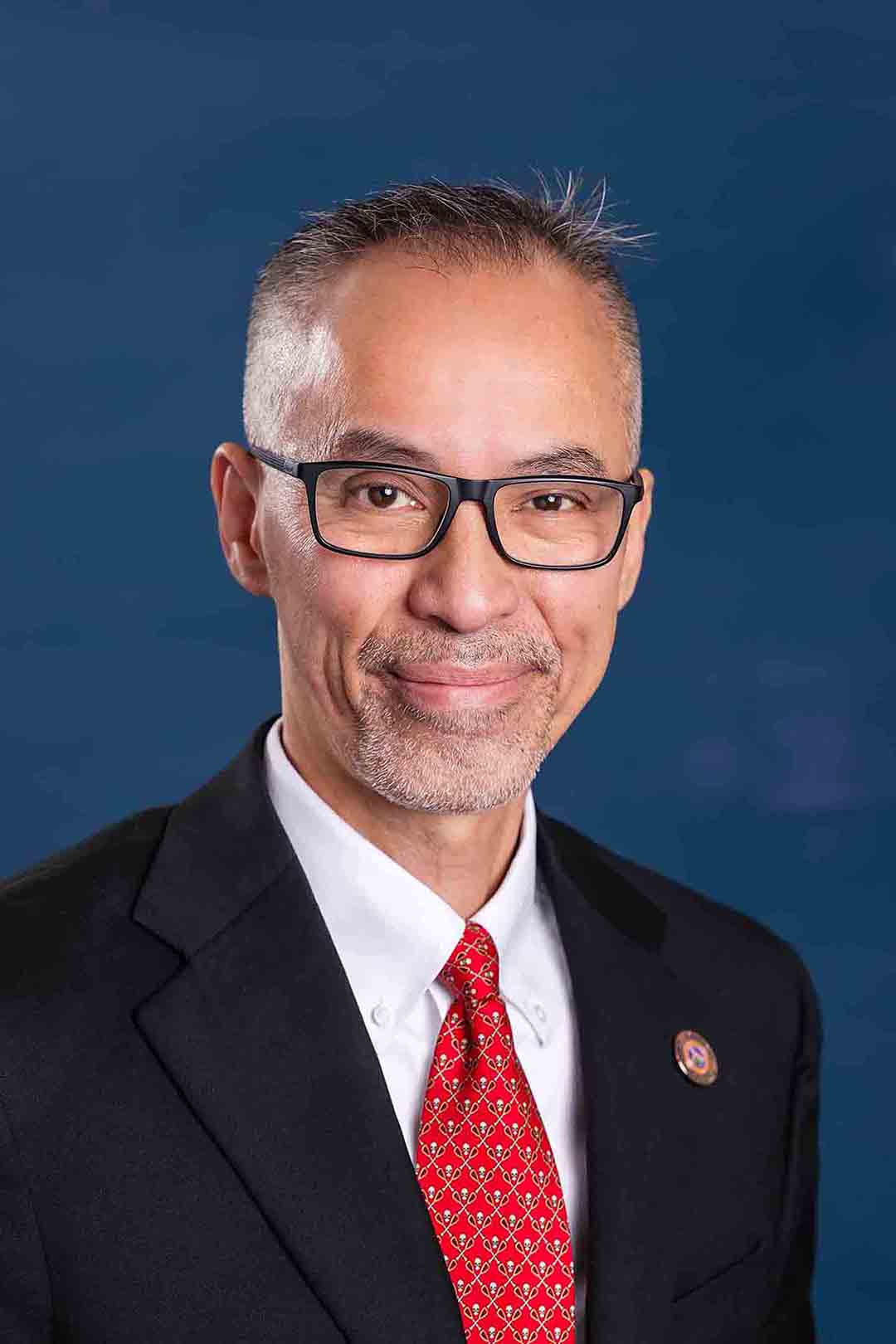
Rep. Quang Nguyen
Sponsored bills
Maddy summaryHB 2384 requires Arizona insurers to use wildfire risk modeling for fire insurance policies in cities and towns with fewer than 150,000 residents. It mandates that insurers base premiums on community-level wildfire mitigation efforts, specifically rewarding properties in "Firewise USA Site" communities that have implemented proven safety measures. This policy change directly affects homeowners in smaller Arizona communities and insurers operating there, shifting how wildfire risk is assessed from individual properties to community-wide safety programs. The law aims to incentivize community-wide wildfire preparedness by offering lower insurance rates to areas with certified mitigation efforts.
Maddy summaryThis bill amends Arizona's definition of "dangerous drug" to include specific synthetic compounds under new categories, such as cannabimimetic substances (e.g., JWH-018, JWH-073) and other listed chemicals. It directly affects individuals possessing or using these substances, as it establishes legal thresholds for enforcement under Arizona law. The key provision redefines "dangerous drug" to explicitly cover these synthetic compounds, including their salts, isomers, and derivatives, without exception. This change clarifies legal boundaries for law enforcement and pharmacists (referencing the Arizona State Board of Pharmacy) regarding these substances. Note: The bill's title mentions "hydrolyzed cocaine," but the actual text focuses on defining dangerous drugs, not hydrolyzed cocaine.
Maddy summaryHB 2115 makes it illegal to observe a nude minor solely for the purpose of sexual gratification, classifying this as a class 2 felony. The law directly affects individuals who engage in this conduct, applying to all minors regardless of age. This amendment to Arizona law (Section 13-3553) specifically adds "observing a nude minor for sexual gratification" as a new prohibited act under sexual exploitation of a minor charges.
Maddy summaryHB 2785 prohibits assisted living facilities and nursing care institutions in Arizona from restricting residents' use of electronic monitoring devices in their private rooms. It specifically bans facilities from prohibiting installation, discriminating against residents who choose to use monitoring, or retaliating based on consent decisions. The law defines "electronic monitoring" as devices recording audio/video in a resident's room for their use or authorized parties, and allows civil penalties for violations. The bill passed the House in March 2025 but failed in the Senate on March 26, 2025.
Maddy summarySB 1207 amends Arizona's Medicaid program (AHCCCS) to add speech therapy as a covered outpatient service for adults aged 21 and older, and to remove cochlear implants from the exclusion list for prosthetic devices. This directly affects AHCCCS members who require these specific health services. The bill changes the coverage rules by explicitly including speech therapy under outpatient services and ensuring cochlear implants are covered as prosthetic devices, aligning with federal Medicaid requirements. These are concrete policy changes to the list of covered health services under Arizona law.
Maddy summaryHB 2604 establishes Arizona's Child and Family Representation Program within the Administrative Office of the Courts to improve legal representation for children and parents in dependency cases (like foster care or child welfare proceedings). The program will assess training needs, recommend minimum standards for court-appointed attorneys, audit counsel practices, handle ethical complaints, and develop metrics to measure representation quality. It appropriates $200,000 and one full-time staff position from the state general fund for fiscal year 2025-2026 to implement these functions. The bill directly affects children and parents in dependency cases, their court-appointed attorneys, and the courts overseeing these proceedings.
Maddy summaryHB 2606 allocates $50 million from Arizona's state general fund for fiscal year 2025-2026 to the Department of Public Safety for local border support. The funds will directly support local law enforcement by creating border-focused officer positions to address drug trafficking, human smuggling, and illegal immigration, and provide grants to cities, towns, and counties for prosecuting and detaining individuals charged with these border-related crimes. The bill also allows funding for equipment like vehicles or technology needed for border operations. This is a funding measure, not a policy change, and does not alter which activities are considered crimes.
Maddy summaryHB 2736 establishes a five-year pilot program requiring Arizona state agencies to implement and upgrade data encryption systems meeting strict security criteria. It directly affects the Secretary of State, Department of Revenue, Department of Administration, and the Legislature, each implementing the system in sequential fiscal years starting in 2026. The bill mandates that encryption systems must be U.S.-owned, quantum-proof, use U.S. patents, allow key resets without third-party access, and include detailed audit trails. The Department of Administration must report annually on progress and security, with a final evaluation due in 2031, and the program expires June 30, 2032.
Maddy summaryHB 2608 requires Arizona elected or appointed public officers to provide a photograph taken within the past 12 months for all official uses when assuming office. This applies directly to individuals holding public office, such as mayors, council members, or county officials. The bill mandates that these photos be used for official purposes like identification, public records, or official communications. It overrides any existing requirements regarding officer photographs under other laws.