

Maddy summaryThis bill establishes a new interdivisional taskforce within the Securities and Exchange Commission to address the needs and challenges faced by senior investors, defined as individuals over the age of 65. The taskforce will be led by a director appointed by the SEC Chairman and will include staff from enforcement, compliance, and investor education divisions to identify problems senior investors face, such as financial exploitation and cognitive decline. The group will produce biennial reports to Congress analyzing trends, regulatory gaps, and recommendations for policy improvements while coordinating with state regulators and other federal agencies. Additionally, the bill requires the Government Accountability Office to conduct a study within two years of enactment to assess the economic costs and frequency of financial exploitation of senior citizens. The taskforce will operate for ten years using existing funds without additional compensation for its members.
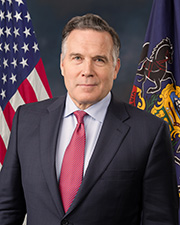
Sen. David McCormick
Sponsored bills
Maddy summaryThis bill would require the U.S. Secretary of State to annually report on whether the Polisario Front, a group involved in the Western Sahara conflict, has received military support from Iranian-linked terrorist organizations. If such cooperation is confirmed, the President would designate the Polisario Front as a foreign terrorist organization and impose financial sanctions that block its assets and prohibit U.S. transactions with it. The legislation defines specific types of military support that would trigger sanctions, including weapons, drones, and intelligence sharing. It applies to the Polisario Front and any successor organizations, while defining Iranian-affiliated terrorist groups as those officially designated by the U.S. government.
Maddy summaryThis bill establishes a sanctions framework that would impose economic penalties on the Chinese government and Communist Party if they threaten Taiwan's security. It requires the President to identify threats and then blocks property, restricts financial transactions, and prohibits investments in sanctioned Chinese entities. The legislation also allows for increased import duties on Chinese goods and bans the trading of Chinese securities on U.S. exchanges. Key provisions include targeting Chinese officials, state-owned banks, and companies that support China's military-industrial capacity, while providing the President authority to waive sanctions for national security reasons.
Maddy summaryThis bill requires the Department of Veterans Affairs to establish at least five centers of excellence focused on innovative therapies for treating veterans with specific conditions like PTSD, depression, and chronic pain. The VA Secretary must select facilities based on competitive peer reviews that evaluate scientific merit, research capabilities, and partnerships with medical schools for training. Each center must include an advisory committee with veteran representatives and develop a national data repository to track treatment outcomes. The legislation authorizes $30 million annually for research and education activities at these centers while ensuring geographic distribution across the country.
Maddy summaryThis bill, titled the Stop Unemployment Fraud Act, requires states to verify the identity of unemployment compensation claimants using government-issued IDs and supporting documents, while also mandating data matching with systems like the National Directory of New Hires to detect fraud. It prohibits states from relying solely on a claimant's self-attestation to prove eligibility and strengthens work search requirements by mandating that claimants maintain and submit weekly records of job search activities. The legislation also allows states to use up to 5% of recovered overpayments or collected contributions to fund fraud prevention efforts, technology upgrades, and proper employment classification systems.
Maddy summaryThis bill, known as the Foreign Service Age Integration and Reform Act of 2026, would change the mandatory retirement age for U.S. Foreign Service officers. Currently, these employees must retire at age 65, but the bill would raise that limit to age 67 or the applicable Social Security Full Retirement Age, whichever is higher. The change directly affects career diplomats and Foreign Service personnel by allowing them to continue working longer before being required to leave the service. This adjustment aligns the retirement rules for Foreign Service officers with the retirement age system used for Social Security benefits.
Maddy summaryThis bill requires the Department of Housing and Urban Development and the Economic Development Administration to create an agreement to better coordinate their joint housing and economic development projects. The agreement would streamline application processes, standardize language in funding notices, reduce duplicate reporting requirements, and establish clear contact points for applicants. Additionally, the two agencies must share research and market data to support evidence-based decision-making. Within one year of enactment, the agencies must submit a report to Congress with recommendations for further improving their collaboration and removing barriers to joint projects.
Maddy summaryThis resolution designates February 21-28, 2026, as "National FFA Week" to honor the National FFA Organization’s work in agricultural education. It recognizes FFA’s role in developing leadership and career skills for students (with over 1 million members nationally) and celebrates the 50th anniversary of Alaska’s State FFA Association, which has 19 chapters and 493 members. As a symbolic resolution, it has no legal effect but formally expresses Senate support for FFA’s mission.
Maddy summaryThis bill, titled the Enhanced Cybersecurity for SNAP Act of 2026, requires the U.S. Department of Agriculture to update cybersecurity and digital service regulations for Electronic Benefit Transfer (EBT) cards used in the Supplemental Nutrition Assistance Program. The law mandates that states issue chip-enabled EBT cards within four years, ban magnetic stripe cards on new cards, and eliminate replacement fees for cards lost, stolen, or damaged due to fraud. It also requires online transaction security measures, provides funding for retailers to upgrade payment terminals, and establishes reporting requirements to track fraud and system performance.
Maddy summaryThis bill, known as the TAP Promotion Act, would allow representatives from recognized veterans service organizations to join presentations that inform service members about benefits they can access after leaving the military. These presentations are part of the Transition Assistance Program, which helps veterans prepare for civilian life, and the law requires that they be standardized and approved by the Department of Veterans Affairs before being used. The bill also mandates that the presentations include information on how veterans service organizations can help with filing benefit claims, while prohibiting any effort to encourage members to join a specific organization. Additionally, the Department of Veterans Affairs must submit an annual report to Congress detailing which organizations participated in these sessions and how many service members attended.