

Maddy summaryThe Turkey Human Rights Promotion Act of 2026 conditions U.S. security assistance on Turkey's release of political prisoners and its repeal of laws used to suppress free expression. It requires the Secretary of State to certify that Turkey has taken sustained steps to reduce the number of detainees held for exercising their human rights and to comply with European Court of Human Rights rulings before any military funds can be spent. If these conditions are not met, the bill mandates sanctions against specific Turkish officials, visa restrictions, and a ban on exporting surveillance technology to the country. Additionally, the legislation directs funding toward civil society groups and independent media outlets while requiring annual reports on human rights conditions in Turkey.
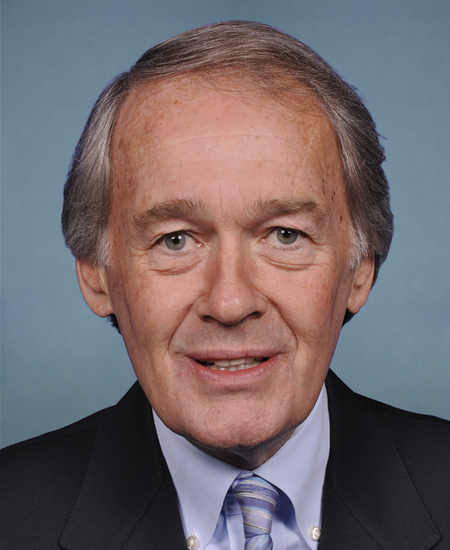
Sen. Edward J. Markey
Sponsored bills
Maddy summaryThis bill establishes the Green New Deal for Public Schools Act, which creates new funding streams to help U.S. public schools, including those run by the Bureau of Indian Education, become environmentally sustainable and resilient to climate change. It directs billions of dollars toward retrofitting existing school buildings to be energy-efficient and zero-carbon, constructing new green schools, and hiring local educators and support staff to improve school environments and community partnerships. The legislation also mandates that a significant portion of funds be used in environmental justice communities to address inequities, while requiring contractors to pay prevailing wages and prioritize hiring from local and historically disadvantaged groups. Additionally, the bill sets up a new office within the Department of Education to coordinate these efforts and ensures that schools can serve as community centers during disasters by upgrading infrastructure for power, water, and internet access.
Maddy summaryThe Restoring Justice for Workers Act prohibits employers from requiring workers to sign agreements that force them to resolve disputes through individual arbitration rather than in court or as part of a group. It bans retaliation against employees who refuse to arbitrate and mandates that any post-dispute arbitration agreements be truly voluntary, requiring plain language explanations, a 45-day waiting period, and written consent. The bill also amends the National Labor Relations Act to make it illegal for employers to enter into or enforce contracts that prevent workers from joining together to file joint or class-action lawsuits regarding workplace rights. These changes apply to all workers, including independent contractors, and take effect immediately upon enactment.
Maddy summaryThis bill updates federal laws to ensure that members of the Army, Navy, Marine Corps, Air Force, and Space Force cannot be excluded from jobs or assignments based on their gender. It requires the Department of Defense to establish occupational standards using scientifically rigorous methods that evaluate technical, tactical, cognitive, and physical abilities without gender bias. Additionally, the legislation mandates annual reports to Congress detailing any involuntary reclassifications or separations and requires a detailed review of the operational effectiveness of Army and Marine Corps ground combat units. These changes are scheduled to take effect on September 30, 2026, with the first required report due the following year.
Maddy summaryThe Audit the Pentagon Act requires the Department of Defense to reduce its funding by 2 percent if it fails to receive a clean financial audit for a given year. This penalty applies to all departments, agencies, and elements within the Pentagon starting after fiscal year 2024. The withheld money is distributed proportionally across various programs and projects, while the remaining funds are sent to the Treasury to help reduce the national deficit.
Maddy summaryThis joint resolution seeks to officially reject a rule proposed by the Department of Health and Human Services regarding the Child Care and Development Fund. If passed, the measure would prevent the new regulations from taking effect, thereby maintaining the previous rules governing how federal child care funds are administered. The bill directly impacts families and organizations that rely on CCDF subsidies for child care assistance by blocking the specific administrative changes outlined in the disputed rule. By exercising its authority under the Congressional Review Act, Congress aims to ensure the proposed flexibility measures do not alter the current structure of child care funding.
Maddy summaryThe Green New Deal for Health Act establishes a comprehensive federal framework to address the intersection of climate change and public health by creating new offices, expanding funding, and mandating specific actions across the health care sector. It directly affects hospitals, health care providers, medical manufacturers, health professions schools, and communities identified as environmentally or medically underserved. Key provisions include establishing an Office of Climate Change and Health Equity to develop a national strategic action plan, requiring hospitals to provide detailed notifications and mitigation plans before discontinuing services or closing, and offering grants to modernize medical facilities for climate resilience. The bill also mandates that the health care sector disclose climate risks associated with medical supplies, expands Medicare coverage for home resiliency services like heat pumps for vulnerable patients, and allocates billions in funding to train health workers on climate-related health risks. Additionally, the legislation creates a research initiative to study climate impacts on health and establishes requirements for green, zero-emission medical manufacturing and supply chains.
Maddy summaryThis joint resolution seeks to disapprove a rule issued by the Small Business Administration that changes citizenship and residency requirements for 7(a) and 504 business loans. If passed, the measure would cancel the new regulations, preventing any updates to who is eligible to own or apply for these specific types of government-backed loans. The bill directly affects small business owners and lenders who might have been impacted by the proposed restrictions. By rejecting the rule, Congress intends to stop the changes from taking legal effect.
Maddy summaryThis Senate resolution recognizes the importance of independent living and economic self-sufficiency for individuals with disabilities, emphasizing their right to live in their own homes and communities. It calls on the Department of Justice to rescind a recent opinion that the Senate views as undermining the legal requirement to provide community-based services instead of institutional care. The document also urges various federal agencies to improve funding for home and community-based services, increase accessible housing and transportation, and promote competitive employment opportunities for people with disabilities. Additionally, the resolution pledges bipartisan efforts to address barriers faced by individuals with disabilities, including those of color, and opposes cuts to the Medicaid program that could limit access to essential support services.
Maddy summaryThis bill establishes a formal code of conduct for all federal judges and specifically requires the Supreme Court to create its own set of ethical rules for justices. It creates a new position called Ethics Investigations Counsel to enforce these rules, investigate potential violations, and publish annual public reports on the findings. Additionally, the legislation mandates that Supreme Court justices publicly explain their reasons for disqualifying themselves or denying requests for disqualification in any case.