

Maddy summaryThis bill, the Restoring College Access and Affordability Act, primarily reverses several changes made to federal student loan and grant programs in previous legislation. It restores previous loan limits, repayment terms, and deferment options that were altered by prior laws, affecting current and future student borrowers. The bill also modifies eligibility rules for Pell Grants and adjusts criteria for determining which educational programs can be deemed low-earning, specifically including programs that award associate's degrees and certificates. Additionally, it delays certain federal regulations related to borrower defense claims and closed school discharges, while reducing the excise tax on private college endowment income to 1.4 percent.
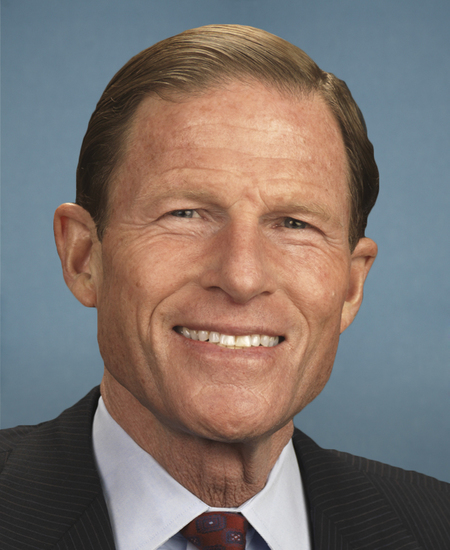
Sen. Richard Blumenthal
Sponsored bills
Maddy summaryThis bill establishes a funding mechanism to support youth vaping prevention efforts by increasing tobacco industry user fees and expanding how those fees are collected and allocated. It requires tobacco manufacturers and importers to submit detailed sales data to the FDA, which will use this information to calculate fees based on market share and distribute funds for public education campaigns targeting teens and minors. The legislation also mandates annual reporting to Congress on how user fees are spent between different types of tobacco products and requires the FDA to explain how it ensures sufficient funding for youth vaping prevention education.
Maddy summaryThe STOP Corrupt Bets Act of 2026 prohibits trading on prediction markets related to political elections, government actions, sporting events, and military operations through registered financial entities. This ban applies to contracts, transactions, or swaps involving these topics unless they are used for legitimate hedging or commercial risk mitigation. The bill also directs the Comptroller General to conduct a study on prediction markets, focusing on insider trading, impacts on young adults, and ways to address illegal activities in both domestic and foreign markets. Additionally, the legislation clarifies that it does not override state laws regulating gambling.
Maddy summaryThis bill extends eligibility for the Special Supplemental Nutrition Program for Women, Infants, and Children (WIC) to new mothers for up to two years after giving birth, instead of the current six-month limit. It also adjusts the breastfeeding requirement to allow continued participation for 24 months rather than one year, helping families receive nutritional support during a longer postpartum period. The legislation requires the Secretary of Agriculture to submit a report to Congress within two years evaluating how these changes affect maternal and infant health, breastfeeding rates, and family experiences. Directly affected individuals include new mothers and their infants who currently lose access to WIC benefits before the end of their first year postpartum.
Maddy summaryThis bill creates two grant programs to help prevent suicide among individuals under 26 years old by funding health care and education initiatives. The first program provides up to $20 million to states, health departments, hospitals, and other organizations to train health care providers on identifying suicide risks, discussing firearm safety, and connecting at-risk individuals with support services. The second program allocates $10 million to medical and nursing schools to develop curricula on suicide prevention and safe firearm storage for health care professionals. Additionally, the bill authorizes the use of up to 15 percent of the first grant's funds to distribute secure gun storage devices at reduced or no cost to households with youth, along with counseling on their use. The Department of Health and Human Services will maintain an informational website and submit annual reports to Congress on the programs' progress through fiscal year 2030.
Maddy summarySJRES 103 is a congressional disapproval resolution targeting a Department of Veterans Affairs (VA) rule on reproductive health services for veterans. The resolution, if passed, would block the VA rule from taking effect by invoking the Congressional Review Act (Chapter 8 of Title 5, U.S. Code), meaning the rule published in the Federal Register (December 31, 2025) would have no legal force. This directly affects the VA’s ability to implement new guidelines for reproductive health services at its facilities, preserving existing policies instead. The resolution does not create new policy but halts a specific administrative rule.
Maddy summaryThis joint resolution seeks to disapprove a rule issued by the National Credit Union Administration that would remove fee reporting requirements. If passed, the resolution would nullify the rule, meaning credit unions would need to continue reporting fees as previously required. The measure directly affects the National Credit Union Administration and financial institutions operating under its oversight. It uses the Congressional Review Act process to overturn federal agency rules without changing the underlying law.
Maddy summaryThis bill, known as the Plastic Pellet Free Waters Act, directs the Environmental Protection Agency to ban the discharge of pre-production plastic pellets and related materials into wastewater and runoff from specific industrial facilities. It requires the EPA to issue new rules within 60 days that prohibit these discharges from factories that make, use, package, or transport plastic pellets, as well as from facilities regulated under existing federal water pollution regulations. The law mandates that these new restrictions be included in all wastewater and stormwater permits issued by the EPA and state programs, as well as in performance standards for affected industrial point sources. This legislation directly impacts manufacturers and distributors of plastic pellets and aims to prevent plastic pollution from entering water systems during the production and packaging stages.
Maddy summaryThe WIPPES Act (S 1092) requires manufacturers and retailers to label specific wipes with a clear "Do Not Flush" notice and symbol. It directly affects producers of baby wipes, antibacterial wipes, cleaning wipes, and personal care wipes (like makeup remover or feminine hygiene wipes) that could be flushed. The law mandates precise labeling on packaging - ensuring visibility, high contrast, and specific placement depending on package type - while banning all claims that these wipes are flushable. Enforcement falls to the Federal Trade Commission under existing consumer protection laws, and the federal standard preempts conflicting state regulations.
Maddy summaryThis bill amends the Marine Mammal Protection Act to create new provisions specifically for sea turtles. It establishes a dedicated $5 million annual grant program (2025-2030) for sea turtle rescue and rehabilitation, funded through a new "Sea Turtle Rescue, Rehabilitation, and Rapid Response Fund" with $500,000 yearly. Eligible applicants include coastal organizations with Endangered Species Act authorizations or cooperative agreements, required to follow specific care standards and data reporting. The law directly affects wildlife rehabilitation groups and coastal communities handling stranded sea turtles by providing targeted federal funding and clear grant eligibility criteria.