

Robocall Trace Back Enhancement Act This bill provides liability protection for specified information-sharing activities undertaken to trace the origins of unlawful robocalls, illegally spoofed calls, and other illegal calls. Specifically, the bill protects a designated consortium that conducts private-led efforts to trace unlawful robocalls from liability for receiving, sharing, or publishing information about illegal calls, including their origin or source. The bill also applies liability protection to a voice service provider (i.e., a provider of any service that enables real-time, two-way voice communications) or other entity or person that shares information with the consortium.
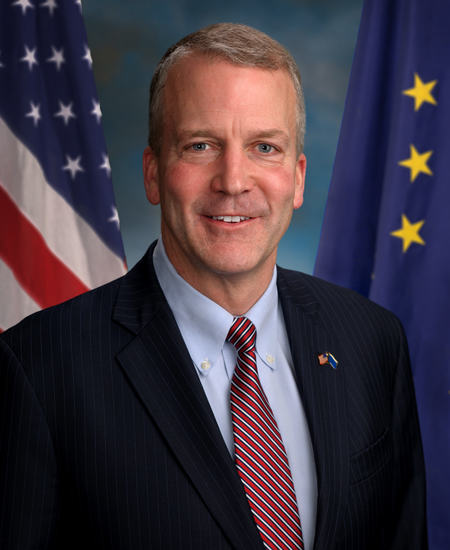
Sen. Dan Sullivan
Sponsored bills
Protecting the American Taxpayer and Medicare Act This bill makes several budgetary and technical changes, particularly in relation to Medicare. Specifically, the bill continues to exempt Medicare from sequestration until March 31, 2022. (Sequestration is a process of automatic, usually across-the-board spending reductions under which budgetary resources are permanently cancelled to enforce specific budget policy goals.) Additionally, the bill (1) temporarily extends other provisions under Medicare, including a payment increase under the physician fee schedule; and (2) requires any debits recorded for FY2022 on the statutory pay-as-you-go (PAYGO) scorecards to be deducted from the scorecards for 2022 and added to the scorecards for 2023.
VA Electronic Health Record Transparency Act of 2021 This bill requires the Department of Veterans Affairs to report on the costs of its Electronic Health Record Modernization Program, including by describing all expenses driven by the program.
Maddy summarySRES 460 is a non-binding Senate resolution designating November 2021 as "National Runaway Prevention Month." It aims to raise public awareness about youth homelessness by highlighting statistics on vulnerable groups, including LGBTQ youth, youth of color, and those in foster care. The resolution encourages community engagement and collaboration among organizations, schools, and local groups to address the crisis. It does not create new laws or funding but formally recognizes the issue and supports existing awareness efforts led by groups like the National Runaway Safeline.
This resolution supports (1) the goals and ideals of World AIDS Day, including the goal to achieve zero new HIV infections, zero discrimination, and zero AIDS-related deaths; (2) efforts to end the HIV epidemic in the United States and around the world by 2030; (3) continued funding for prevention, care and treatment services, and research programs for communities impacted by HIV and people living with HIV in the United States and globally; and (4) continued leadership by the United States in domestic, bilateral, multilateral, and private sector efforts to fight HIV. Finally, the resolution urges other members of the international community to sustain and scale up their support for, and financial contributions to, efforts around the world to combat HIV.
Section 401 Certification Act The bill provides statutory authority for the rule published on July 13, 2020, by the Environmental Protection Agency (EPA) entitled Clean Water Act Section 401 Certification Rule . Under Section 401 of the Clean Water Act, an applicant for a federal license or permit to conduct an activity that may result in any discharge into navigable waters must also obtain a certification—or waiver of such certification—from a relevant state, intrastate agency, or Indian tribe that the proposed activity will not violate certain water quality requirements of the state or Indian tribe. The rule revised existing regulations, including by limiting the scope of the certification review process as well as the time frame for a state, interstate agency, or Indian tribe to issue a certification.
Colonel John M. McHugh Tuition Fairness for Survivors Act of 2021 This bill requires the Department of Veterans Affairs to disapprove courses of education provided by public institutions of higher learning if such institutions charge a higher rate for tuition and fees than in-state tuition for individuals who are entitled to educational assistance under the Survivors' and Dependents' Educational Assistance program.
Arctic Focus Act This bill directs the Coast Guard to undertake various efforts to maintain a persistent presence in the Arctic to advance the national security interests of the United States. The Coast Guard must prioritize icebreaker deployments to the Arctic; provide sufficient icebreaking activity to keep the Northwest Passage sea lanes open for commerce, national defense, rescue and recovery operations, and scientific exploration by 2030; permanently station at least one ice-breaking vessel within the Arctic by the earlier of one year after the delivery of the first Polar Security Cutter, or 2030; and continuously patrol the Arctic with at least one major Coast Guard cutter that is able to execute search and rescue operations, fisheries enforcement, pollution response, and support for national defense operations. The department in which the Coast Guard is operating must submit a report to the appropriate congressional committees that describes the ability and time line to conduct a transit of the Northern Sea Route and periodic transits of the Northwest Passage, and that includes a plan to implement the activities set forth in this bill.
Commitment to Veteran Support and Outreach Act This bill authorizes the Department of Veterans Affairs (VA) to provide grants to states to implement programs that improve outreach and assistance to veterans and their families to ensure that such individuals are fully informed about veterans' benefits and programs. Specifically, the VA may provide grants to states to (1) implement or enhance outreach activities or activities to assist in the development and submittal of claims for veterans, or (2) increase the number of county or tribal veterans service officers in the state. The VA must prioritize awarding grants in areas with a critical shortage of county or tribal veterans service officers, areas with high rates of suicide among veterans, and areas with high rates of referrals to the Veterans Crisis Line.
Maddy summarySRES 451 is a commemorative Senate resolution honoring the late Senator Max Cleland (D-GA), who died November 9, 2021. The resolution recognizes his service as a Vietnam War veteran (losing both legs and an arm in combat), his 50+ years of public service including roles as Georgia State Senator, Secretary of State, U.S. Senator, and Administrator of the Veterans Administration, and his advocacy for veterans. It formally expresses the Senate’s "profound sorrow" and "deep regret" over his death, commemorates his legacy of service to Georgia and veterans, and requests the Secretary of the Senate transmit the resolution to his family. This is a ceremonial resolution with no policy changes or legal effect.