This resolution supports the designation of National Clean Energy Week.
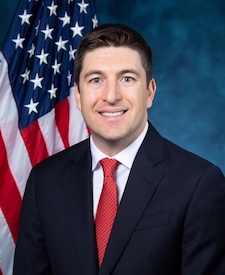
Rep. Bryan Steil
Sponsored bills
Renter Protection Act of 2021 This bill limits the use and availability of assistance provided under certain emergency rental assistance programs created in response to the COVID-19 pandemic. For example, rental assistance not yet used by grantees to assist eligible households as of July 1, 2021, must only be used for rental arrears after this date, and not for rent, utilities and home energy costs and arrears, or other expenses as allowed under current law. Further, the bill changes the deadline for distribution of these funds from September 30, 2022, to December 31, 2021.
Guaranteeing Healthcare Access to Personnel Who Served Act This bill addresses the administration and provision of health care to veterans through the Department of Veterans Affairs (VA) and non-VA providers. First, the bill provides statutory authority for the eligibility thresholds for when a veteran must receive non-VA care under the Veterans Community Care Program (VCCP) for primary care, mental health care, noninstitutional extended care services, specialty care, or specialty services. Additionally, the bill establishes access to care standards for non-VA care under the VCCP, meaning a veteran's appointment must be within specified distances and time frames. Among other requirements, the VA must also implement an 18-month pilot program to allow certain veterans to use a website or mobile application to request, schedule, and confirm medical appointments with VCCP providers; ensure that VCCP third party administrators and credentials verification organizations comply with specified requirements to help ensure that certain health care providers are excluded from providing non-VA health care services; develop a strategic plan to ensure the effectiveness of the telehealth technologies and modalities delivered by the VA; and establish an online health care education portal for veterans. The bill requires the Government Accountability Office to report on (1) the VA program under which third parties provide transportation for veterans who are seeking VA services or benefits, (2) VA telehealth services, and (3) the VA's Foreign Medical Program. Finally, the Paperwork Reduction Act does not apply to the voluntary collection of information during research conducted by the Veterans Health Administration.
Curriculum Review of Teachings Transparency Act or the CRT Transparency Act This bill requires a local educational agency, in order to receive certain federal education grants, to post on a publicly accessible website the curriculum for each grade level of its elementary and secondary schools.
Afghanistan Withdrawal Oversight and Liability Act or the AWOL Act This bill prohibits using federal funds appropriated for FY2021 to provide support to the Taliban. The bill also requires reports and certifications related to Afghanistan. Specifically, no FY2021 funds may be used to (1) make payments or contributions of material support to the Taliban, or (2) provide relief from sanctions against the Taliban or its leaders. The bill requires the President to report to Congress on efforts to evacuate U.S. citizens and lawful permanent residents from Afghanistan. The President must also certify to Congress when all such individuals seeking evacuation from Afghanistan have been evacuated. The Department of State must periodically report to Congress on any agreements between the United States and the Taliban. Within seven days of the United States reaching an agreement with the Taliban, the State Department must provide to Congress all materials relevant to that agreement. The bill also requires the Office of the Inspector General of the State Department to report to Congress about the State Department's compliance with legal requirements in connection to agreements with the Taliban. Specifically, the office must assess compliance with a law that requires the State Department to provide certain information to Congress when the United States enters certain international agreements. The Department of Defense must report to Congress concerning U.S. equipment, property, and classified material that was destroyed, surrendered, or abandoned in Afghanistan during a period starting from February 29, 2020.

Puppies Assisting Wounded Servicemembers for Veterans Therapy Act or the PAWS for Veterans Therapy Act This bill implements a program and a policy related to service dog therapy for veterans. Specifically, the bill requires the Department of Veterans Affairs (VA) to implement a five-year pilot program to provide canine training to eligible veterans diagnosed with post-traumatic stress disorder as an element of a complementary and integrative health program. Eligible veterans are those who are enrolled in the VA health care system and have been recommended for participation by a qualified mental health care provider or clinical team. The VA must seek to enter agreements containing specified elements with accredited nongovernmental entities that have demonstrated ability to provide canine training. Veterans who participate in the program are authorized to adopt the dog they assisted in training if their health provider determines it is in the best interest of the veteran. The VA must establish processes to document and track the progress of participating veterans with respect to health benefits and improvements. The Government Accountability Office must brief Congress and submit a report on the program. The bill also authorizes the VA to provide service dogs to veterans with mental illnesses, regardless of whether they have a mobility impairment.
This resolution condemns the President's failure to heed military and intelligence advisors about the speed and nature of the Taliban offense in Afghanistan and urges the President to commit to maintaining the evacuation operation as long as necessary to evacuate any U.S. citizen, lawful permanent resident, or Afghan partner who requests evacuation assistance .
This bill requires the Department of Defense (DOD) to report daily on the efforts to evacuate U.S. citizens and legal permanent residents from Afghanistan until the President certifies to Congress that all such individuals who sought evacuation have been evacuated. Until such certification is submitted, DOD may not use FY2021 funds for activity which would have the effect of reducing the total number of service members deployed to Afghanistan, except in specified circumstances.
Tree Spiking Mitigation Act of 2021 This bill directs the Forest Service and the Bureau of Land Management (BLM) to coordinate to take necessary actions to ensure the detection, identification, and, as determined to be appropriate, mitigation of tree spiking devices located on federal lands. A tree spiking device includes spikes, nails, or other objects hammered, driven, fastened, or otherwise placed into or on any timber to impede logging. To carry out such activities, the Forest Service and the BLM shall prioritize areas in which (1) incidences of tree spiking devices have occurred, or (2) the Forest Service and the BLM suspect that there are tree spiking devices. No later than 90 days after the enactment of this bill, the Forest Service and the BLM shall, where appropriate, update safety guidelines and training protocols to include the awareness, detection, identification, and mitigation of tree spiking devices.
Information Sharing And Advanced Communication Alerting Act or the ISAAC Alerting Act This bill requires the Technological Advisory Council of the Federal Communications Commission, in consultation with relevant stakeholders, to submit a report that identifies measures, barriers, and recommendations for implementing a 9–1–1 disability alerting system. The alerting system must allow an individual to register and create a profile associated with an individual who has a disability that includes information such as whether the individual is a wandering risk, nonverbal, or physically limited. The alerting system then transmits such information to public safety answering points to be conveyed to first responders.