

Maddy summaryHR 1486, the Economic Espionage Prevention Act, requires the State Department to report within 90 days on Chinese entities supplying critical components (like semiconductors) to Russia's military or intelligence sectors. It authorizes sanctions against foreign entities - particularly those linked to China - that knowingly engage in economic espionage against U.S. entities, provide material support to Russia's military, or violate U.S. export controls. Sanctions include freezing assets held in the U.S., banning visas, and revoking existing entry documents for affected individuals and entities. The bill directly targets foreign entities, especially Chinese nationals or companies, found to facilitate Russia's war effort through prohibited transactions.
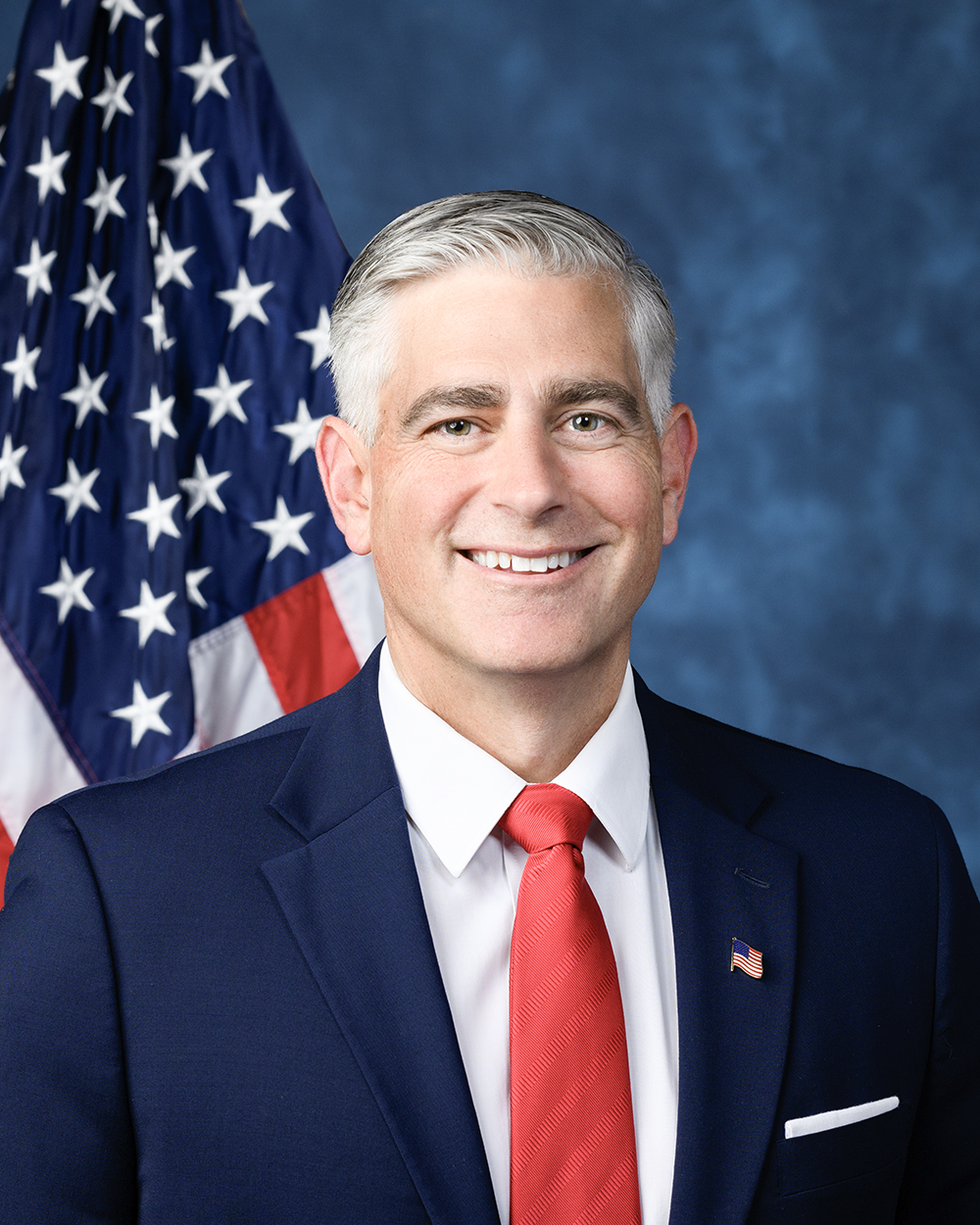
Rep. Michael Baumgartner
Sponsored bills
Maddy summary# Summary of the SHIPS for America Act This comprehensive legislation focuses on strengthening the U.S. maritime industry, shipbuilding capacity, and maritime workforce to enhance national security and economic competitiveness. ## Key Areas of Focus 1. **Shipbuilding & Maritime Infrastructure** - Establishes a United States Center for Maritime Innovation to accelerate adoption of commercial technologies - Creates a National Shipbuilding Research Program - Requires an annual survey of anticipated commercial vessel construction - Includes provisions for streamlined environmental reviews of maritime infrastructure 2. **Workforce Development** - Establishes the United States Merchant Marine Career Retention Program to maintain mariner qualifications - Creates Centers of Excellence for Domestic Maritime Workforce Training and Education - Implements military-to-maritime transition programs - Establishes a Maritime Career and Technical Education Advisory Committee 3. **Education & Training** - Expands educational assistance for merchant mariners - Creates eligibility for Naval Postgraduate School for merchant mariners - Establishes maritime education programs from K-12 through higher education - Provides for international exchanges for mariners and naval architects 4. **National Security & Strategic Readiness** - Requires reports on National Defense Reserve Fleet utilization - Includes measures to de-risk the maritime sector from Chinese influence - Enhances shipbuilding capacity for national security needs - Establishes programs to ensure sufficient mariner workforce for national defense 5. **Funding Mechanisms** - Authorizes appropriations from the Maritime Security Trust Fund - Includes funding for workforce programs, education, and shipbuilding initiatives - Establishes specific funding levels for various programs over multiple fiscal years The legislation aims to create a sustainable domestic maritime industrial base that supports both commercial shipping and national defense requirements, with a particular emphasis on developing and retaining a skilled U.S. maritime workforce.
Maddy summaryHR 3138 raises dollar thresholds in the Arms Export Control Act for congressional notification on foreign military sales. It increases key thresholds from $14 million to $23 million and $50 million to $83 million for certain defense transfers, while raising other related caps. The bill also requires a State Department report on efforts to circumvent these thresholds and prohibits federal employees from structuring transactions to avoid notification rules. Violations could result in a $100,000 civil penalty and barring from federal employment. This directly affects defense contractors and State Department officials handling foreign military sales.
Fentanyl Awareness for Children and Teens in Schools Act or the FACTS Act This bill establishes grant programs and requires strategies and studies to address the misuse of synthetic opioids (i.e., laboratory-derived substances such as fentanyl and its derivatives) among youth. The bill requires the Department of Health and Human Services (HHS) to award grants to partnerships between educational and health organizations for prevention, treatment, and recovery efforts related to the use of synthetic opioids by middle and high school-aged children. It also allows school-based health centers to use existing HHS grants to purchase naloxone to reverse the effects of opioid overdoses and to establish programs to address misuse of synthetic opioids. Also, the bill authorizes state educational agencies to use certain Department of Education (ED) grant funds to provide training to school personnel on addressing students’ misuse of synthetic opioids. State and local educational agencies must also address such misuse in their educational plans in order to qualify for certain ED grants. Finally, the bill (1) establishes an interagency taskforce to coordinate federal efforts to address synthetic opioid misuse among youth, (2) requires an evaluation of the State Unintentional Drug Overdose Reporting System’s effectiveness in identifying the specific synthetic opioids causing youth overdoses, (3) expands the data reported by the National Center for Education Statistics to include information about the use of synthetic opioids in schools, and (4) requires two recurring HHS surveys to include questions on youth exposure to synthetic opioids.
Maddy summaryHRES 366 is a non-binding resolution recognizing the 50th anniversary of the Fall of Saigon on April 30, 1975, known as Black April in Vietnamese history. It honors the Vietnamese American community - now over 2.3 million strong - who resettled in the U.S. after 1975 and have contributed to American society through diverse fields like public service and business. The resolution commemorates the service of U.S. and South Vietnamese military personnel during the Vietnam War and reaffirms U.S. support for democracy and human rights in Vietnam. As a symbolic gesture, it does not create new laws but encourages public observance of this historical event and the community's resilience.
Maddy summaryThis bill expands access to employee ownership by modifying the Small Business Act to allow S corporations owned by employee stock ownership plans (ESOPs) to retain small business status, even when an ESOP owns over 49% of the company. It creates a new Treasury Department office to provide education and technical assistance for S corporations establishing ESOPs, and establishes a Labor Department Advocate for Employee Ownership to coordinate outreach and resolve disputes. These changes directly affect S corporations transitioning to ESOP ownership and their employees, who gain retirement benefits through ESOP accounts. The bill aims to increase employee ownership by removing eligibility barriers and improving support for businesses adopting this model.
Ukrainian Adjustment Act of 2025 This bill provides a streamlined process for certain Ukrainian nationals (including accompanying spouse and children) who are living in the United States to receive lawful permanent resident status. Specifically, the bill permits Ukrainian nationals who have been paroled into the United States after February 20, 2014, to apply for and receive lawful permanent resident status. Additionally, the Department of Homeland Security (DHS) may waive grounds for inadmissibility (excluding certain crimes or security related grounds) for individuals who apply for status adjustment. DHS must establish vetting requirements (including an interview) for applicants that are equivalent to those under the United States Refugee Admissions Program. The bill also preserves eligibility for the status adjustment of certain battered spouses whose eligibility for such status stemmed from a marriage that has terminated. Finally, the bill requires DHS to issue guidance to implement these requirements and establishes a deadline for eligible individuals to apply for adjustment.
Maddy summaryThis bill requires the U.S. government to strengthen measures against hostage-taking by Iran and other adversaries. It mandates annual reports on $6 billion in Iranian funds transferred to Qatar (including certifications on humanitarian use), reviews of past hostage cases in Iran to identify individuals for sanctions, and restrictions on Iranian diplomats at the UN who face terrorism-related sanctions. The bill also directs the Secretary of State to evaluate whether U.S. passports should be invalid for travel to Iran due to detention risks, and requires a strategy to deter hostage-taking by U.S. adversaries. These provisions aim to hold accountable those involved in hostage-taking while protecting U.S. citizens.
Maddy summaryThe Restore College Sports Act (HR 2663) establishes the American Collegiate Sports Association (ACSA) to replace the NCAA as the governing body for college sports. It requires all participating colleges to comply with specific rules, including: sharing all athletic revenue (ticket sales, broadcasting, merchandise) equally between institutions and student athletes; allowing athletes to transfer between schools without penalty; capping coach salaries at 10 times the full cost of attendance; and requiring athletic conferences to be limited to schools in the same time zone. This directly affects all member colleges, student athletes, and coaches participating in NCAA-sponsored sports. The bill mandates compliance through the Higher Education Act, making ACSA membership a condition for institutions to maintain certain federal education benefits.
Maddy summaryThis bill, HR 2102 (Major Richard Star Act), allows veterans with combat-related disabilities to receive both full military retired pay and veterans' disability compensation simultaneously, without the previous offset that reduced retired pay. It directly affects veterans already eligible for both benefits due to combat-related injuries, removing the requirement that their retired pay be reduced by the disability compensation amount. The key provision amends Title 10 and Title 38 to eliminate the offset rule (sections 5304 and 5305 of Title 38) for these veterans. The change applies to payments starting after the bill’s enactment date, effective for all qualifying veterans. This is a policy change to increase financial support for affected veterans, not a new benefit.