

Maddy summaryThe CARE Act of 2025 limits refugee resettlement by prohibiting the U.S. government from resettling refugees in any state or locality that has formally disapproved resettlement through its governor, state legislature, or local government officials. It amends the Immigration and Nationality Act to block resettlement funding in jurisdictions with such formal disapproval actions during any fiscal year. The bill directly affects refugees seeking resettlement and state/local governments that take formal opposition to refugee arrivals. Key provisions require explicit disapproval by elected officials at the state or local level to restrict resettlement, without exceptions for federal oversight. This policy change creates a new administrative barrier to refugee resettlement based on local political decisions.
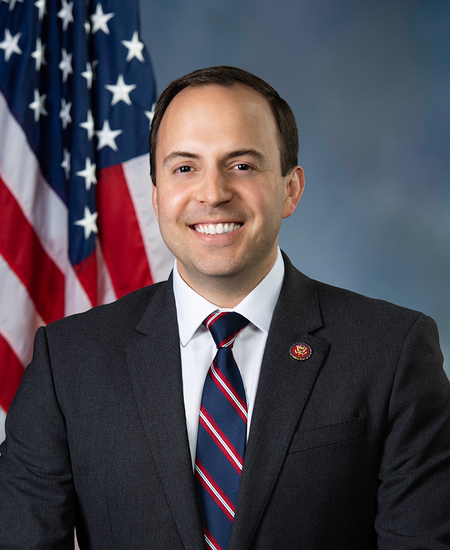
Rep. Lance Gooden
Sponsored bills
Maddy summaryHR 3806, the New World Screwworm Preparedness Act of 2025, requires the U.S. Department of Agriculture to conduct a study on the nation's readiness to prevent and respond to New World screwworm (NWS) infestations. The study must assess current threats, sterile insect production capabilities, surveillance systems, emergency response plans, research needs, and international cooperation, with input from livestock producers, wildlife agencies, and scientists. The Secretary of Agriculture must submit a report to Congress within six months detailing findings and recommendations for improving preparedness. This bill directly affects agricultural stakeholders and wildlife management by mandating a review of existing capabilities, not by changing current policy.
Give Kids a Chance Act of 2025 This bill expands the Food and Drug Administration’s (FDA’s) authority with respect to research on rare pediatric diseases, including by permitting the FDA to take enforcement action against drug sponsors that fail to satisfy pediatric study requirements and by reauthorizing programs that support pediatric research. Specifically, the bill modifies requirements relating to molecularly targeted pediatric cancer investigations to permit research on new drugs in combination with active ingredients that have already been approved, provided certain conditions are met; permits the FDA to take enforcement action against drug sponsors that fail to comply with pediatric study requirements, if such sponsors demonstrated a lack of due diligence in satisfying the requirement; renews the FDA’s authority to award priority review vouchers to sponsors of new products intended to treat rare pediatric diseases through September 30, 2029; and reauthorizes through FY2027 certain funding for the National Institutes of Health to support priority pediatric research. The bill also provides statutory authority for the FDA’s interpretation of the orphan drug exclusivity period. The bill specifies, consistent with FDA regulations, that the seven-year market exclusivity period for drugs for rare diseases or conditions (i.e., orphan drugs) prohibits the approval of the same drug for the same approved use or indication with respect to the disease or condition. (In Catalyst Pharmaceuticals, Inc. v. Becerra , a court rejected the FDA’s interpretation and held that orphan drug exclusivity extends to all uses or indications for the disease or condition.)
Student Compensation and Opportunity through Rights and Endorsements Act or the SCORE Act This bill provides a framework for the compensation of student athletes for the use of their name, image, or likeness (NIL). This includes addressing certain elements of the court approved agreement to settle the In re College Athlete NIL Litigation (i.e., House settlement ). Specifically, the bill statutorily prohibits institutions, conferences, or interstate intercollegiate athletic associations (e.g., the National Collegiate Athletic Association (NCAA)) from restricting the ability of a student athlete to enter an NIL agreement. The bill also requires institutions of higher education that generate $20 million or more in annual revenue from the institution's intercollegiate athletics activities to (1) provide counseling and medical benefits to student athletes, and (2) establish and maintain at least 16 varsity sports teams. Further, the bill authorizes interstate intercollegiate athletic associations to establish rules with respect to athletic eligibility, transfers, recruitment, and the disclosure of NIL agreements. Under the bill, student athletes may not be considered employees of an institution, conference, or interstate intercollegiate athletic association. The bill also preempts state laws with respect to compensation, payments, benefits, employment status, eligibility, and academic standards applicable to student athletes. Compliance with the provisions of this bill is considered lawful under federal and state antitrust laws.
Maddy summaryThis bill directs the U.S. Secretary of State to develop a strategy advocating for Taiwan's membership or observer status in Interpol and to formally request it on Taiwan's behalf. It requires the U.S. to work with Interpol member states to support Taiwan's participation, addressing Taiwan's current lack of access to Interpol's global communications system (I-24/7) for crime-fighting coordination. The bill mandates a 90-day report to Congress detailing this strategy and the U.S. efforts to secure Taiwan's inclusion in Interpol and other international organizations.
Maddy summaryThe ROTOR Act narrows the definition of "sensitive government mission" for aircraft operations, excluding training flights and flights by officials below Cabinet rank. It requires regular reporting to Congress about exceptions to ADS-B Out requirements, establishes deadlines for requiring ADS-B In equipment on most aircraft, and mandates safety reviews for airports with military operations. The bill also improves coordination between the FAA and Department of Defense on airspace management and safety information sharing. These changes increase transparency around aircraft operations that don't broadcast their location while enhancing safety oversight. The bill directly affects Federal agencies operating aircraft, the FAA, and aircraft operators required to equip with ADS-B technology.
Maddy summaryHR 6019 repeals a requirement that Senate offices must be notified when legal requests seek Senate data. Specifically, it removes Section 213 of the 2026 appropriations act, which mandated that Senate offices be informed about legal processes requesting disclosure of Senate data. This change directly affects Senate offices by eliminating a procedural notification step for legal requests involving their data. The bill makes no other policy changes, solely removing this specific administrative requirement.
Maddy summaryHRES 782 is a non-binding House resolution expressing condolences to victims of the July 4, 2025, catastrophic floods in Texas, which caused at least 135 deaths (including 37 children) and widespread destruction. It honors first responders who rescued over 850 people and community heroes like camp staff who saved children, while committing the House to stand with affected Texans. The resolution does not create new laws or allocate funds - it formally mourns the loss of life, recognizes acts of courage, and urges prioritization of rebuilding infrastructure and support for vulnerable residents. This symbolic gesture was introduced by multiple Texas representatives and referred to the Transportation Committee.
Maddy summaryHRES 864 is a ceremonial resolution honoring U.S. veterans on Veterans Day 2025. It does not create new laws or policies but formally recognizes veterans' service and sacrifice, calling on all Americans to observe Veterans Day. The resolution references historical context about Veterans Day's origins (from Armistice Day to honoring all veterans) but contains no concrete policy changes. It directly addresses the general public, urging them to participate in the observance. As a non-binding resolution, it affects no specific individuals or groups through legislative action.
Maddy summaryHRES 863 is a symbolic House resolution honoring veterans from Texas, recognizing the state's status as home to nearly 1.6 million veterans - the highest in the U.S. - including over 203,000 women veterans and 11 House members who are veterans. The resolution does not create new laws or alter policies but expresses the House's commitment to supporting veterans through existing VA programs, particularly addressing challenges like mental health care, homelessness, and job transitions. It emphasizes Texas's significant military legacy, including over 22,000 Texan lives lost in World War II and 102 Medal of Honor recipients. As a commemorative resolution, it has no binding effect but serves as a formal acknowledgment of Texas veterans' service.