

Maddy summaryThe Let Kids Play Act prohibits private equity firms and their affiliates from investing in or engaging in specific harmful practices within the youth sports industry. It defines "vulture practices" as actions that extract profit by imposing excessive debt, raising prices, cutting jobs, or restricting access to essential services and competing platforms. To operate in this sector, these firms must obtain certification from the Federal Trade Commission or the Department of Justice proving they have never engaged in such behaviors and will not do so in the future. If a firm is designated as a vulture investor, it is required to divest its ownership stakes, return assets, refund fees, and forgive debts owed to the community and employees. The bill also establishes a Youth Sports Fund to receive disgorged funds for reducing participation costs and supporting local sports programs.
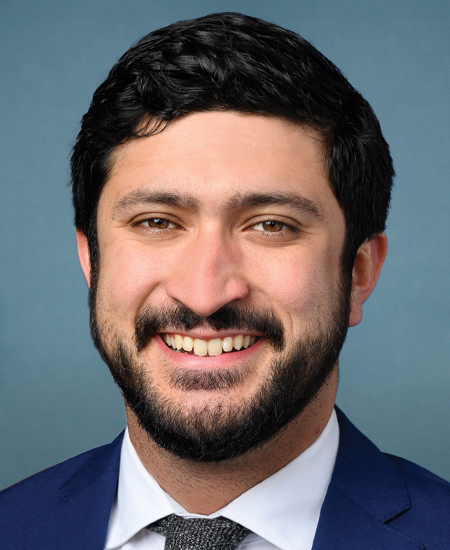
Rep. Greg Casar
Sponsored bills
Maddy summaryThe TREE Act prohibits the import and sale in the U.S. of goods linked to deforestation, starting in 2029, and directly affects companies that trade or sell commodities like cattle, soy, palm oil, and wood. To enforce this ban, the bill requires importers to submit detailed due diligence statements proving their products are deforestation-free, while also mandating increased customs inspections for goods from countries categorized as high or moderate risk. The U.S. Trade Representative will annually assess and rank countries based on their deforestation rates and environmental laws, with higher-risk nations facing stricter scrutiny and potential trade restrictions. Additionally, the law establishes civil penalties for violations and directs half of the collected fines toward providing financial assistance to developing countries for forest management.
Maddy summaryThe Reward Work Act prohibits companies from buying back their own stock on public exchanges while requiring at least one-third of corporate board members to be elected by employees. Under this bill, corporations would need to hold one-employee-one-vote elections to select these worker representatives, with the Securities and Exchange Commission tasked with creating rules to ensure fair and democratic processes. The legislation specifically targets publicly traded companies and their boards of directors, aiming to increase worker influence in corporate governance through direct election mechanisms.
Maddy summaryThe No WAR Act prohibits Congress from using budget reconciliation procedures to fund military hostilities against Iran unless such actions are explicitly authorized by a formal declaration of war or a specific authorization for the use of military force. This legislation directly affects the legislative process by establishing a point of order that blocks any reconciliation bill attempting to provide budget authority for offensive military operations, strikes, or covert actions targeting Iranian military forces, territory, or government institutions. The bill also defines proxy forces as any foreign military or irregular groups operating with U.S. direction or material support, ensuring these entities are included in the restrictions on unauthorized funding. By amending the Congressional Budget and Impoundment Control Act, the measure aims to prevent the use of budgetary shortcuts to bypass the constitutional requirement for congressional approval before engaging in armed conflict with Iran.
Maddy summaryThis resolution directs the House Committee on Oversight and Government Reform to take legal action in federal court to enforce a subpoena issued to Attorney General Pamela Bondi. The specific goal is to obtain a court order requiring Bondi to provide deposition testimony and documents related to the government's handling of sex trafficking cases and the Jeffrey Epstein investigation. The House Office of General Counsel is authorized to represent the committee in these proceedings and may hire additional private lawyers to assist. If the committee initiates or intervenes in the lawsuit, it must report its actions to the full House of Representatives as soon as possible.
Maddy summaryThis bill amends the Fair Credit Reporting Act to restrict how background information is shared with landlords when screening potential tenants. It directly affects individuals with criminal records by prohibiting consumer reporting agencies from including specific data in reports used for rental housing decisions. Key provisions ban the inclusion of arrest records, juvenile adjudications, expunged convictions, and cases resolved through diversion programs, while also preventing the reporting of convictions that have been completed or where the individual is currently on probation or parole. Additionally, the legislation requires landlords who deny housing based on these reports to provide applicants with the specific reasons for the denial within three days. Finally, the bill prevents states from setting their own time limits for how long certain types of criminal information can be excluded from these reports.
Maddy summaryThis bill, titled the Protecting Human Rights and Public Health in Foreign Assistance Act, aims to cancel specific regulations issued by the Department of State. It directly affects the federal government by prohibiting any department or agency from enforcing, implementing, or proposing rules related to protecting life, combating discriminatory equity ideology, and combating gender ideology in foreign aid programs. The legislation treats these cancelled rules as if they never existed, effectively nullifying their impact on future foreign assistance policies.
Maddy summaryThe Special Election Timeliness Act requires states to hold special elections to fill vacancies in the U.S. House of Representatives within 180 days, unless a regular general election is scheduled during that period. This law directly affects state officials who manage elections and federal representatives who may lose their seats due to death, resignation, or failure to be elected. The bill establishes legal enforcement mechanisms, allowing the Attorney General or aggrieved federal leaders to sue state executives in federal court if these deadlines are missed. By setting a specific timeline, the legislation aims to ensure timely representation in Congress without altering the existing process for nominating candidates.
Maddy summaryThis bill, known as the Lowering Utility Bills Act, aims to reduce electricity and natural gas costs by regulating how utility companies calculate their profits and what expenses they can pass on to customers. It requires transmission providers and investor-owned utilities to determine a reasonable profit range based on historical stock market returns from academics, large financial institutions, and major global banks, then generally limits their authorized profit to the lowest point in that range. Additionally, the legislation bans utilities from recovering specific costs in customer rates, including lobbying fees, political contributions, executive travel, and entertainment expenses. The bill also mandates that utilities prioritize lower-cost grid technologies in their planning and requires them to publicly justify any decision to use a higher profit rate than the standard minimum.
Maddy summaryThe Living Wage For All Act raises the federal minimum wage in a tiered schedule, requiring large corporations to reach $25 per hour by 2031 while giving smaller businesses a longer timeline to catch up. Once the standard is met, the law automatically indexes the minimum wage to two-thirds of the national median hourly wage to ensure it keeps pace with economic changes. The bill also eliminates the lower minimum wage for tipped employees and youth workers, phasing them out until they match the general standard, and extends similar protections to incarcerated workers. Additionally, the legislation restricts the issuance of special minimum wage certificates for workers with disabilities and mandates that employers provide technical assistance during the transition period.