

Maddy summaryThis bill sets clear limits on class action lawsuits against credit reporting companies for violations of the Fair Credit Reporting Act (FCRA). For intentional failures to follow FCRA rules, it caps individual damages at $100,000 or 40% of total damages, and total class recovery at $500,000 or 1% of the company’s net worth. For negligent failures, it similarly limits total class recovery to $500,000, 1% of net worth, or 40% of actual damages. These changes directly affect credit bureaus (like Equifax or TransUnion) and creditors handling consumer credit data, preventing excessive damages in class actions. The bill harmonizes existing liability rules by adding specific, predictable financial limits to court awards.
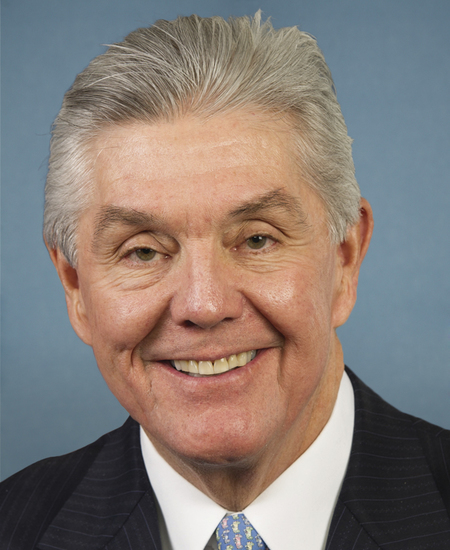
Rep. Roger Williams
Sponsored bills
Maddy summaryHR 4398, the Veteran Burial Timeliness and Death Certificate Accountability Act, requires Veterans Affairs (VA) physicians or nurse practitioners to certify the death of a veteran who dies of natural causes within 48 hours of learning of the death. This directly affects veterans' families, who previously faced delays of up to eight weeks in burial and access to survivor benefits due to slow death certifications. The bill mandates annual reports to Congress on VA compliance with the 48-hour rule, including statistics on delays and their causes. The key change is establishing a strict timeline for death certification to prevent unnecessary delays in honoring veterans' final arrangements.
Maddy summaryHR 2332, the SHARE Act of 2025, standardizes how states share criminal history background check information for professional licensing across state lines. It requires the FBI to provide this information to state licensing authorities through agreements with law enforcement, specifically for verifying applicants seeking licenses or practice privileges in multiple states. The bill strictly prohibits states from sharing detailed criminal history records with other states or the public, allowing only a simple "satisfactory" or "unsatisfactory" result to be shared. This directly affects licensed professionals (like nurses or contractors) seeking to practice in multiple states and the state agencies that issue their licenses.
Maddy summaryThis bill, titled the Ban Abortion by Mail Act, aims to restrict how abortion medications like mifepristone are prescribed by requiring an in-person visit between the patient and the doctor. It directly affects health care providers who are currently certified by the FDA to dispense these drugs, threatening their certification status if they prescribe them without a physical examination or to patients living in states where the provider lacks a medical license. The legislation mandates that the FDA report annually to Congress on any providers who lose this certification due to violations or unsafe prescribing practices. By enforcing these specific conditions, the bill seeks to ensure that all prescriptions for abortion drugs are administered under strict supervision and within the legal boundaries of the patient's state.
Maddy summaryHR 2978, the GUARD Act, allows state, local, and tribal law enforcement agencies to use existing federal grant funds for investigating elder financial fraud, "pig butchering" investment scams, and general financial fraud. The bill directs these funds toward hiring specialized staff, training on blockchain tools and transnational fraud, purchasing investigative software, improving data collection, and creating financial sector liaisons to coordinate with banks. It requires annual reports from law enforcement on fund usage and outcomes, and mandates federal agencies to submit comprehensive reports to Congress on scam statistics, enforcement actions, and funding allocation. The legislation directly affects law enforcement agencies and aims to strengthen efforts against fraud targeting vulnerable populations, particularly elderly individuals.
COVID Fraud Transparency Act of 2026 This bill requires the Small Business Administration's Office of Inspector General to report quarterly to Congress about fraud cases involving certain COVID-19 loans (e.g., Paycheck Protection Program loans). The report must include the number and total dollar amount of such loans, number of new cases of fraud and suspected fraud, number of fraud cases resolved, and types of such cases of fraud. The reporting requirements terminate two years after this bill is enacted.
Maddy summaryHR 941, the Small LENDER Act, creates a 3-year compliance period and a subsequent 2-year penalty-free period for small lenders required to report small business lending data under a new rule. It directly affects financial institutions that originated at least 500 small business loans in each of the previous two years (defined as loans to businesses with under $1 million annual revenue). The bill delays full enforcement of new data reporting requirements, giving lenders time to adjust without penalties during the grace periods. This changes how the Consumer Financial Protection Bureau enforces reporting rules for smaller lenders focused on small business loans.
Maddy summaryThis bill, titled the Protect Domestic Oil and Gas Small Business Act of 2026, exempts small oil and gas wells from specific environmental regulations under the Clean Air Act. It directly affects owners and operators of marginal wells, defined as sites producing 15 barrels of oil or less per day, or 90,000 cubic feet of natural gas or less per day. The legislation removes requirements for monitoring, reporting, and leak detection for these smaller operations, while also mandating that the EPA approve any state plan revisions granting this exemption within 180 days. Additionally, the bill requires the EPA to update its regulations to reflect these changes and to terminate any ongoing enforcement actions against marginal wells that were initiated before the law takes effect.
Maddy summaryHR 3234, the "Keeping Deposits Local Act," amends the Federal Deposit Insurance Act to adjust how banks calculate reciprocal deposits that don't count as "funds obtained through a deposit broker." It establishes tiered percentage thresholds based on a bank's total liabilities: 50% for banks under $1 billion, decreasing to 40% for $1-10 billion, 30% for $10-250 billion, 20% for $250 billion-$1 trillion, and 2% for banks over $1 trillion. This change directly affects commercial banks, particularly smaller institutions, by allowing them to hold a larger share of deposits without triggering stricter broker-related regulations. The bill aims to simplify compliance for community banks while maintaining oversight for larger financial institutions.
Maddy summaryThis bill, known as the Bulletproof Law Enforcement Vehicles Act, directs the Department of Homeland Security to allow funding for upgrading law enforcement vehicles with security features like bulletproof windows. By amending an existing law, it expands the types of vehicle enhancements that can be financed with current federal assistance programs. The change specifically authorizes the use of these funds for protective upgrades without creating new budgetary requirements. Law enforcement agencies that receive federal financial assistance would be the primary beneficiaries of this expanded eligibility.