

Maddy summary# Summary of the SHIPS for America Act This comprehensive legislation focuses on strengthening the U.S. maritime industry, shipbuilding capacity, and maritime workforce to enhance national security and economic competitiveness. ## Key Areas of Focus 1. **Shipbuilding & Maritime Infrastructure** - Establishes a United States Center for Maritime Innovation to accelerate adoption of commercial technologies - Creates a National Shipbuilding Research Program - Requires an annual survey of anticipated commercial vessel construction - Includes provisions for streamlined environmental reviews of maritime infrastructure 2. **Workforce Development** - Establishes the United States Merchant Marine Career Retention Program to maintain mariner qualifications - Creates Centers of Excellence for Domestic Maritime Workforce Training and Education - Implements military-to-maritime transition programs - Establishes a Maritime Career and Technical Education Advisory Committee 3. **Education & Training** - Expands educational assistance for merchant mariners - Creates eligibility for Naval Postgraduate School for merchant mariners - Establishes maritime education programs from K-12 through higher education - Provides for international exchanges for mariners and naval architects 4. **National Security & Strategic Readiness** - Requires reports on National Defense Reserve Fleet utilization - Includes measures to de-risk the maritime sector from Chinese influence - Enhances shipbuilding capacity for national security needs - Establishes programs to ensure sufficient mariner workforce for national defense 5. **Funding Mechanisms** - Authorizes appropriations from the Maritime Security Trust Fund - Includes funding for workforce programs, education, and shipbuilding initiatives - Establishes specific funding levels for various programs over multiple fiscal years The legislation aims to create a sustainable domestic maritime industrial base that supports both commercial shipping and national defense requirements, with a particular emphasis on developing and retaining a skilled U.S. maritime workforce.
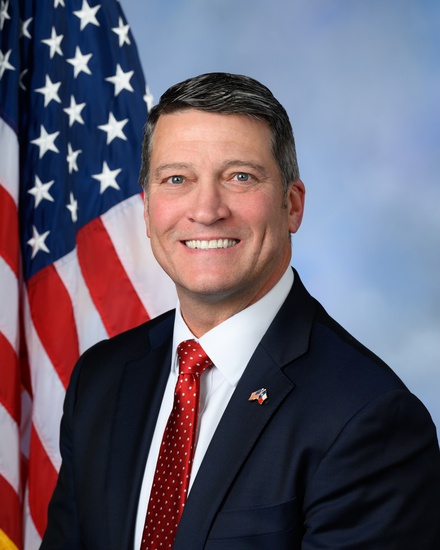
Rep. Ronny Jackson
Sponsored bills
Maddy summaryHR 2326, the Dietary Guidelines Reform Act of 2025, requires the U.S. Department of Agriculture (USDA) and Health and Human Services (HHS) to update the Dietary Guidelines for Americans at least every 10 years, instead of the previous 5-year cycle. The bill mandates guidelines be based on "significant scientific agreement" through evidence-based reviews, include input from an Independent Advisory Board (with specific member requirements and conflict-of-interest disclosures), and exclude topics like taxation or social policies. It also requires the Secretaries to notify Congress 90 days before updates and assign evidence strength ratings to each guideline. These changes directly affect the federal agencies responsible for creating the guidelines and the public who rely on them for health guidance.
Maddy summaryHR 2930, the PROTECT the Second Amendment Act, prevents landlords and housing authorities from banning or imposing extra restrictions on lawfully possessed firearms in specific federally assisted housing. It directly affects tenants living in properties covered by HUD or USDA housing programs, including public housing, Section 8 voucher recipients, and other subsidized rental units. The bill explicitly allows residents to possess firearms within their own dwelling units or while moving through common areas to reach their unit, without additional prohibitions. This changes existing policies in these housing programs by mandating that firearm possession cannot be restricted solely based on housing type.
Safeguard American Voter Eligibility Act or the SAVE Act This bill requires individuals to provide documentary proof of U.S. citizenship when registering to vote in federal elections. Specifically, the bill prohibits states from accepting and processing an application to register to vote in a federal election unless the applicant presents documentary proof of U.S. citizenship. The bill specifies what documents are considered acceptable proof of U.S. citizenship, such as identification that complies with the REAL ID Act of 2005 that indicates U.S. citizenship. Further, the bill (1) prohibits states from registering an individual to vote in a federal election unless, at the time the individual applies to register to vote, the individual provides documentary proof of U.S. citizenship; and (2) requires states to establish an alternative process under which an applicant may submit other evidence to demonstrate U.S. citizenship. Each state must take affirmative steps on an ongoing basis to ensure that only U.S. citizens are registered to vote, which shall include establishing a program to identify individuals who are not U.S. citizens using information supplied by certain sources. Additionally, states must remove noncitizens from their official lists of eligible voters. The bill allows for a private right of action against an election official who registers an applicant to vote in a federal election who fails to present documentary proof of U.S. citizenship. The bill establishes criminal penalties for certain offenses, including registering an applicant to vote in a federal election who fails to present documentary proof of U.S. citizenship.
Maddy summaryThis bill amends a specific section of the law governing Post-9/11 GI Bill benefits. It updates the repayment rules for service members who contributed to their education assistance, removing outdated language from the existing code. The change directly affects veterans and service members who paid into the program and are now required to repay contributions. The amendment takes effect on August 1, 2025, but does not alter benefit amounts or eligibility. This is a technical correction to the existing repayment process.
Maddy summaryThis bill codifies a "maximum pressure" policy toward Iran, requiring the U.S. to maintain all sanctions until Iran meets specific conditions related to its nuclear program, missile development, support for terrorism, and human rights violations. It expands sanctions on Iran's Revolutionary Guard Corps (IRGC) and entities supporting Iran's ballistic missile program, while prohibiting waivers of sanctions on these entities. The bill mandates regular reports to Congress on Iran's nuclear activities, support for terrorist groups like Hamas and Hezbollah, and human rights abuses within Iran. It also directs the use of frozen Iranian assets to support victims of state-sponsored terrorism and prevents the release of funds that could benefit Iran's terrorist proxies. The bill aims to maintain economic and diplomatic pressure on Iran until it changes its behavior across multiple fronts.
Maddy summaryHR 2581, the Iranian Terror Prevention Act, requires the U.S. government to designate 29 specific Iranian-backed militant groups as terrorist organizations within 90 days of the bill’s passage. The President must then decide within 60 days whether to impose sanctions on these groups, blocking their U.S. assets and transactions under existing law. The bill also mandates regular reports to Congress on these designations and sanctions, including for any new groups meeting the criteria. This law directly affects the 29 named groups (such as the Badr Organization and Houthis) and any entities controlled by Iran’s Islamic Revolutionary Guard Corps.
Maddy summaryHR 1417 establishes a new program within the U.S. Department of Agriculture to provide tailored technical assistance to rural health care facilities. The program directly supports facilities like hospitals, clinics, and health centers in rural areas by helping them identify operational needs, improve financial management, and access USDA loan and grant programs. Key provisions include prioritizing facilities in medically underserved areas or facing financial vulnerability, with a $2 million annual funding limit for fiscal years 2026-2030. The program requires annual reports on outcomes and effectiveness to Congress, focusing on preventing facility closures and strengthening rural health care delivery.
Maddy summaryThe Freedom from Unfair Gun Taxes Act of 2025 would prohibit states and local governments from imposing taxes on the sale of firearms, ammunition, or firearm parts during interstate or foreign commerce. This bill directly affects state tax policies and manufacturers or dealers selling these items across state lines. It explicitly states that the bill does not change the existing federal tax on firearms and ammunition that funds wildlife conservation programs. The key provision bans state-level taxes for these sales in interstate transactions while preserving current federal funding mechanisms.
Maddy summaryHR 2443, the NPR and PBS Act, would ban all federal funding for National Public Radio (NPR) and the Public Broadcasting Service (PBS), including funds used indirectly by public broadcast stations. This bill directly affects NPR, PBS, and any future organizations replacing them, as it prohibits government money from supporting them through any channel - like station dues or programming purchases. The key provision blocks all federal funds, both direct and indirect, from flowing to these entities after the bill's enactment. This would require NPR and PBS to find new funding sources, as they currently rely on federal support. The bill does not change how public broadcasting operates but eliminates its primary government funding stream.