

Maddy summaryHR 3901, the Agency Subpoena Compliance Act, requires federal agencies to comply with congressional subpoenas or face potential funding reductions. It mandates the President to annually report to Congress on agency subpoena compliance, triggering committee hearings to review each case. If an agency ignores a valid subpoena, the committees may propose a 0.5% funding cut in the next year's budget for each ignored subpoena. Agencies failing to submit the required report on time risk a 2% annual budget cut for each week of delay. This bill directly affects all federal agencies covered by annual budget bills.
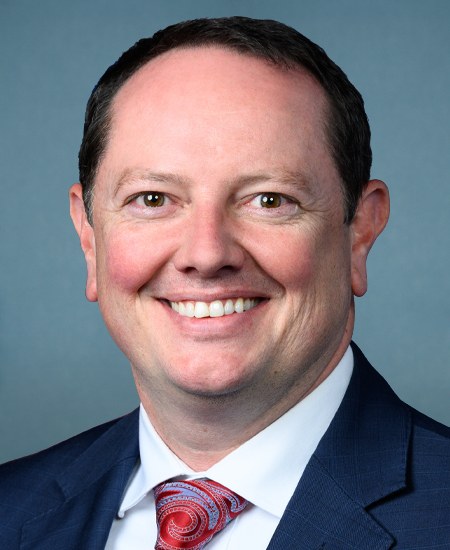
Rep. Eric Burlison
Sponsored bills
This resolution requires the Clerk of the House of Representatives to place in the House Chamber a real-time display of the outstanding national debt.
Maddy summaryHR 3792 extends U.S. security funding for Israel through 2028 (Section 3) and expands energy cooperation to include advanced nuclear technologies and carbon capture (Section 5). It requires annual reports on regional security partnerships involving Israel (Section 6) and ensures countries in the Abraham Accords can access U.S. development programs (Section 8). The bill also mandates reports on diplomatic efforts against ICC investigations targeting the U.S. and Israel (Section 10) and encourages people-to-people programs to strengthen the Abraham Accords (Sections 7, 9). These provisions directly affect Israel’s diplomatic engagement, security partnerships, and economic cooperation in the Middle East.
Maddy summaryHR 3754, the Restoring Vehicle Market Freedom Act of 2023, repeals five specific federal tax credits for clean and alternative fuel vehicles. It eliminates the previously owned clean vehicle credit (Section 25E), alternative motor vehicle credit (Section 30B), alternative fuel vehicle refueling property credit (Section 30C), new qualified plug-in electric vehicle credit (Section 30D), and credit for qualified commercial clean vehicles (Section 45W). These repeals apply to vehicles acquired or property placed in service after the bill's enactment date, directly affecting new vehicle buyers who previously qualified for these tax incentives. The bill makes no new policy changes but removes existing tax benefits for clean vehicle purchases under the Internal Revenue Code.
Maddy summaryHR 3212, the "Shall Not Be Infringed Act of 2023," repeals or prevents funding for numerous gun control measures across federal agencies. The bill eliminates funding for Bureau of Alcohol, Tobacco, Firearms and Explosives (ATF) modernization efforts, blocks Department of Veterans Affairs programs related to firearm storage, and prohibits CDC and NIH from funding research on firearm injury prevention. It also repeals specific provisions from the Bipartisan Safer Communities Act related to background checks and domestic violence restrictions, and prevents the use of federal funds for red flag laws or gun registries. The bill directly affects federal agencies and programs that implement gun control measures, including ATF, VA, HHS, CDC, NIH, and the Department of Education.
Maddy summaryHouse Resolution 437 is a procedural resolution formally censuring Rep. Adam Schiff (CA-30) for allegedly making false claims about Trump-Russia collusion and misusing intelligence access. The resolution demands Schiff appear in the House chamber for a public censure reading and imposes a $16 million fine, citing specific incidents including false statements about the Steele dossier and a flawed FISA memo. This resolution does not change laws or policies but addresses Schiff's conduct as a representative, based on the resolution's allegations. It was introduced by Rep. Luna on May 23, 2023, and referred to the Committee on Ethics.
Maddy summaryHR 3497, the Uranium Miners and Workers Act of 2023, expands eligibility for compensation under the Radiation Exposure Compensation Act (RECA) to include uranium miners, millers, ore transporters, and core drillers who worked in specified states between 1942 and 1978 and later developed certain cancers or kidney diseases. The bill redirects $475 million from unobligated coronavirus relief funds (from acts like the CARES Act and American Rescue Plan) to the RECA trust fund to pay claims. It also extends the RECA program's funding period by 4 years and adjusts the deadline for submitting claims to 4 years after the bill's enactment. This law directly affects former uranium industry workers who developed radiation-related illnesses.
Maddy summaryHR 3492, the Gun Owner Registration Information Protection Act, prohibits federal agencies from funding or supporting state databases that track lawfully owned firearms or their owners. This directly affects states maintaining such databases, requiring them to cover costs themselves if they choose to keep these systems operational. The bill allows federal funding for databases tracking lost or stolen firearms, as specified in the exception. The key policy change is blocking federal financial support for databases compiling information on legal gun ownership, without banning the databases outright.
Maddy summaryThe Stop TSP ESG Act (HR 3406) requires the Thrift Savings Fund (TSP) to delegate voting rights on securities to a qualified professional asset manager instead of its governing board. This amendment to Section 8438(f) of Title 5, U.S. Code, directly affects the TSP, which manages retirement savings for federal employees. The key mechanism mandates that voting on securities must be handled by an external professional manager, removing direct TSP Board control over investment decisions. The bill's title indicates it aims to prevent the TSP from incorporating ESG (Environmental, Social, and Governance) factors into its investment strategy.
Maddy summaryHR 3328 (Protecting Children From Experimentation Act of 2023) prohibits healthcare professionals from performing or referring for gender transition procedures on minors under 18. The bill defines "gender transition procedures" to include puberty-blocking drugs, cross-sex hormones, and surgeries (like genital or non-genital procedures) aimed at altering physical characteristics to match a gender different from a minor’s biological sex. It excludes care for minors with medically verified disorders of sex development or conditions requiring urgent medical treatment. Violations could result in fines, up to 5 years in prison, or both for providers, while minors receiving such care cannot be prosecuted.