

Maddy summaryHR 5738, the "No Budget, No Pay Act," requires Congress to approve a budget resolution and pass all annual appropriations bills by October 1 each fiscal year. If Congress misses this deadline, members of Congress (excluding the Vice President) lose pay for the period of non-compliance, as determined by the House and Senate Budget and Appropriations Chairs. The bill specifies that no retroactive pay is allowed for any period during which Congress was out of compliance. This directly affects all elected members of Congress by linking their pay to timely budget passage, creating a financial incentive for meeting the October 1 deadline.
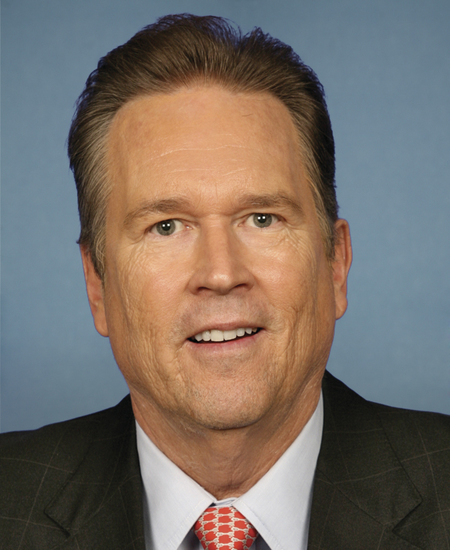
Rep. Vern Buchanan
Sponsored bills
Maddy summaryThis bill adds Medicare coverage for multi-cancer early detection screening tests (blood or biological tests analyzing cell-free DNA) starting January 1, 2028. It directly affects Medicare beneficiaries aged 68 and older (starting in 2028, with the age limit increasing by 1 year annually), requiring tests to be FDA-cleared and deemed reasonable/necessary by the Secretary for early cancer detection across multiple organ sites. Payment will initially match current stool DNA test rates before 2031, then shift to a lower rate or new payment system after 2031, with limits preventing more than one test per year. The bill explicitly states it does not alter coverage for existing cancer screenings like breast, colorectal, or prostate cancer tests.
Maddy summaryThis bill would require all states to recognize valid concealed carry permits issued by other states, allowing permit holders to carry concealed handguns (excluding machine guns) in any state that either issues such permits or doesn't prohibit concealed carry. It directly affects law-abiding gun owners with valid permits from their home state, ensuring they can carry in states with similar permit systems or no prohibitions. Key provisions include treating valid permit documents as proof of legal carry (reducing officer stops), shifting the burden of proof to prosecutors if challenged, and allowing civil lawsuits for violations with attorney's fee awards. The bill does not override state laws restricting firearms on private property or government land, nor does it affect federal gun restrictions like those in section 922(q).
Maddy summaryThis bill amends the Violence Against Women Act Reauthorization Act of 2022 to clarify and expand law enforcement support for identity theft cases. It defines "identity theft" as criminal acts involving unauthorized use of another person's identifying details (like Social Security numbers or bank info), and adds "identity theft" to existing federal grant programs for local police to investigate cybercrimes. These grants will now fund investigations into identity theft alongside other cybercrimes. The bill directly affects local law enforcement agencies receiving these grants and victims of identity theft by improving enforcement resources. (Note: The title "Protect Your PIN" is misleading; the bill focuses on identity theft definitions and funding, not PIN security.)
Maddy summaryThe SAVES Act (HR 2605) creates a 5-year pilot program where the Department of Veterans Affairs (VA) awards competitive grants to nonprofit organizations to provide service dogs to veterans with specific disabilities. It directly affects veterans with covered conditions like blindness, mobility impairments, PTSD, traumatic brain injury, or other disabilities deemed appropriate for service dog assistance by the VA. Key provisions include: grants capped at $2 million per nonprofit (with $10 million annually authorized), no fees charged to veterans, VA-provided lifetime veterinary insurance for the dogs, and requirements for nonprofits to train veterans and maintain humane animal standards. The program aims to expand access to service dogs as a support tool for veterans managing qualifying disabilities.
Maddy summaryThis bill bans the import, export, and sale of donkey skins and ejiao products (a gelatin made from donkey skin) in U.S. commerce. It directly affects U.S. businesses importing or selling ejiao, which currently accounts for $12 million in annual U.S. imports. The law prohibits trading in donkey skins for ejiao production or any product containing ejiao, with civil penalties up to $10,000 per violation or criminal charges for larger offenses. Enforcement will be handled by U.S. Customs and Border Protection, targeting the U.S. market for a product driving global donkey population declines.
Maddy summaryHRES 719 is a House resolution honoring Charles "Charlie" James Kirk, the founder of Turning Point USA who was assassinated on September 10, 2025. The resolution condemns his assassination and all political violence, extends condolences to his family, and calls on Americans to reject violence while promoting civil discourse. It specifically recognizes Kirk's legacy as a defender of constitutional principles and his role in inspiring youth through free speech and faith-based civic engagement. As a commemorative resolution, it does not enact policy changes but formally expresses the House's stance on honoring his life and legacy.
Maddy summaryThe Make America's Youth Healthy Again Act of 2025 establishes a new President’s Council on Sports, Fitness, and Nutrition to advise the President on youth health initiatives. The Council, appointed by the President with up to 30 members serving two-year terms, will recommend strategies to reinstate the Presidential Fitness Test, develop school-based physical education programs, expand community sports access, and address childhood obesity as a national security concern. Key provisions include advising on fitness goals for American youth, promoting partnerships with sports organizations, and emphasizing active lifestyles and nutrition. The Council will terminate two years after enactment unless extended by the President. This bill directly affects federal policy coordination for youth fitness programs but does not create new funding or mandate changes to existing laws.
Maddy summaryThis resolution (HRES 712) is a symbolic designation, not a law, expressing the House's support for September 14, 2025, to be recognized as "National Food is Medicine Day." It highlights the role of nutritious food in health and recommends that the Department of Health and Human Services (HHS) continue research on using food as a healthcare tool to prevent and manage chronic conditions like diabetes and heart disease. The resolution urges HHS to collaborate with the USDA and scale food-as-medicine programs in partnership with healthcare providers and communities. It does not create new programs or funding but formally advocates for integrating nutrition-focused care into healthcare systems.
Maddy summaryHR 2808, the Homebuyers Privacy Protection Act, restricts how consumer reporting agencies share credit reports during mortgage applications. It prevents agencies from sending these reports to third parties unless the request is tied to a firm credit offer and the recipient has either the homebuyer’s explicit written consent or is directly involved in the mortgage (like the lender, loan servicer, or the homebuyer’s bank holding an active account). This directly affects homebuyers applying for residential mortgages by limiting unsolicited sharing of their credit information. The law amends the Fair Credit Reporting Act to strengthen privacy protections around mortgage-related credit data.