

Maddy summaryHJRES 121 proposes a constitutional amendment to allow Congress and states to set reasonable limits on money raised or spent to influence elections. It would permit regulations distinguishing between natural persons (individuals) and corporations or other artificial entities, potentially restricting corporate spending in elections. The amendment explicitly states that such regulations cannot abridge press freedom. This is a proposed constitutional change requiring ratification by three-fourths of state legislatures, not yet law.
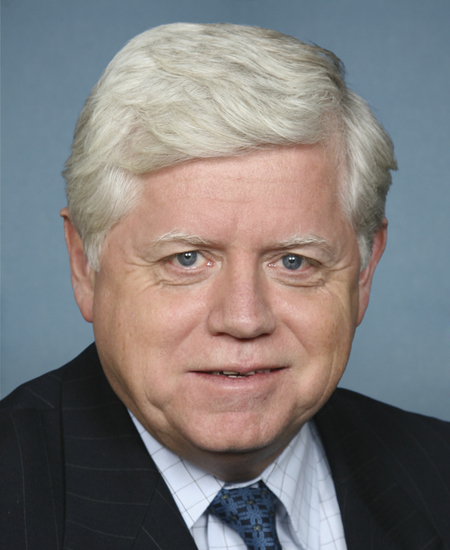
Rep. John B. Larson
Sponsored bills
Maddy summaryHRES 701 is a House resolution requesting the President to provide documents about the Department of Government Efficiency's (DOGE) access to Social Security Administration data. It specifically seeks records related to a cloud system hosting the Social Security Numerical Identification System (NUMIDENT), including security plans, the purpose of the cloud copy (e.g., audits, benefits decisions, AI training), and access by named individuals. The resolution requires the President to submit these materials within 14 days of adoption. This is an inquiry, not a policy change, focused solely on transparency about government data access.
Maddy summaryHR 5309, the Congressional Tribute to Constance Baker Motley Act of 2025, authorizes a posthumous Congressional gold medal for Constance Baker Motley, a pioneering civil rights attorney and judge. The bill directs the Treasury Secretary to strike the medal with her image and name, to be presented to her son, Joel W. Motley III, and her niece, Constance Royster. It also permits the sale of bronze duplicates at cost to cover expenses, with proceeds going to the U.S. Mint fund. This is a commemorative measure with no substantive policy changes, honoring Motley’s legacy as the first African-American woman appointed to a federal judgeship.
Maddy summaryHR 5340 prohibits the U.S. Department of Housing and Urban Development (HUD) and public housing agencies from sharing tenant records with immigration authorities for immigration enforcement purposes. It directly affects all HUD housing program participants (including renters and applicants, regardless of immigration status) by requiring HUD to obtain written consent or a language-proficient request from the individual before disclosing their records. Key provisions include banning disclosure without consent, preventing HUD from forcing public housing agencies to share records, and mandating a 90-day compliance report to Congress detailing record security and past sharing practices. The bill aims to protect housing privacy by ensuring immigration enforcement cannot access sensitive tenant information held by HUD without explicit individual authorization.
Maddy summaryThis bill directs the U.S. President to identify Pakistani officials responsible for undermining democracy and human rights within 180 days of enactment, then impose Global Magnitsky sanctions on them. It targets senior government, military, or security officials found to have committed gross human rights violations or interfered with democratic processes, such as during Pakistan’s 2024 elections or through constitutional changes. Sanctions would include asset freezes and travel bans, with exceptions for humanitarian aid, UN obligations, and national security activities. The bill expires on September 30, 2030, and aims to pressure Pakistan to uphold democratic norms, human rights, and judicial independence.
Maddy summaryThis bill extends preferential U.S. trade benefits for Haitian exports until 2037 (previously ending in 2025) under the Caribbean Basin Economic Recovery Act. It requires Haitian producers to comply with core labor standards and Haitian labor laws related to minimum wages, working hours, and safe conditions to maintain these benefits. The bill also creates a new technical assistance program where the U.S. Trade Representative will work with Haitian government agencies, businesses, labor groups, and trade support institutions to boost exports - focusing on agricultural processing, apparel sector competitiveness, and export strategy development. These changes directly affect Haitian exporters seeking U.S. trade preferences and U.S. agencies administering trade programs.
Maddy summaryThis bill protects farmers and ranchers who apply for or receive loans or payments through the Farm Service Agency (FSA) by restricting how their personal information is shared. It prohibits FSA employees from disclosing borrower details to certain government employees (like special government employees or staff detailed to FSA under specific rules), except for anonymized statistics or with the borrower's voluntary consent. Violations could result in fines up to $10,000 or imprisonment. The law directly affects agricultural borrowers by strengthening privacy safeguards around their financial data in FSA programs.
Maddy summaryThis bill prohibits Members of Congress, their spouses, and dependent children from owning or trading certain investments, including stocks, commodities, and derivatives (referred to as "covered investments"). It requires affected individuals to divest these investments within 90-180 days, with specific exemptions for Treasury bonds, diversified mutual funds, small business interests, and family trusts meeting strict conditions. Violations incur penalties of 10% of the investment's value plus disgorgement of profits, paid directly to the U.S. Treasury. The law applies to all covered individuals during federal service, with exceptions for investments acquired through inheritance or occupational trading (e.g., a spouse’s finance job).
Maddy summaryHR 5094, the "Protect Patients from Costly Care Act," repeals two specific provisions from a prior reconciliation law (Public Law 119-21) that would have increased patient costs. It restores Medicaid cost sharing rules to their pre-2023 state, directly affecting Medicaid beneficiaries by preventing higher out-of-pocket costs. It also reverses changes to orphan drug exclusions under the Drug Price Negotiation Program, bringing those medications back under federal price negotiation rules for manufacturers. The bill does not create new policies but undoes specific cost-increasing changes to existing programs.
Maddy summaryHR 5048, the "Don’t STEAL Act," amends the Fair Labor Standards Act to ensure workers receive the highest wage promised in their contracts or collective bargaining agreements, whichever exceeds federal or state minimum wage requirements. It directly affects employees engaged in commerce or working for businesses involved in commerce, requiring employers to pay at least the higher of their agreed-upon wage or the legal minimum. The bill establishes criminal penalties for willful wage theft exceeding $1,000 (up to 5 years in prison) and civil penalties for all unpaid wages, with fines funding the Department of Labor’s Wage and Hour Division enforcement efforts. These changes apply to violations occurring 90 days after enactment.