

Maddy summaryThis bill prevents property owners from paying income tax on the profit they make when the government takes their land or buildings through eminent domain (such as for public projects) or when they sell due to immediate threat of taking. It creates a new tax exclusion in the Internal Revenue Code, meaning the government's payment for the property isn't counted as taxable income. Property owners can choose to waive this exclusion and pay tax on the gain if they prefer. The bill directly affects homeowners and businesses facing government acquisitions using eminent domain powers.
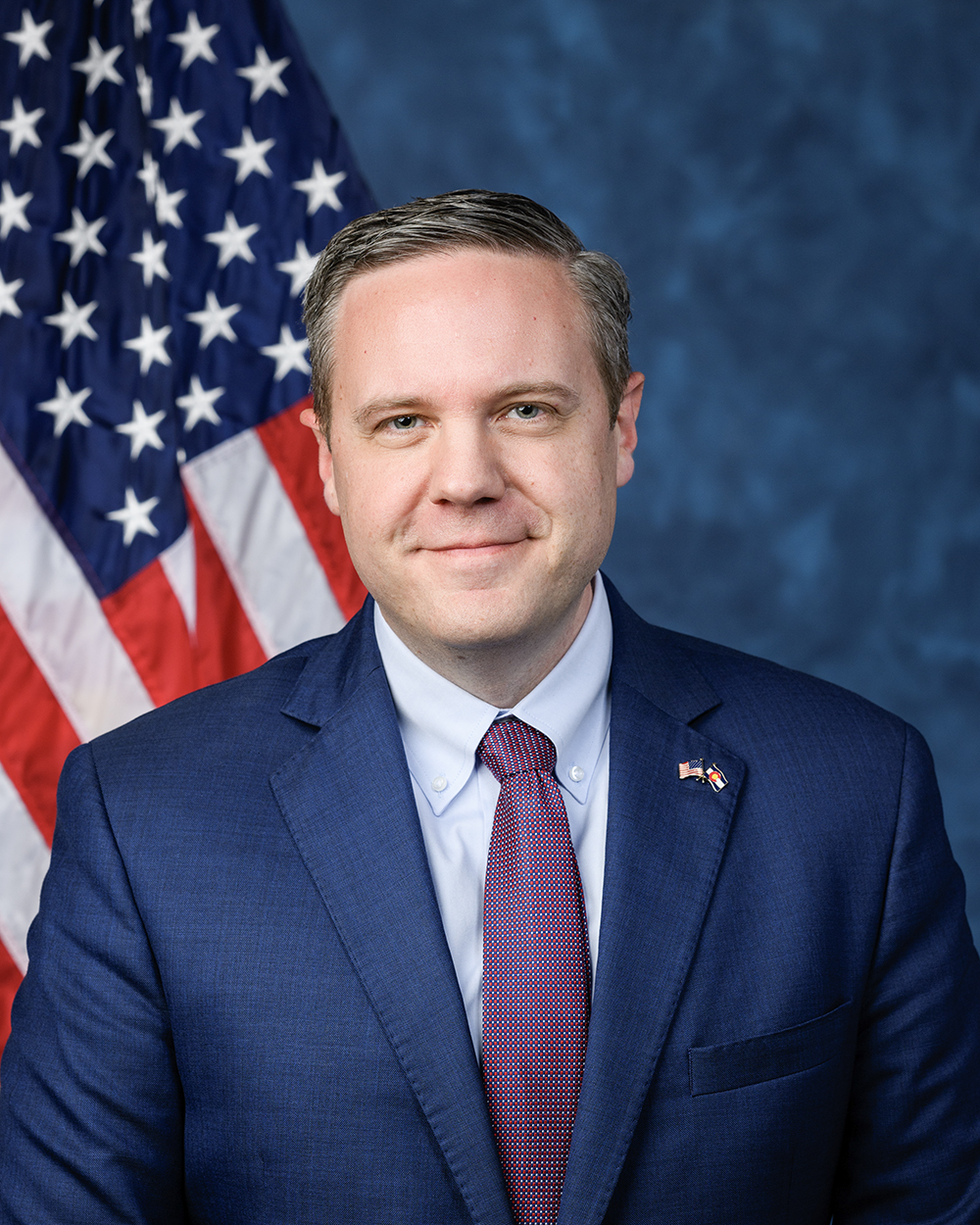
Rep. Jeff Hurd
Sponsored bills
Maddy summaryHRES 1076 is a House resolution recognizing the 10th anniversary of the first U.S. liquefied natural gas (LNG) export shipment from the lower 48 states, which occurred on February 24, 2016. The resolution celebrates this milestone as a historic achievement in American energy production, highlighting its role in supporting over 273,000 annual jobs and $400 billion in economic growth over the past decade. It honors the workers and communities involved and acknowledges LNG exports' contribution to U.S. economic growth, energy security, and global partnerships. The resolution has no binding effect or policy changes - it solely expresses recognition of a past event.
Accessing Satellite Capabilities to Enable New Discoveries Act or the ASCEND Act This bill provides statutory authority for the Commercial SmallSat Data Acquisition (CSDA) program run by the National Aeronautics and Space Administration (NASA). Through the CSDA program, NASA acquires remote sensing data and imagery from commercial satellites to support its Earth science research. ( Remote sensing generally refers to the collection of data by instruments in Earth’s orbit, such as satellites, that can be processed into imagery of Earth’s surface.) Under the bill, NASA may establish or modify end-use agreements to allow for broad use of data and imagery acquired under the program, including by individuals outside of NASA (e.g., other federal agencies). The terms of any data or imagery acquisition may not prevent the publication of such data or imagery for scientific purposes or the publication of information derived from it. To the extent practicable, NASA must acquire such data and imagery from U.S. vendors.
Maddy summaryHRES 1073 is a non-binding resolution designating February 21-28, 2026, as "National FFA Week" to recognize the National Future Farmers of America (FFA) Organization’s role in developing agricultural education leaders and to celebrate the 50th anniversary of Alaska’s State FFA Association. It does not create new laws or affect any specific groups or policies; instead, it formally expresses the House’s support for this commemorative week. The resolution highlights FFA’s mission to prepare students for leadership and careers in agriculture, food, and natural resources. As a symbolic gesture, it has no direct legislative or financial impact on constituents.
Maddy summaryHR 7631, the Rural Water Security Act, amends existing water law by adding Colorado as a state alongside Arizona in three specific provisions of the 1999 Water Resources Development Act. This technical change updates legal references related to Western water management, specifically affecting states involved in interstate water agreements like the Colorado River Basin. The bill does not create new programs or funding but adjusts how Colorado is recognized in current water law. It directly impacts water resource planning and management for states in the Western U.S. participating in these agreements.
Maddy summaryThis bill prevents state or local governments from banning or restricting energy connections (like installation, modification, or access) based on the type or source of energy, such as electricity, natural gas, or renewable fuels. It directly affects consumers choosing energy providers and energy companies seeking to offer services. The key provision prohibits local laws, regulations, or policies that limit energy services sold in interstate commerce, covering all energy types listed in the bill’s definitions. It does not create new programs but limits regulatory authority at the state or local level. The law aims to ensure open access to diverse energy sources without source-based restrictions.
Maddy summaryHRES 1034 modifies House rules for "questions of privilege" resolutions during the 119th Congress. It requires that any privilege resolution offered by the Majority Leader or Minority Leader must have at least one-fifth of all House members as cosponsors when introduced. Additionally, Members must maintain this one-fifth cosponsorship threshold for at least one legislative day after a resolution's introduction before making an oral announcement about it. This procedural change affects how Members can formally raise conduct issues involving other Members, Delegates, or Resident Commissioners.
Maddy summaryHR 6635, the Bus Operator Safety and Security Act, requires new fixed-route buses over 30 feet long (with a 10+ year lifespan) purchased using federal transit funds to have physical barriers at the driver's workstation. These barriers must extend from floor to ceiling, fully enclose the workstation to block entry of people or objects, and not obstruct the driver's view. Transit agencies must install these barriers within two years of the law's enactment, unless the labor union representing bus drivers agrees to waive the requirement. The rule applies only to new buses bought with federal funds (excluding those from rural transportation programs) and directly affects transit agencies and bus drivers operating large fixed-route vehicles.
Maddy summaryThe Comprehensive Congressional Budget Act of 2026 would reform how Congress manages the federal budget by requiring a single annual budget act that includes all federal spending and revenue. The bill establishes a new timeline with key deadlines: the President must submit a budget in February, committees must submit detailed spending and revenue proposals by April 15, and the House must approve the annual budget act by June 10. It would require all committees to submit line-item spending and revenue proposals for inclusion in the annual budget, rather than focusing only on annual appropriations bills. The bill aims to address current fragmentation in the budget process, where only about 26% of federal spending is covered by annual appropriations bills, by creating a more comprehensive and coordinated approach to federal budgeting.
Maddy summaryThis bill requires the federal government to use AI systems to annually identify redundant or outdated regulations in the Code of Federal Regulations. Specifically, the Office of Management and Budget (with National Institute of Standards and Technology guidance) must deploy AI meeting strict standards to flag duplicative or obsolete rules, then refer these to the responsible agency for review within 30 days. Agencies must then either rescind redundant rules or amend/update outdated ones within 30 days, bypassing standard regulatory procedures. The bill directly affects all federal agencies that create or maintain regulations, aiming to streamline the regulatory code through AI-assisted review.