

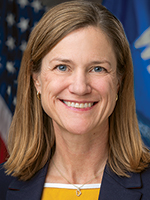
Photo of Deb Andraca
D Wisconsin House · District 23 On the 2026 ballot

Rep. Deb Andraca

Compare
Total votes
575
all sessions
Attendance
99%
8 missed
Near the chamber average
With party
96%
of cast votes
Near the chamber average
Bipartisan score
2%
crosses aisle rarely
Near the chamber average
Sponsored
774
bills & resolutions
Near the chamber average
Committees
4
assignments
774 bills and resolutions

Sponsored bills

Total
774
Primary
774
Co-sponsor
0
This page
774
matching current filters
Primary AB 500
Failed · Wisconsin House · Lead sponsor
Relating to: prohibiting corporal punishment in public and private schools.

Maddy summaryAB 500 bans corporal punishment in all public and private schools, defining it as intentional physical pain used for discipline (e.g., paddling or slapping). The bill prohibits school staff from using such punishment on students but allows reasonable force for safety under new school policies. Schools must adopt policies clarifying when force is permitted, excluding individualized education programs and athletic training. This directly affects all public and private schools and their staff in the state.

Failed Jul 2, 2026 0 co-sponsors
Primary AB 1012
Failed · Wisconsin House · Lead sponsor
Relating to: the establishment of a family and medical leave insurance program; family leave to care for a family member and for the active duty of a family member; the employers that must allow an employee to take family or medical leave; allowing a local government to adopt ordinances requiring employers to provide leave benefits; providing an exemption from emergency rule procedures; providing an exemption from rule-making procedures; granting rule-making authority; making an appropriation; and providing a penalty. (FE)

Maddy summaryAB 1012 establishes a family and medical leave insurance program that would allow eligible workers to take up to 14 weeks of leave per year to care for a newborn, newly adopted child, or family member with a serious health condition, or to address certain family military needs. The bill would require employers with 50 or more employees to provide this leave, funded through a new family and medical leave insurance trust fund. It defines "family member" broadly to include spouses, domestic partners, parents, children, siblings, and other close relatives or people in close association with the employee. The legislation also sets specific limits on leave availability, including a maximum of 6 weeks for certain family situations and 8-14 weeks for combined reasons within a 12-month period.

Failed Jun 16, 2026 0 co-sponsors
Primary AB 913
Signed into law · Wisconsin House · Lead sponsor
Relating to: subtraction for certain income of members of the National Guard and Reserves. (FE)

Maddy summaryAB 913 creates a new tax break for Wisconsin National Guard and Reserve members by allowing a subtraction from taxable income for specific military pay. It covers basic pay received during federally required drills and field exercises (for National Guard) and inactive-duty training compensation (for Reserves), as defined under federal law. This applies to tax years starting after December 31, 2025, and fills a gap in current law, which previously only provided similar tax breaks for active duty or certain call-ups. The bill directly affects Wisconsin residents serving in these military roles who receive this type of compensation.

Signed into law Jun 16, 2026 0 co-sponsors
Primary AB 1102
Failed · Wisconsin House · Lead sponsor
Relating to: longevity bonuses for teachers in school districts. (FE)

Maddy summaryThis bill establishes a longevity bonus program for teachers in Wisconsin school districts, providing a $7,000 payment to educators who have been continuously licensed and employed by the same school board for five consecutive school years starting in the 2031-32 academic year. The program allows teachers to receive additional bonuses for each subsequent five-year period of continuous service, with school boards required to annually report eligible teacher names to the Department of Public Instruction. The legislation creates new statutory sections to authorize funding for these payments and defines eligibility requirements based on continuous licensure and employment history.

Failed Apr 22, 2026 0 co-sponsors
Primary AB 1150
Failed · Wisconsin House · Lead sponsor
Relating to: implementation of an individualized education program or services plan under the Special Needs Scholarship Program. (FE)

Maddy summaryThis bill amends Wisconsin's Special Needs Scholarship Program to require private schools to implement individualized education programs or services plans for students with disabilities, as modified by agreement between the school and the parent. It mandates that private schools provide all records related to these program implementations within five days of receiving a request from the resident school board. The changes take effect starting with the 2026-27 school year, ensuring greater transparency and accountability in how private schools serving students with disabilities manage their educational plans.

Failed Apr 21, 2026 0 co-sponsors
Primary AB 943
Failed · Wisconsin House · Lead sponsor
Relating to: going armed at a polling place and providing a penalty.

Maddy summaryAB 943 creates a new law (Section 941.236) prohibiting people from carrying firearms within 100 feet of polling places during voting hours (one hour before opening to one hour after closing). It directly affects voters, election workers, and anyone near polling locations during elections. The law applies to all individuals except law enforcement officers, qualified out-of-state officers, former officers, property owners on their own land, and security personnel acting in their official duties. Violating this provision is a serious misdemeanor charge.

Failed Apr 21, 2026 0 co-sponsors
Primary AB 790
Failed · Wisconsin House · Lead sponsor
Relating to: creating the water fund for our future, granting rule-making authority, and making an appropriation. (FE)

Maddy summaryAB 790 creates a dedicated "Water Fund for Our Future" with an initial $250 million transfer from the general fund. The fund establishes a rapid response account to cover clean water-related costs during natural disasters or public health emergencies, including remediation and assistance for affected individuals. A new joint committee oversees fund spending, reviewing requests for funding (excluding non-clean-water uses) and recommending approvals to the finance committee. All funds must be used exclusively for clean water activities, with specific rules for disbursement and oversight.

Failed Apr 13, 2026 0 co-sponsors
Primary AB 964
Signed into law · Wisconsin House · Lead sponsor
Relating to: Internet crimes against children administrative subpoenas for the crime of sexual extortion when the crime victim is a child. (FE)

Maddy summaryAB 964 clarifies that online sexual extortion targeting children falls under existing law by specifying it as a violation of Section 942.095 when the victim is a child (as defined in Section 948.01). This bill directly affects law enforcement agencies investigating internet crimes against children, enabling them to issue administrative subpoenas to internet companies for relevant data without a court order. The key provision streamlines the process for obtaining evidence from online platforms in cases where children are victims of sexual extortion. It does not create new penalties but ensures these cases are explicitly covered under current statutes for investigative efficiency.

Signed into law Apr 9, 2026 0 co-sponsors
Primary AB 916
Failed · Wisconsin House · Lead sponsor
Relating to: a home repair program and making an appropriation. (FE)

Maddy summaryAB 916 creates a state-funded home repair program to address habitability issues and improve energy efficiency in affordable housing. It provides grants of up to $25,000 per unit to eligible homeowners (income ≤100% of area median income who own or occupy their homes) and interest-free loans of up to $25,000 to eligible landlords (owning ≤5 properties/15 units of affordable housing). The program prioritizes repairs for homes with health/safety hazards, energy efficiency upgrades, and accessibility improvements for individuals with disabilities or young children. Properties must be between 10 and 40 years old to qualify, and funds are administered by the state authority or contracted counties/nonprofits with strict reporting requirements.

Failed Apr 7, 2026 0 co-sponsors
Primary AB 910
Passed · Wisconsin House · Lead sponsor
Relating to: the amounts of fines and fees state agencies are authorized or required to impose by law. (FE)

Maddy summaryAB 910 requires state agencies to adjust fines and fees for inflation every three years. Agencies must report current amounts, calculate inflation-adjusted values using the consumer price index, and recommend whether to increase, decrease, or maintain fees based on inflation. This applies to all state agencies collecting fees for services or penalties (like driver’s license fees or permit charges), affecting individuals who pay these fees. Agencies can spread increases over up to four years and must consider their service costs when recommending changes. The bill establishes a regular process to keep fee levels aligned with inflation, rather than allowing them to become outdated.

Passed Apr 6, 2026 0 co-sponsors
Showing 1 to 10 of 774 bills
1 2 3 78 Next