Issue · Immigration

Immigration

Every immigration bill, vote, and legislator stance in Wisconsin, automatically classified by Maddy, our AI policy reader.

Total bills
78
119th Congress
Top supporter
Mark Pocan
81% support rate
Top opponent
Glenn Grothman
16% support rate
Ranked legislators
8
3 support · 5 oppose
Key legislators

Who's moving immigration in Wisconsin

Legislators moving immigration in Wisconsin
Legislator Party Stance Support rate Votes
Mark Pocan
Mark Pocan House · District 2
D
Strong +
81% 149
Gwen Moore
Gwen Moore House · District 4
D
Strong +
81% 147
Ron Johnson
Ron Johnson Senate
R
Support
70% 180
Glenn Grothman
Glenn Grothman House · District 6
R
Strong −
16% 147
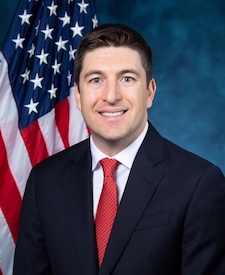
Bryan Steil
Bryan Steil House · District 1
R
Strong −
19% 150
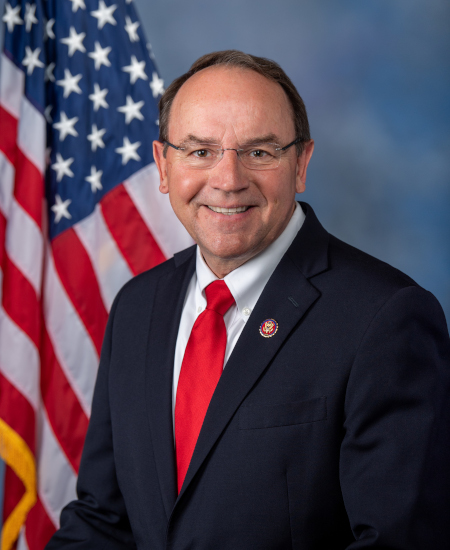
Thomas P. Tiffany
Thomas P. Tiffany House · District 7
R
Strong −
19% 143
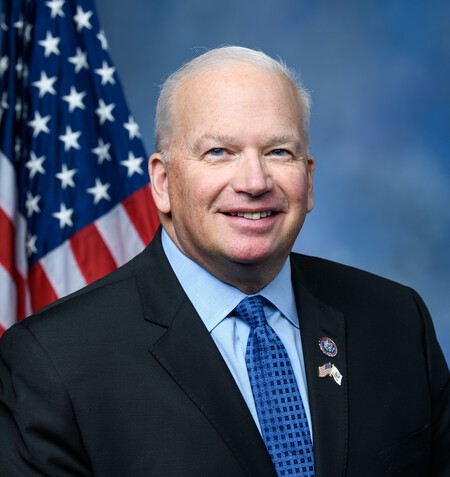
Tony Wied
Tony Wied House · District 8
R
Strong −
19% 148
Scott Fitzgerald
Scott Fitzgerald House · District 5
R
Strong −
19% 149
Showing 1–10 of 78 bills

All immigration bills

passed · United States · House Sep 1, 2026

HRES 1490: Providing for the condemnation and denouncement of socialism in all its forms, and for other purposes.

This resolution states that the House of Representatives condemns and denounces socialism in all its forms, including the Democratic Socialists of America, and opposes the implementation of socialist policies in the United States; reaffirms its support for free, fair, and secure elections and calls for enactment of the SAVE America Act; reiterates that American elections are for American citizens only; and recommits itself to upholding the U.S. Constitution.
in committee · United States · House Sep 2, 2026

HR 10222: No HUD Funding for Sanctuary Cities Act

This bill would prohibit any state or local government designated as a "sanctuary jurisdiction" from receiving grant funds distributed by the Department of Housing and Urban Development (HUD). A jurisdiction is defined as a sanctuary if it has laws, policies, or practices that restrict officials from sharing information about an individual's immigration status or from complying with federal requests to detain or notify about the release of individuals. The funding restriction would apply to grants distributed 180 days after the bill's enactment. To determine which jurisdictions qualify for this ineligibility, the HUD Secretary is required to consult with the Secretary of Homeland Security.
in committee · United States · House Jul 9, 2026

HR 9633: Birthright Citizenship Clarification Act of 2026

The Birthright Citizenship Clarification Act of 2026 would amend federal law to change how citizenship at birth is determined for children born in the United States. Under this proposal, a child born in the U.S. to parents who are present temporarily or unlawfully would not automatically receive citizenship, while also preserving historical exceptions for children of foreign diplomats and those born on foreign ships. The bill specifically defines temporary presence to include holders of student, work, tourist, and other nonimmigrant visas, as well as participants in the Visa Waiver Program. These changes would apply only to individuals born after the law takes effect, leaving the citizenship status of those born before that date unchanged.
in committee · United States · House Jun 29, 2026

HR 9514: Homeownership Eligibility Reform Act

The Homeownership Eligibility Reform Act restricts access to government-backed and private mortgage insurance for single-family homes to individuals who are U.S. citizens. Specifically, the bill amends laws governing the Federal Housing Administration, Fannie Mae, and Freddie Mac to require that borrowers for one-to-four-unit properties must be citizens to qualify for their mortgage products. This change directly affects foreign nationals and non-citizen residents who currently might purchase homes with these types of financing, effectively limiting their eligibility for these specific mortgage programs.
in committee · United States · House Jul 15, 2026

HRES 1394: Condemning prosecution policies that give preferential treatment to foreign nationals over United States citizens.

This resolution expresses strong disapproval of local prosecution policies that allegedly offer special leniency to foreign nationals compared to U.S. citizens. It argues that such practices endanger public safety and violate federal civil rights laws by failing to treat all individuals equally under the law. The text calls on state and local prosecutors to ignore immigration status when deciding how to handle criminal cases and urges the Department of Justice to investigate these alleged preferential treatments. Ultimately, the measure aims to ensure that every crime is prosecuted to the fullest extent of the law regardless of the suspect's background.
in committee · United States · House Apr 29, 2026

HR 8586: Americans First Immigration Act

This bill fundamentally restructures the U.S. immigration system by replacing the current employment-based visa categories with a new points-based program that prioritizes applicants with high salaries, advanced degrees, English proficiency, and U.S. military service. Under this new system, employers must attest that they have attempted to hire qualified American workers first and guarantee that hiring an immigrant will not result in layoffs of existing U.S. employees. Additionally, the bill eliminates the Diversity Lottery program, restricts certain family sponsorship categories for citizens, and imposes conditional permanent resident status on new immigrants who must prove they are not receiving public benefits and remain employed within two years. The legislation also mandates that undocumented students pay out-of-state tuition rates at colleges and requires immigrants to sign statements affirming their loyalty to U.S. constitutional principles and opposition to specific forms of persecution.
in committee · United States · House May 4, 2026

HJRES 172: Proposing an amendment to the Constitution of the United States to protect United States citizenship.

This bill proposes a constitutional amendment to clarify how citizenship is determined at birth, directly affecting individuals born in the United States and their parents. It would restrict automatic citizenship to children born to parents who are U.S. citizens, lawful permanent residents, or active-duty military members, while also granting Congress the authority to pass laws enforcing these rules. By modifying the interpretation of the 14th Amendment, the measure aims to establish specific criteria for birthright citizenship that align with current immigration laws.
in committee · United States · House Apr 2, 2026

HR 8182: Banning Perpetrators of Religious Persecution Act of 2026

This bill prohibits the issuance of U.S. visas to individuals who have committed particularly severe violations of religious freedom, either while serving as foreign government officials or while acting outside the United States. It directly affects foreign nationals by adding them to the list of inadmissible aliens under U.S. immigration law if they meet specific criteria related to religious persecution. The law requires the Secretary of State to publish the names and locations of these individuals on a public website, though the Secretary retains discretion to withhold identities if doing so would harm U.S. foreign policy interests. This measure expands existing immigration restrictions to specifically target those responsible for religious freedom violations, creating a new ground for visa denial.
in committee · United States · House Mar 25, 2026

HR 8077: 287(g) Cooperation Act of 2026

This bill, the 287(g) Cooperation Act of 2026, requires state and local law enforcement agencies to sign a formal agreement with the Department of Homeland Security to remain eligible for federal Community Oriented Policing Services grants. The law mandates that agencies must have this written memorandum of agreement in place within 180 days of the bill's enactment, or they will be ineligible to receive funding for the program. The Attorney General and Secretary of Homeland Security must establish procedures to verify that agencies have completed this agreement before approving any grant awards. The changes apply to grant applications starting with fiscal year 2027 and all subsequent years.
in committee · United States · House Apr 9, 2026

HR 8240: SAFER Act of 2026

The SAFER Act of 2026 prohibits U.S. immigration officials from granting asylum to individuals who have returned to their country of nationality or last habitual residence after applying for asylum. The bill also allows for the termination of existing asylum status, denaturalization, and deportation for those who return to their country of concern. Exceptions to these restrictions may be made on a case-by-case basis if the President certifies national security needs or the Secretary of State certifies a legitimate transfer of power in the country. This legislation directly affects asylum seekers and those already granted asylum who travel back to their home countries.
Showing 1 to 10 of 78 bills
1 2 3 8 Next