Issue · Healthcare

Healthcare (Insurance)

Every healthcare bill, vote, and legislator stance in Wisconsin, automatically classified by Maddy, our AI policy reader.

Total bills
73
2025-2026 Regular Session
Top supporter
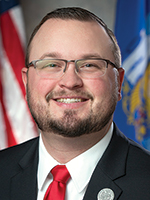
Adam Neylon
67% support rate
Top opponent
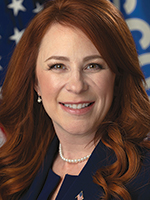
Christine Sinicki
0% support rate
Ranked legislators
10
5 support · 5 oppose
Key legislators

Who's moving insurance in Wisconsin

Legislators moving insurance in Wisconsin
Legislator Party Stance Support rate Votes
Adam Neylon
Adam Neylon House · District 15
R
Support
67% 3
Alex Dallman
Alex Dallman House · District 39
R
Support
67% 3
Amanda Nedweski
Amanda Nedweski House · District 32
R
Support
67% 3
Barbara Dittrich
Barbara Dittrich House · District 99
R
Support
67% 3
Ben Franklin
Ben Franklin House · District 88
R
Support
67% 3
Christine Sinicki
Christine Sinicki House · District 20
D
Strong −
0% 3
Deb Andraca
Deb Andraca House · District 23
D
Strong −
0% 3
Jenna Jacobson
Jenna Jacobson House · District 50
D
Strong −
0% 3
Jodi Emerson
Jodi Emerson House · District 91
D
Strong −
0% 3
Joe Sheehan
Joe Sheehan House · District 26
D
Strong −
0% 3
Showing 11–20 of 73 bills

All healthcare bills

failed · Wisconsin · Assembly Mar 23, 2026

AB 1189: Relating to: limitation on retroactive claim denials under health insurance policies.

This bill would limit when health insurance companies can ask people to pay back money they already received for medical claims. It directly affects individuals with disability insurance policies, health maintenance organizations, and other health coverage plans. Under the new rules, insurers can only request repayment of already paid claims within 12 months of the initial payment, or 18 months if the claim involved coordination with other programs like Medicare or state medical assistance. The only exception allows retroactive denials if the original claim information was found to be fraudulent.
Sub-Topics Insurance Medicare
failed · Wisconsin · Senate Mar 23, 2026

SB 1136: Relating to: prior authorization for treatment of severe misalignment or malocclusion of teeth under health insurance policies and plans.

This bill prohibits disability insurance policies and self-insured health plans from using the Salzmann Evaluation Index alone to deny coverage for treating severe misalignment or malocclusion of teeth. It directly affects dental coverage under various health insurance plans, including limited service organizations, preferred provider plans, and defined network plans. The legislation requires these plans to consider additional clinical factors beyond the Salzmann Index when making prior authorization decisions for orthodontic treatment. The bill applies to policies and plans starting with the 2026-2027 plan year, with additional provisions for collective bargaining agreements.
Sub-Topics Insurance
failed · Wisconsin · Senate Mar 23, 2026

SB 1102: Relating to: reimbursement of maternal mental health screenings under the Medical Assistance program and coverage of maternal mental health screenings by health insurance policies and plans. (FE)

This bill requires health insurance policies and plans in Wisconsin to cover maternal mental health screenings for each pregnancy, while also allowing the Medical Assistance program to reimburse these screenings. The legislation mandates that screening standards be developed in consultation with organizations led by Black, Indigenous, and other persons of color, and permits licensed midwives, nurse-midwives, advanced practice registered nurses, and other qualified healthcare providers to administer the screenings. Additionally, the bill requires state disability insurance policies and self-insured health plans that include maternity coverage to include these screenings. The law takes effect on the day after publication, with specific provisions for collective bargaining agreements to apply when new or renewed.
failed · Wisconsin · Senate Mar 23, 2026

SB 1103: Relating to: special enrollment period for pregnancy.

This bill creates a special enrollment period for pregnant individuals in Wisconsin health insurance plans, allowing them to sign up for coverage at any time during their pregnancy rather than waiting for an open enrollment window. It directly affects health benefit plans, self-insured plans, and nonprofit cooperative health plans that operate under state insurance regulations. The key provision requires plans to cover pregnant individuals and their dependents starting from the first day of the month in which medical verification of pregnancy is received, with plans also required to notify enrollees about this option when first offered coverage. The bill applies to policies and plans beginning on January 1 of the year following its effective date, with special provisions for collective bargaining agreements.
failed · Wisconsin · Senate Mar 23, 2026

SB 1147: Relating to: limitation on retroactive claim denials under health insurance policies.

This bill limits when health insurance companies can demand repayment for claims they have already paid. It applies to disability insurance policies and various health care plans, including those offered by the state, counties, and other organizations. Under the bill, insurers can only request repayment within 12 months of making the initial payment, or 18 months if the claim involved coordination with other programs like Medicare or state medical assistance. The only exception is when the original claim was based on fraudulent information. The bill would take effect for policy years beginning on the date it is enacted, with special rules for plans covered by collective bargaining agreements.
Sub-Topics Insurance Medicare
failed · Wisconsin · Assembly Mar 23, 2026

AB 1224: Relating to: establishing a publicly financed health care plan for residents of this state, creating the office of the ombudsman for patient advocacy, granting rule-making authority, and making an appropriation.

This bill proposes creating a publicly financed health care plan for Wisconsin residents and establishes a new Office of the Ombudsman for Patient Advocacy within the Department of Health Services. The ombudsman would be appointed by the health secretary to advocate for patients, and the bill creates a separate health plan fund to manage money for the program, including federal payments and donations. The legislation defines key terms like "enrollee" and "medically necessary" care, authorizes the department to seek federal waivers to implement the plan, and sets up rules for how health care providers are classified and compensated. However, the bill failed to pass in the Senate on March 23, 2026, so these changes have not been enacted.
failed · Wisconsin · Assembly Mar 23, 2026

AB 1128: Relating to: insurer claims denial practices and auditing, creating the Office of the Public Intervenor, granting rule-making authority, and making an appropriation. (FE)

This bill creates a new Office of the Public Intervenor within the state insurance commissioner's office to help individuals with insurance claims, policies, and appeals for medical procedures and medications. It establishes rules requiring insurers to process disability insurance claims within reasonable timeframes, provide detailed explanations for claim denials, and disclose when artificial intelligence is used in claim decisions. The office can levy assessments on insurers based on their premium volume to fund its operations and conduct audits of claims denial practices. Additionally, the bill prohibits specific insurer practices such as using vague policy terms, stalling claim reviews, or allowing non-physician personnel to determine medical necessity.
failed · Wisconsin · Assembly Mar 23, 2026

AB 1121: Relating to: health insurance coverage of prosthetic limbs and custom orthotic braces. (FE)

This bill requires health insurance plans, including those for government employees and public schools, to cover prosthetic limbs and custom orthotic braces when deemed medically necessary by a licensed healthcare provider. The law defines prostheses as devices that replace missing limbs and custom orthotic braces as personalized devices that correct or support musculoskeletal conditions, ensuring coverage includes materials, instruction, and repairs under specific circumstances. Coverage must match or exceed federal standards and apply to replacement or repair when medically needed due to changes in the patient's condition or when repair costs exceed 60 percent of replacement costs. The bill also mandates that plans maintain access to at least two in-network providers in the state and requires written explanations for any coverage denials based on medical necessity.
Sub-Topics Insurance
failed · Wisconsin · Senate Mar 30, 2026

SB 1164: Relating to: preventing surprise bills for emergency medical services and other items and services under health insurance policies and plans. (FE)

This bill aims to protect patients from unexpected medical bills by establishing rules for how health insurance plans must handle emergency care and services provided by out-of-network providers. It requires insurance plans to cover emergency medical services without prior authorization and ensures that cost-sharing amounts for out-of-network emergency care are no higher than what would apply for in-network care. Additionally, the bill mandates that plans pay out-of-network providers directly for services rendered at participating facilities and counts patient cost-sharing payments toward in-network deductibles and out-of-pocket maximums. These provisions apply to defined network plans, preferred provider plans, and self-insured governmental plans that have networks of participating providers.
Sub-Topics Hospitals Insurance
failed · Wisconsin · Assembly Mar 23, 2026

AB 1110: Relating to: fertility treatment rights, reimbursement of fertility treatments under the Medical Assistance program, and requiring insurance coverage for fertility treatments. (FE)

This bill establishes statutory rights for individuals, healthcare providers, insurance companies, and manufacturers to access and provide fertility treatments without interference, while also creating a legal mechanism for enforcement through private lawsuits. It defines fertility treatment broadly to include procedures like in vitro fertilization, egg and sperm preservation, genetic testing, and related medications, requiring that services follow widely accepted medical standards. The legislation mandates that health insurance issuers cover fertility treatments and allows the state to seek federal waivers to reimburse these services through the Medical Assistance program if necessary. Additionally, it grants individuals the right to make decisions about their reproductive genetic material and establishes legal protections for providers to continue treatments they have already begun.
Sub-Topics Insurance
Showing 11 to 20 of 73 bills
Previous 1 2 3 8 Next