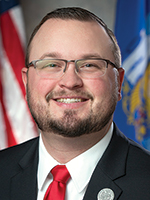
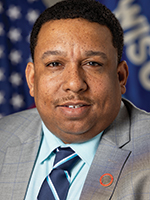
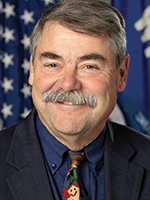
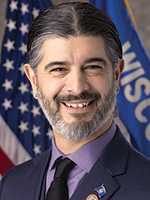
Key legislators
Who's moving healthcare in Wisconsin
Showing 11–14 of 14
bills
All healthcare bills
AB 598 allows patient representatives to consent to health care facility admissions for incapacitated individuals without requiring a court-appointed guardian or protective placement petition. The bill creates a defined "patient representative" role, requiring two medical professionals (e.g., two physicians or one physician plus an advanced practice clinician) to certify incapacity based on medical need - not age, disability, or eccentricity. Patient representatives gain authority to make health care decisions, enroll individuals in Medical Assistance, and authorize health care expenses similar to a guardian, but only for non-developmental disability and non-mental illness cases. This change streamlines admissions for incapacitated patients while mandating 72-hour notifications to county agencies about the certification.
SB 264 requires health insurance plans and the Medical Assistance program to cover specific breast cancer screenings without out-of-pocket costs for enrollees. It defines two key types of screenings: "diagnostic breast examinations" (used to evaluate symptoms or abnormalities, like mammograms) and "supplemental breast screening examinations" (for high-risk individuals without symptoms, using MRI or ultrasound). The bill prohibits cost-sharing (such as copays) for all diagnostic screenings and for the first supplemental screening per year, while allowing limited cost-sharing for additional supplemental screenings in the same year. This directly affects individuals with health insurance or Medical Assistance who require these screenings, particularly those at higher risk for breast cancer.
SB 23 extends Medicaid eligibility for postpartum women from 60 days to 365 days (one year) after pregnancy, directly affecting pregnant and postpartum women enrolled in the Medical Assistance program. The bill modifies eligibility rules to ensure coverage continues without regard to income changes during this extended period. It also adds a provision allowing women with family income above 300% of the poverty line to qualify if medical expenses for family members are covered, extending this eligibility to all family members. The bill requires federal approval for the 365-day extension to take effect.
SB 232 creates annual state grants of $17,000 per child advocacy center in Wisconsin to support education, training, medical advice, and quality assurance for responding to child maltreatment cases. The bill specifically authorizes funding for existing centers in Milwaukee, Kenosha, Fox Valley, Marathon, Chippewa, Brown, Racine, Walworth, and Green counties, plus adds the Lakeshore Regional Center in Sheboygan County and a statewide "Child Advocacy Centers of Wisconsin" entity. These grants, drawn from a specific state appropriation, directly support the operational capacity of these centers to improve multidisciplinary child abuse response. The bill was enacted as 2025 Wisconsin Act 13 after approval by the Governor on July 2, 2025.