Issue · Environment

Environment

Every environment bill, vote, and legislator stance in Wisconsin, automatically classified by Maddy, our AI policy reader.

Total bills
170
2025-2026 Regular Session
Top supporter
Shannon Zimmerman
89% support rate
Top opponent
Francesca Hong
20% support rate
Ranked legislators
10
5 support · 5 oppose
Key legislators

Who's moving environment in Wisconsin

Legislators moving environment in Wisconsin
Legislator Party Stance Support rate Votes
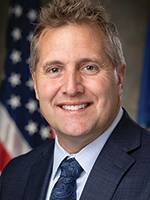
Shannon Zimmerman
Shannon Zimmerman House · District 30
R
Strong +
89% 17
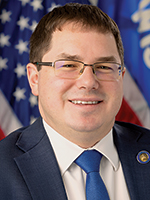
Mark Spreitzer
Mark Spreitzer Senate · District 15
D
Strong +
88% 18
Melissa Ratcliff
Melissa Ratcliff Senate · District 16
D
Strong +
88% 18
Jodi Habush Sinykin
Jodi Habush Sinykin Senate · District 8
D
Strong +
88% 18
Kelda Roys
Kelda Roys Senate · District 26
D
Strong +
86% 17
Francesca Hong
Francesca Hong House · District 76
D
Strong −
20% 19
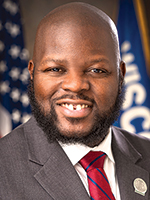
Supreme Moore Omokunde
Supreme Moore Omokunde House · District 17
D
Strong −
20% 19
Lori Palmeri
Lori Palmeri House · District 54
D
Strong −
20% 19
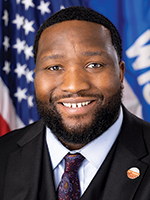
Darrin Madison
Darrin Madison House · District 10
D
Strong −
20% 19
Sequanna Taylor
Sequanna Taylor House · District 11
D
Strong −
20% 18
Showing 161–170 of 170 bills

All environment bills

failed · Wisconsin · Senate Mar 23, 2026

SJR 37: Relating to: the right of the people to a clean, safe, and healthy natural environment and to its preservation (first consideration).

Senate Joint Resolution 37 (SJR 37) proposes to amend the Wisconsin Constitution by creating a new section that establishes a right to a clean, safe, and healthy natural environment. This constitutional right would apply to all people in the state, including future generations, and specifically mentions clean water, air, healthy soils, and a stable climate. The proposed amendment dictates that these rights shall never be infringed, be subject to strict scrutiny in court, and be protected equitably across all communities. Additionally, it designates the state as a trustee responsible for protecting Wisconsin's natural resources for its citizens.
failed · Wisconsin · Senate Mar 23, 2026

SB 343: Relating to: requiring bicycle and pedestrian facilities in highway projects and granting rule-making authority. (FE)

SB 343 requires state highway departments to include bike paths and pedestrian pathways in all new highway construction or reconstruction projects funded by state or federal money. It creates specific exceptions allowing projects to skip these features only if the cost exceeds 20% of the total project budget, if they would cause excessive harm in a tight space, if there's no community need, or if a local community refuses to maintain them. The bill directs the state transportation department to create rules defining these exceptions, with a requirement for a senior official to review cost-based exceptions. This policy directly affects state highway planning and project developers working with state or federal funds.
failed · Wisconsin · Assembly Mar 23, 2026

AB 310: Relating to: creating a nutrient loss reduction grant program. (FE)

AB 310 creates a state-funded grant program to help agricultural businesses reduce nutrient runoff into waterways. It provides financial assistance for farmers and ranchers to implement practices like cover cropping, precision fertilization, or manure management systems. The program aims to improve water quality by directly supporting on-farm changes that limit excess nutrients from entering rivers and lakes. (Note: As introduced, specific eligibility details and funding levels remain under review by the Agriculture Committee.)
Sub-Topics Water Quality
failed · Wisconsin · Senate Mar 23, 2026

SB 628: Relating to: notifying counties and tribes of an exceedance of groundwater protection standards or standards for PFAS. (FE)

SB 628 requires the state environmental department to notify county health departments, tribal health departments, and county land conservation departments within 7 business days whenever groundwater pollution levels exceed safety standards or PFAS chemical limits. It mandates that the department create a public notification system to alert affected local governments about these exceedances, including adjacent counties that might be impacted. The bill directly affects local health and environmental agencies in counties where pollution incidents occur, ensuring they receive timely information to address potential public health or environmental risks. This is a procedural requirement focused on transparency and rapid communication, not on changing pollution standards or enforcement actions.
failed · Wisconsin · Assembly Mar 23, 2026

AB 291: Relating to: native prairie and forage plants.

AB 291 requires all state agencies to prioritize using native prairie and forage plants in their projects to support native bees, butterflies, and other pollinators. This law directly affects state agencies, including departments and boards, by mandating they favor native plant species over non-native alternatives where appropriate. The Department of Natural Resources must provide requested information to help agencies implement this requirement. The bill creates a new statute section defining state agencies and establishing this preference without altering existing environmental protections.
failed · Wisconsin · Senate Jun 1, 2026

SB 294: Relating to: labeling plants as beneficial to pollinators. (FE)

SB 294 prohibits retailers and plant providers from labeling plants as "beneficial to pollinators" if the plants were treated with systemic insecticides that carry specific pollinator warnings on their product labels (such as a "pollinator protection box" or bee/honeybee precautionary statements). The bill directly affects nurseries, garden centers, and other businesses selling plants at retail. It creates a clear requirement: if an insecticide label warns about pollinator harm, the plant cannot be marketed as pollinator-friendly. This policy change aims to prevent misleading marketing by aligning product claims with actual pollinator safety.
signed · Wisconsin · Assembly Apr 6, 2026

AB 131: Relating to: programs and requirements to address PFAS.

AB 131 establishes a municipal grant program to test for PFAS (perfluoroalkyl and polyfluoroalkyl substances) in public water systems and fund source reduction measures. It allows water utilities to use customer service fees to cover up to half the cost of PFAS source reduction for connected customers, if cheaper than facility upgrades. The bill also creates eligibility rules for disadvantaged communities extending service due to PFAS contamination and directs PFAS contamination claims to an existing landowner grant program. These provisions directly affect municipal water systems, public utilities, and communities addressing PFAS in drinking water.
failed · Wisconsin · Senate Mar 23, 2026

SJR 33: Relating to: declaration of the Economic Justice Bill of Rights.

SJR 33 is a Senate Joint Resolution that declares an "Economic Justice Bill of Rights" for the people of Wisconsin. This resolution outlines ten fundamental rights, including the right to a job that pays a living wage, adequately funded public education, affordable healthcare, and a clean and sustainable environment. It serves as a legislative declaration affirming these principles for all Wisconsinites, regardless of background.
Sub-Topics Minimum Wage
failed · Wisconsin · Assembly Mar 23, 2026

AB 287: Relating to: local regulation of pesticides to protect pollinators.

AB 287 creates a new section of state law allowing local governments (like cities or counties) to regulate pesticides specifically to protect pollinators, such as bees and butterflies. The bill defines "pollinator" as insects that pollinate flowers and establishes a legal basis for local ordinances restricting pesticide use in ways that safeguard these insects and their habitats. This legislation directly affects local governments, enabling them to develop their own pesticide rules without overriding state law, while focusing on concrete protection for pollinators rather than imposing new statewide restrictions.
Sub-Topics Water Quality
failed · Wisconsin · Senate Mar 23, 2026

SB 293: Relating to: native prairie and forage plants.

SB 293 requires all state agencies to prioritize using native prairie and forage plants in their projects to support native bees, butterflies, and other pollinators. It creates a new statute (20.935) defining "state agency" broadly and mandating that agencies use these native plants where appropriate. The Department of Natural Resources must provide requested information to help agencies implement this requirement. The bill directly affects every state agency that manages land or projects, with no financial or regulatory changes beyond the preference for native plants.
Showing 161 to 170 of 170 bills
Previous 1 15 16 17