

Issue · Environment
Environment
Every environment bill, vote, and legislator stance in Wisconsin, automatically classified by Maddy, our AI policy reader.
Total bills
170
2025-2026 Regular Session
Top supporter
Shannon Zimmerman
89% support rate
Top opponent
Francesca Hong
20% support rate
Ranked legislators
10
5 support · 5 oppose
Key legislators
Who's moving environment in Wisconsin
| Legislator | Party | Stance | Support rate | Votes |
|---|---|---|---|---|
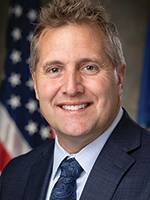
Shannon Zimmerman
House · District 30
|
R |
Strong +
|
89% | 17 |

Mark Spreitzer
Senate · District 15
|
D |
Strong +
|
88% | 18 |

Melissa Ratcliff
Senate · District 16
|
D |
Strong +
|
88% | 18 |

Jodi Habush Sinykin
Senate · District 8
|
D |
Strong +
|
88% | 18 |

Kelda Roys
Senate · District 26
|
D |
Strong +
|
86% | 17 |

Francesca Hong
House · District 76
|
D |
Strong −
|
20% | 19 |

Supreme Moore Omokunde
House · District 17
|
D |
Strong −
|
20% | 19 |

Lori Palmeri
House · District 54
|
D |
Strong −
|
20% | 19 |
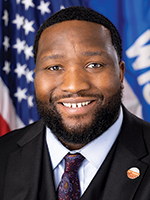
Darrin Madison
House · District 10
|
D |
Strong −
|
20% | 19 |

Sequanna Taylor
House · District 11
|
D |
Strong −
|
20% | 18 |
Showing 151–160 of 170
bills
All environment bills
AB 619: Relating to: a tax credit for aviation biofuel manufacturing, authorizing the state to contract public debt for an aviation biofuel project grant, and making an appropriation. (FE)
Topics
✓ Budget & TaxesSupports Budget & TaxesBill authorizes $150M grant appropriation via state debt for aviation biofuel manufacturing, directly funding a specific program through state budget allocation.
✓ EnergySupports EnergyFunds $150M for aviation biofuel manufacturing, requiring 80% local biomass and exclusive renewable production, directly advancing renewable energy infrastructure.
✓ EnvironmentSupports EnvironmentFunds aviation biofuel manufacturing (clean energy) with 80% local biomass sourcing, promoting reduced emissions and sustainable resource use per bill requirements.
✓ TransportationSupports TransportationFunds $150M aviation biofuel manufacturing grant, promoting sustainable transportation infrastructure through renewable fuel production for aviation.
AB 289: Relating to: ban on the use of certain insecticides by the Department of Natural Resources.
SB 436: Relating to: the Warren Knowles-Gaylord Nelson stewardship 2000 program and making an appropriation. (FE)
Topics
✓ Budget & TaxesSupports Budget & TaxesBill creates annual appropriations for conservation grants and tribal co-management program with set spending limits through 2031, directly funding conservation initiatives.
✓ EnvironmentSupports EnvironmentCreates governing board with environmental group reps and funds conservation grants through 2031, directly advancing environmental protection and stewardship programs.
AB 7: Relating to: requiring local approval for certain wind and solar projects before Public Service Commission approval.
Topics
✗ EnergyOpposes EnergyRequires local approval for large renewable projects, adding potential delays/obstruction, aligning with 'oppose' indicators of restricting development.
✓ EnvironmentSupports EnvironmentRequires local approval for wind/solar projects (15+ MW), streamlining renewable energy development to advance climate goals by preventing delays in clean energy projects.
AB 315: Relating to: the Warren Knowles-Gaylord Nelson stewardship 2000 program and a major land acquisitions program. (FE)
Sub-Topics
Conservation
AB 288: Relating to: labeling plants as beneficial to pollinators. (FE)
AB 333: Relating to: a refundable income tax credit for bicycle purchases and making an appropriation. (FE)
Topics
✓ Budget & TaxesSupports Budget & TaxesCreates refundable tax credit for low-income bicycle purchases, providing tax relief and requiring state appropriation.
✓ EnvironmentSupports EnvironmentPromotes bicycle use, reducing vehicle emissions and supporting cleaner transportation as a key environmental benefit.
✓ TransportationSupports TransportationPromotes sustainable transportation by incentivizing bicycle purchases through a refundable tax credit for low-income families, aligning with 'promotes sustainable transportation' indicator.
AB 488: Relating to: fire suppression products derived from soybeans.
AB 129: Relating to: providing safe drinking water in public and private schools. (FE)
Topics
✓ EducationSupports EducationMandates safe water infrastructure in schools, enhancing student safety and facility standards per education topic requirements.
✓ EnvironmentSupports EnvironmentRequires testing for lead/PFAS and mandates action to protect water quality, aligning with pollution control in environmental protection.