Issue · Criminal Justice

Criminal Justice (Law Enforcement)

Every criminal justice bill, vote, and legislator stance in Wisconsin, automatically classified by Maddy, our AI policy reader.

Total bills
64
2025-2026 Regular Session
Top supporter
Adam Neylon
100% support rate
Top opponent
Alex Joers
0% support rate
Ranked legislators
10
5 support · 5 oppose
Key legislators

Who's moving law enforcement in Wisconsin

Legislators moving law enforcement in Wisconsin
Legislator Party Stance Support rate Decisive votes
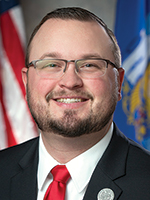
Adam Neylon
Adam Neylon House · District 15
R
Strong +
100% 5
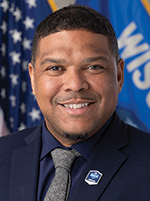
Alex Dallman
Alex Dallman House · District 39
R
Strong +
100% 5
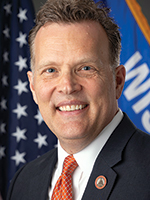
Amanda Nedweski
Amanda Nedweski House · District 32
R
Strong +
100% 5
Barbara Dittrich
Barbara Dittrich House · District 99
R
Strong +
100% 5
Ben Franklin
Ben Franklin House · District 88
R
Strong +
100% 5
Alex Joers
Alex Joers House · District 81
D
Strong −
0% 5
Amaad Rivera-Wagner
Amaad Rivera-Wagner House · District 90
D
Strong −
0% 5
Andrew Hysell
Andrew Hysell House · District 48
D
Strong −
0% 5
Angela Stroud
Angela Stroud House · District 73
D
Strong −
0% 5
Angelina Cruz
Angelina Cruz House · District 62
D
Strong −
0% 5
Showing 61–64 of 64 bills

All criminal justice bills

failed · Wisconsin · Senate Mar 23, 2026

SB 444: Relating to: identity requirements for officers who arrest or detain individuals and providing a penalty.

SB 444 requires law enforcement officers to clearly identify themselves during arrests or detentions by verbally stating their role, displaying their surname and badge number with high-contrast visibility, and showing agency insignia in specific sizes. It mandates officers to provide the legal authority for the detention and prohibits face covering except for health/safety reasons or tactical teams. Violating these requirements is a Class D felony, though courts cannot impose jail time. The bill directly affects all officers employed by law enforcement agencies and individuals subject to arrests or detentions.
vetoed · Wisconsin · Assembly May 13, 2026

AB 629: Relating to: police authority to disable drones threatening public safety and providing a penalty.

AB 629 prohibits operating drones over correctional facilities without authorization from facility leaders (e.g., secretary of corrections or sheriff). It imposes a $5,000 fine for unauthorized drone flights and criminalizes using weaponized drones (equipped with tasers, firearms, etc.) near prisons, classifying it as a Class H felony. The bill grants police officers authority to disable or destroy drones they reasonably believe pose an imminent threat to public safety, including through jamming or hacking, without financial liability for property damage. These provisions directly affect drone operators near prisons, facility staff, and law enforcement agencies, with specific focus on preventing security threats at correctional institutions.
passed · Wisconsin · Assembly Mar 23, 2026

AB 53: Relating to: special circumstances battery to a community service officer and providing a penalty.

AB 53 amends Wisconsin law to classify intentionally causing bodily harm or threatening harm to a community service officer (or their family) as a Class H felony under specific conditions. It directly affects community service officers and their families by creating a new felony charge when the harm occurs in response to the officer's official duties. The bill requires that the perpetrator knew the victim was a community service officer (or family member) and that the act was retaliation for an official action taken by the officer. This policy change strengthens criminal penalties for attacks targeting these officers during their work, without altering existing protections for other law enforcement roles.
Sub-Topics Law Enforcement
failed · Wisconsin · Assembly Mar 23, 2026

AB 558: Relating to: warrior-style training of law enforcement officers. (FE)

AB 558 bans "warrior-style training" for law enforcement officers in the state, directly affecting law enforcement agencies, officers, and training organizations. The bill prohibits agencies from providing, arranging, reimbursing, or contracting for such training - defined as any program that dehumanizes individuals or encourages aggressive conduct that increases the likelihood of deadly force. It specifically exempts aikido training, allowing agencies to provide or reimburse for it. The law amends state statutes to enforce these restrictions on training content and funding.
Showing 61 to 64 of 64 bills
Previous 1 … 5 6 7