

Issue · Criminal Justice
Criminal Justice (Law Enforcement)
Every criminal justice bill, vote, and legislator stance in Wisconsin, automatically classified by Maddy, our AI policy reader.
Total bills
75
2025-2026 Regular Session
Top supporter
Adam Neylon
100% support rate
Top opponent
Alex Joers
0% support rate
Ranked legislators
10
5 support · 5 oppose
Key legislators
Who's moving law enforcement in Wisconsin
| Legislator | Party | Stance | Support rate | Votes |
|---|---|---|---|---|
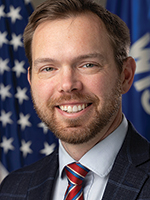
Adam Neylon
House · District 15
|
R |
Strong +
|
100% | 5 |
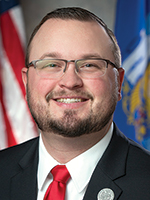
Alex Dallman
House · District 39
|
R |
Strong +
|
100% | 5 |
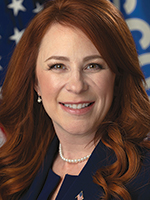
Amanda Nedweski
House · District 32
|
R |
Strong +
|
100% | 5 |

Barbara Dittrich
House · District 99
|
R |
Strong +
|
100% | 5 |

Ben Franklin
House · District 88
|
R |
Strong +
|
100% | 5 |

Alex Joers
House · District 81
|
D |
Strong −
|
0% | 5 |
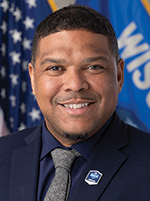
Amaad Rivera-Wagner
House · District 90
|
D |
Strong −
|
0% | 5 |
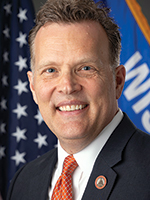
Andrew Hysell
House · District 48
|
D |
Strong −
|
0% | 5 |

Angela Stroud
House · District 73
|
D |
Strong −
|
0% | 5 |
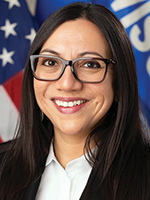
Angelina Cruz
House · District 62
|
D |
Strong −
|
0% | 5 |
Showing 51–60 of 75
bills
All criminal justice bills
AB 278: Relating to: grants to law enforcement agencies for data-sharing platforms.
Topics
✓ Budget & TaxesSupports Budget & TaxesCreates state grant program funding law enforcement data platforms, directly increasing government spending on public safety technology per bill's grant allocation structure.
✓ Criminal JusticeSupports Criminal JusticeFunds law enforcement data-sharing platforms through grants, directly supporting operational efficiency in criminal justice systems per bill's grant program.
✓ TechnologySupports TechnologyBill mandates data security standards and secure access controls for law enforcement data platforms, directly enhancing cybersecurity and data privacy protections.
SB 17: Relating to: special circumstances battery to a community service officer and providing a penalty.
Sub-Topics
Law Enforcement
SB 278: Relating to: sunset of the community-oriented policing-house grant program.
Topics
✓ Budget & TaxesSupports Budget & TaxesBill establishes continuing appropriation for community policing grants, ensuring stable biennial funding and preventing defunding of essential program.
✓ Criminal JusticeSupports Criminal JusticePrevents automatic expiration of community policing grants, ensuring ongoing funding for community engagement initiatives central to criminal justice reform.
AB 236: Relating to: the rights of sexual assault crime victims.
AB 84: Relating to: prostitution crime surcharge and making an appropriation. (FE)
Topics
✓ Budget & TaxesSupports Budget & TaxesBill creates new $5,000 surcharge (tax) to fund victim services and law enforcement, directly allocating funds through fiscal mechanism.
✓ Criminal JusticeSupports Criminal JusticeFunds sex-trafficking victim services and law enforcement operations, aligning with criminal justice reform indicators like victim support and targeted enforcement.
AB 229: Relating to: the law enforcement officers’ bill of rights.
Sub-Topics
Law Enforcement
SB 57: Relating to: county sheriff assistance with certain federal immigration functions. (FE)
Topics
✗ Criminal JusticeOpposes Criminal JusticeBill reclassifies sheriff assistance with federal immigration as felony (from misdemeanor), expanding criminalization and increasing penalties, aligning with 'oppose' indicators.
✓ ImmigrationSupports ImmigrationBill reclassifies sheriff assistance with federal immigration enforcement as felony, limiting state cooperation that could harm immigrants.
AB 319: Relating to: extreme risk protection temporary restraining orders and injunctions, making an appropriation, and providing a penalty. (FE)
Topics
✓ Budget & TaxesSupports Budget & TaxesAllocates $700,000 annually for ERPO law enforcement training, directly funding a public safety program through state appropriation.
✓ Criminal JusticeSupports Criminal JusticeFunds ERPO training and expands background checks for firearm prohibitions related to extreme risk orders, advancing gun violence prevention in criminal justice reform.
AB 298: Relating to: grants for technical colleges to provide mapping data to law enforcement. (FE)
Topics
✓ Budget & TaxesSupports Budget & TaxesCreates grants for technical colleges to share mapping data with law enforcement, funding a public safety program through state budget allocation.
✓ Criminal JusticeSupports Criminal JusticeBill funds mapping systems for law enforcement to improve emergency response coordination, directly supporting operational capabilities within criminal justice law enforcement.
Sub-Topics
Law Enforcement