Issue · Criminal Justice

Criminal Justice (Corrections)

Every criminal justice bill, vote, and legislator stance in Wisconsin, automatically classified by Maddy, our AI policy reader.

Total bills
67
2025-2026 Regular Session
Top supporter
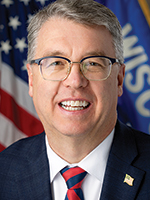
Brad Pfaff
100% support rate
Top opponent
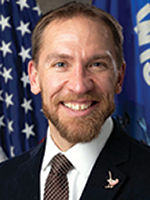
Steve Doyle
0% support rate
Ranked legislators
10
5 support · 5 oppose
Key legislators

Who's moving corrections in Wisconsin

Legislators moving corrections in Wisconsin
Legislator Party Stance Support rate Votes
Brad Pfaff
Brad Pfaff Senate · District 32
D
Strong +
100% 4
Bob Wirch
Bob Wirch Senate · District 22
D
Support
75% 4
Chris Larson
Chris Larson Senate · District 7
D
Support
75% 4
Dianne Hesselbein
Dianne Hesselbein Senate · District 27
D
Support
75% 4
Dora Drake
Dora Drake Senate · District 4
D
Support
75% 4
Steve Doyle
Steve Doyle House · District 94
D
Strong −
0% 6
Paul Tittl
Paul Tittl House · District 25
R
Strong −
0% 3
Jill Billings
Jill Billings House · District 95
D
Strong −
17% 6
Jodi Emerson
Jodi Emerson House · District 91
D
Strong −
17% 6
AJ
André Jacque Senate · District 1
R
Oppose
25% 4
Showing 51–60 of 67 bills

All criminal justice bills

failed · Wisconsin · Assembly Mar 23, 2026

AB 370: Relating to: crime victim notification cards. (FE)

AB 370 creates standardized crime victim notification cards to help victims stay informed about court proceedings involving offenders. The bill directs the Director of State Courts to design these free cards, which victims can fill out with their contact information and details about the inmate or probationer. County courts and victim-witness offices must provide the cards to victims, who can then send completed cards to the relevant court to receive updates. The bill also protects victims' mailing addresses in court records from public inspection under state law.
failed · Wisconsin · Senate Mar 23, 2026

SB 93: Relating to: recommendation to revoke extended supervision, parole, or probation if a person is charged with a crime. (FE)

SB 93 requires state departments to recommend revoking extended supervision, parole, or probation when a person under those programs is charged with a crime. It directly affects individuals supervised by the department after release from incarceration. The bill mandates this recommendation as a standard step in the process, without altering the existing revocation procedures or hearing requirements. The change applies to criminal charges filed on or after the bill's effective date.
failed · Wisconsin · Senate Mar 23, 2026

SB 153: Relating to: expanding the treatment alternatives and diversion programs. (FE)

SB 153 expands a grant program for counties and tribes to create treatment and diversion programs for individuals with substance use disorders or mental illness who are charged with or convicted of crimes related to these conditions. The bill requires programs to use evidence-based practices, integrate mental health services, include case management, and collaborate with courts, prosecutors, and treatment providers. It also modifies sentencing rules to exempt participants in approved programs from losing good time in jail. This bill directly affects individuals facing charges related to substance use or mental health, as well as local governments and service providers.
failed · Wisconsin · Assembly Mar 23, 2026

AB 624: Relating to: increasing the maximum penalty for certain controlled substances offenses if the violation occurs near a homeless shelter and providing a penalty.

AB 624 increases penalties for distributing methamphetamine or similar drugs near homeless shelters. If someone distributes these substances within 1,000 feet of a homeless shelter (and knows or should know the location), the maximum prison sentence for that offense rises by 5 years. The bill defines "near a homeless shelter" as being on or within 1,000 feet of the shelter premises, including when the shelter is readily recognizable. This directly affects individuals convicted of drug distribution offenses in these specific locations. The policy change modifies existing sentencing rules without altering the core definition of drug offenses.
vetoed · Wisconsin · Assembly May 13, 2026

AB 672: Relating to: penalty enhancer for crimes committed by a person acting as an agent of a foreign government or terrorist organization with the intent to silence or punish persons for their political view, criminalizing the enforcement of foreign laws without federal or state approval, and providing a penalty. (FE)

AB 672 creates new Wisconsin statutes to address "transnational repression," defined as actions by foreign government or terrorist organization agents targeting dissidents (like activists, journalists, or minority group members) to silence them over political views. It establishes a state training program for law enforcement, a public awareness campaign, and a digital reporting portal to identify such cases. The bill increases penalties for crimes committed as part of this repression (e.g., elevating a Class B felony to a Class A felony) and criminalizes enforcing foreign laws without federal or state approval, punishable by a minimum 3-year prison term. These provisions directly affect foreign agents operating within Wisconsin and target actions intended to suppress political dissent.
signed · Wisconsin · Assembly Dec 10, 2025

AB 265: Relating to: human trafficking and trafficking of a child and providing a penalty.

AB 265 strengthens Wisconsin's penalties for human trafficking by requiring minimum prison terms: 15 years for child trafficking and 10 years for general human trafficking convictions. It creates new felony charges for individuals who profit from trafficking (Class D C felony) or receive compensation from commercial sex acts or debt bondage (Class F E felony). The bill directly affects convicted traffickers, their financial beneficiaries, and those who facilitate trafficking through recruitment or harboring of children for commercial sex. These sentencing changes apply to offenses committed after the bill's effective date.
vetoed · Wisconsin · Senate May 13, 2026

SB 610: Relating to: increasing the maximum penalty for certain controlled substances offenses if the violation occurs near a homeless shelter and providing a penalty.

SB 610 increases the maximum prison sentence for distributing methamphetamine or similar drugs near homeless shelters. If someone distributes these drugs within 1,000 feet of a homeless shelter - knowing or reasonably aware the shelter is nearby - their maximum prison term rises by 5 years. The bill specifically targets violations of drug distribution laws (Section 961.65) occurring in these proximity circumstances. This policy change directly affects individuals convicted of such drug distribution offenses near shelters, without altering existing penalties for other drug offenses.
vetoed · Wisconsin · Assembly May 13, 2026

AB 85: Relating to: recommendation to revoke extended supervision, parole, or probation if a person is charged with a crime. (FE)

AB 85 requires Wisconsin's Department of Corrections to recommend revoking parole, probation, or extended supervision whenever a person under supervision is charged with a new crime. This applies directly to individuals on community supervision who face new criminal charges. The bill mandates that the department submit this recommendation to the appropriate administrative body, triggering a hearing process unless the person waives it. The law changes existing statutes to make this recommendation automatic upon a new charge, without requiring proof of violation first.
failed · Wisconsin · Assembly Mar 23, 2026

AB 178: Relating to: expanding the treatment alternatives and diversion programs. (FE)

AB 178 creates a new state grant program to fund county and tribal programs that offer treatment alternatives to jail for people facing criminal charges related to substance use or mental health issues. It requires these programs to use evidence-based treatment, integrate mental health services, and include graduated incentives for participants. The bill directly affects criminal defendants with substance use disorders or mental illness who qualify for these programs, as well as counties and tribes receiving grants. Key provisions include mandating collaboration between courts, prosecutors, public defenders, and health agencies to develop and oversee the programs, while exempting participants in approved programs from losing good time credit in jail.
failed · Wisconsin · Assembly Mar 23, 2026

AB 441: Relating to: identity requirements for officers who arrest or detain individuals and providing a penalty.

AB 441 requires law enforcement officers to clearly identify themselves during arrests or detentions. Specifically, officers must state their name, display their badge number and agency insignia (with specified visibility standards), and state the legal authority for the action. The bill prohibits concealing identity except for medical masks, tactical gear, or during imminent danger. Violating these rules is a Class D felony, though courts cannot impose jail time. This directly affects officers employed by state or local law enforcement agencies during enforcement actions.
Showing 51 to 60 of 67 bills
Previous 1 5 6 7 Next