Issue · Criminal Justice

Criminal Justice (Law Enforcement)

Every criminal justice bill, vote, and legislator stance in Wisconsin, automatically classified by Maddy, our AI policy reader.

Total bills
75
2025-2026 Regular Session
Top supporter
Adam Neylon
100% support rate
Top opponent
Alex Joers
0% support rate
Ranked legislators
10
5 support · 5 oppose
Key legislators

Who's moving law enforcement in Wisconsin

Legislators moving law enforcement in Wisconsin
Legislator Party Stance Support rate Votes
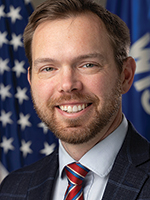
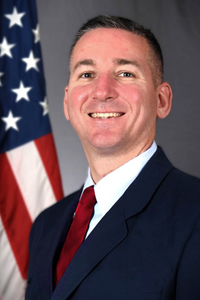
Adam Neylon
Adam Neylon House · District 15
R
Strong +
100% 5
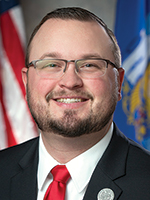
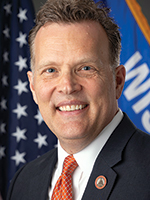
Alex Dallman
Alex Dallman House · District 39
R
Strong +
100% 5
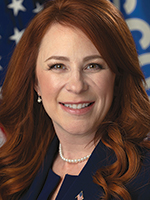
Amanda Nedweski
Amanda Nedweski House · District 32
R
Strong +
100% 5
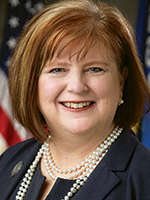
Barbara Dittrich
Barbara Dittrich House · District 99
R
Strong +
100% 5
Ben Franklin
Ben Franklin House · District 88
R
Strong +
100% 5
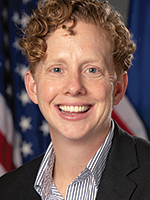
Alex Joers
Alex Joers House · District 81
D
Strong −
0% 5
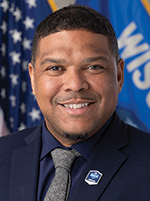
Amaad Rivera-Wagner
Amaad Rivera-Wagner House · District 90
D
Strong −
0% 5
Andrew Hysell
Andrew Hysell House · District 48
D
Strong −
0% 5
Angela Stroud
Angela Stroud House · District 73
D
Strong −
0% 5
Angelina Cruz
Angelina Cruz House · District 62
D
Strong −
0% 5
Showing 41–50 of 75 bills

All criminal justice bills

vetoed · Wisconsin · Senate May 13, 2026

SB 432: Relating to: mandatory reporting requirements and referring cases of threatened or suspected child abuse to law enforcement. (FE)

SB 432 requires certain professionals, including social workers and agency employees who interact directly with children or handle child welfare cases, to report suspected or threatened child abuse to law enforcement. It mandates that county departments, the state department, and licensed child welfare agencies refer most abuse cases to police within 12 hours (excluding weekends/holidays) and adopt written policies for reporting specific types of abuse or neglect defined in state law. The bill adds a new reporting category for child welfare employees and clarifies when written policies must be created for certain abuse cases. This changes existing procedures by expanding who must report and requiring standardized policies for specific scenarios.
failed · Wisconsin · Assembly Mar 23, 2026

AB 575: Relating to: prohibiting state agencies and local governmental units from using facial recognition technology or data generated from it.

AB 575 prohibits all state agencies and local governmental units (like cities, counties, or school districts) from using facial recognition technology or its data, except to identify their own employees for employment-related purposes. The bill defines facial recognition technology as an automated system that compares camera footage of faces against databases to find matches. It directly affects government entities that currently use or plan to use this technology for public services, law enforcement, or other operations. The law creates a clear ban on its use for public identification, with only the narrow exception for internal employee verification.
vetoed · Wisconsin · Senate May 13, 2026

SB 25: Relating to: court-issued criminal complaints in officer-involved deaths.

SB 25 would require courts to defer to a district attorney's determination that there is no basis to prosecute a law enforcement officer involved in a death. Specifically, it prohibits judges from issuing criminal complaints against such officers unless new or unused evidence is presented, after the district attorney has already concluded there is no case to pursue. The bill directly affects officers in officer-involved death cases defined under Wisconsin law (s. 175.47 (1) (c)). This change shifts authority from courts to district attorneys in determining whether charges proceed, streamlining the process for cases where prosecutors have already declined to file.
Sub-Topics Courts Law Enforcement
passed · Wisconsin · Senate Mar 23, 2026

SB 224: Relating to: the rights of sexual assault crime victims.

SB 224 (2026 Legislature) improves communication rights for sexual assault victims who provide forensic evidence kits. The bill requires law enforcement to test kits within a specified timeline and provide victims with clear information about kit status, DNA testing results, and destruction dates upon request. It also mandates that victims be notified of any changes to their case status, including if it's closed or reopened. These provisions directly affect sexual assault victims who submit kits during forensic examinations, ensuring they receive timely updates about their case. The bill focuses on transparency and victim notification without altering legal penalties or funding.
failed · Wisconsin · Assembly Mar 23, 2026

AB 88: Relating to: civil action for injury or damages resulting from riot or vandalism, participation in a riot, prohibiting certain limitations or restrictions on law enforcement responses to riot or vandalism activity, and providing a penalty.

AB 88 addresses civil actions and law enforcement responses related to riot and vandalism activities. The bill prohibits government officials from limiting or restricting law enforcement's authority to arrest individuals or quell such disturbances. It also creates a new civil cause of action, allowing individuals who suffer injury or property damage from riot or vandalism to sue those who committed the acts or provided material support. Victims may seek compensatory damages, an order for property repair, and legal fees, regardless of whether criminal charges are filed. The bill also defines "rioting" and "incite" for these purposes.
Sub-Topics Law Enforcement
signed · Wisconsin · Assembly Mar 19, 2026

AB 78: Relating to: impoundment of vehicles used in certain reckless driving offenses. (FE)

AB 78 modifies Wisconsin law regarding vehicle impoundment for reckless driving offenses. It gives law enforcement officers discretion to impound vehicles used in certain reckless driving cases, rather than requiring mandatory impoundment. The bill directly affects drivers convicted of qualifying reckless driving offenses and law enforcement officers who decide whether to impound a vehicle. This change, now part of 2025 Wisconsin Act 46, alters the standard procedure for handling such vehicles.
Sub-Topics Law Enforcement
failed · Wisconsin · Senate Mar 23, 2026

SB 487: Relating to: training requirements for a license to carry a concealed weapon.

SB 487 modifies training requirements for concealed carry license applicants and renewers in this state. It expands acceptable proof of training to include out-of-state licenses that document required training, and adds new mandatory training components like suicide prevention, de-escalation techniques, and firearm safety storage practices. The bill requires applicants to submit proof of continuing training (including specific topics like live-fire practice and de-escalation) when renewing licenses. These changes apply to all new applications or renewals submitted on the bill's effective date.
vetoed · Wisconsin · Assembly May 13, 2026

AB 672: Relating to: penalty enhancer for crimes committed by a person acting as an agent of a foreign government or terrorist organization with the intent to silence or punish persons for their political view, criminalizing the enforcement of foreign laws without federal or state approval, and providing a penalty. (FE)

AB 672 creates new Wisconsin statutes to address "transnational repression," defined as actions by foreign government or terrorist organization agents targeting dissidents (like activists, journalists, or minority group members) to silence them over political views. It establishes a state training program for law enforcement, a public awareness campaign, and a digital reporting portal to identify such cases. The bill increases penalties for crimes committed as part of this repression (e.g., elevating a Class B felony to a Class A felony) and criminalizes enforcing foreign laws without federal or state approval, punishable by a minimum 3-year prison term. These provisions directly affect foreign agents operating within Wisconsin and target actions intended to suppress political dissent.
failed · Wisconsin · Senate Mar 23, 2026

SB 626: Relating to: police authority to disable drones threatening public safety and providing a penalty.

This bill prohibits drone operation over correctional facilities (prisons and jails) without specific authorization from facility leadership. It imposes a $5,000 fine for unauthorized flights and creates a Class H felony charge for using weaponized drones (equipped with tasers, firearms, or explosives) that threaten public safety. Law enforcement officers are authorized to detect, disable, or destroy such drones using lawful methods (like jamming or physical capture) if they reasonably believe immediate action is needed to prevent harm. The law also requires officers to seize drone-recorded footage during violations and shields them from liability for damaging intercepted drones.
failed · Wisconsin · Assembly Mar 23, 2026

AB 667: Relating to: prohibiting a law enforcement agency from accessing personal data in exchange for payment without a warrant.

AB 667 prohibits law enforcement agencies from paying third parties or government entities for access to an individual's personal data without a warrant. The bill defines "personal data" broadly to include names, location, financial records, health information, browsing history, and device identifiers. It allows exceptions only when a warrant is obtained, during emergencies involving immediate danger, if data is already public, or with the individual's explicit consent. This law directly affects law enforcement agencies and data-sharing companies by restricting how personal information can be acquired for investigations.
Showing 41 to 50 of 75 bills
Previous 1 4 5 6 8 Next